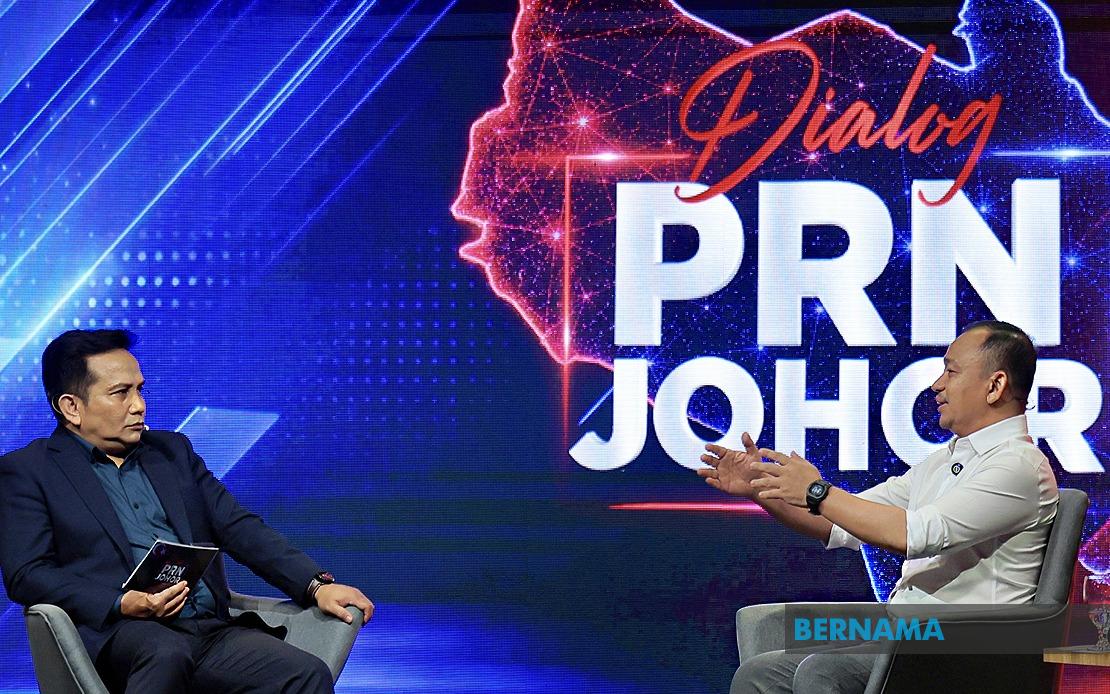
Dr Maszlee Malik, the Pakatan Harapan contender for the Puteri Wangsa seat, has made an impassioned appeal for Malaysian politics to mature beyond emotional appeals and tribal voting patterns. Speaking in Johor Bahru following a state election dialogue session, the former education minister emphasised that political parties and candidates must engage voters through substantive debate grounded in facts, arguments and verifiable evidence. His remarks reflect growing concern within opposition circles that Malaysian political culture remains susceptible to sentiment-driven decision-making rather than reasoned policy evaluation.
The dialogue, jointly hosted by Radio Televisyen Malaysia, Astro AWANI and Sinar Harian at the Permata Sari Auditorium under the State Broadcasting Department's auspices, served as a platform to demonstrate how structured political engagement could elevate public discourse. Maszlee characterised the event as a valuable opportunity to model the kind of substantive conversation voters deserve during election campaigns, one that respects their intelligence and capacity to evaluate competing visions on their merits. His framing suggests a deliberate strategy by PH to differentiate itself through intellectual rigour during the final stretch of campaigning.
Communications Minister Datuk Fahmi Fadzil's participation underscored the federal government's investment in this particular race, signalling its importance within the broader political landscape. The ministerial presence also suggested that Putrajaya views structured dialogue as an effective counterweight to what opposition critics characterise as the governing coalition's reliance on machinery politics and resource advantages. For observers tracking PH's evolution since returning to federal power in 2022, such initiatives represent an attempt to rebuild party credibility after the 2023 general election results demonstrated electoral fatigue among urban, educated voters.
With three campaign days remaining before polling on July 11, PH's strategy has shifted toward maximising voter participation, a telling indicator of internal campaign assessments. Maszlee stressed that higher turnout strengthens the legitimacy of whatever government emerges from the election, a message carefully calibrated to encourage PH supporters to overcome logistical barriers to voting. The emphasis on out-of-town voters returning to their constituencies reflects demographic realities in urban-leaning constituencies where migration to larger economic centres has altered electoral mathematics. This logistical focus, while appearing technical, carries significant strategic weight in close contests.
The emphasis on voter turnout as essential to legitimate governance represents a departure from Malaysian electoral rhetoric, which traditionally downplays this dimension. By linking turnout explicitly to governmental legitimacy, PH articulates a conception of democratic accountability that challenges the notion that any government commanding a numerical majority automatically possesses sufficient democratic credentials. This framing proves particularly relevant in a state election context where coalition negotiations and post-election realignments could produce governments lacking clear electoral mandates.
Early voting held on the day of the dialogue provided a measurable indication of campaign momentum, though public data on participation rates remained unavailable at the time of these remarks. The compression of the campaign period—with early voting already underway just four days before main polling—suggests electoral authorities' desire to complete the process efficiently. For candidates like Maszlee, this compressed timeline intensifies the pressure to consolidate support quickly, making dialogue sessions and media appearances critical to reaching persuadable voters.
Johor's 16th state election carries significance extending beyond state-level governance, functioning as a barometer of federal coalition health and regional political alignments. Any major swing toward or away from PH would send signals reverberating through Malaysian politics as parties assess their positioning ahead of future electoral contests. The state has historically favoured ruling coalitions, though recent cycles have demonstrated greater volatility than earlier decades, suggesting that complacency among incumbent political forces carries genuine electoral risk.
Maszlee's background as education minister—a portfolio carrying symbolic weight in discussions of nation-building and social development—lends credibility to his advocacy for elevated political discourse. His transition from federal ministerial rank to state electoral candidacy also reflects broader PH challenges in retaining senior figures, with some observers interpreting such moves as either commitment to grassroots work or, more sceptically, as repositioning following perceived diminishment of influence at the federal level. Regardless of interpretation, his continued prominence in party activities indicates that PH values his articulation of pro-reform messaging.
The partnership between RTM, Astro AWANI and Sinar Harian in organising the dialogue demonstrates how state media institutions and private broadcasters coordinate during electoral periods in Malaysia. This arrangement, while ostensibly promoting balanced coverage, also reflects implicit understandings about appropriate campaign conduct and media participation in democratic processes. For international observers, such partnerships illustrate the distinctive Malaysian approach to election management, where informal coordination supplements formal regulatory frameworks.
Looking beyond immediate electoral outcomes, Maszlee's call for mature political culture touches on persistent weaknesses within Malaysian democracy that transcend party affiliation. The durability of patronage networks, the prevalence of personalised rather than institutionalised party structures, and voters' heterogeneous access to reliable political information all complicate efforts to elevate discourse. Yet by articulating aspirational visions of what politics could become, opposition figures like Maszlee maintain theoretical pressure on political systems to evolve toward greater transparency, policy-centredness and intellectual substance, even when immediate electoral prospects remain uncertain.
The Johor campaign thus encapsulates broader tensions within Malaysian politics between tradition and reform, between entrenched patterns and emerging demands for change. Whether dialogue initiatives and appeals to rational discourse genuinely shift voter behaviour or function primarily as symbolic gestures distinguishing parties ideologically remains an open question. Yet the persistent articulation of such appeals suggests that among politically engaged Malaysians, appetite for substantive politics continues to exist, even if mobilised support for such visions remains fragmented and incomplete across the broader electorate.

