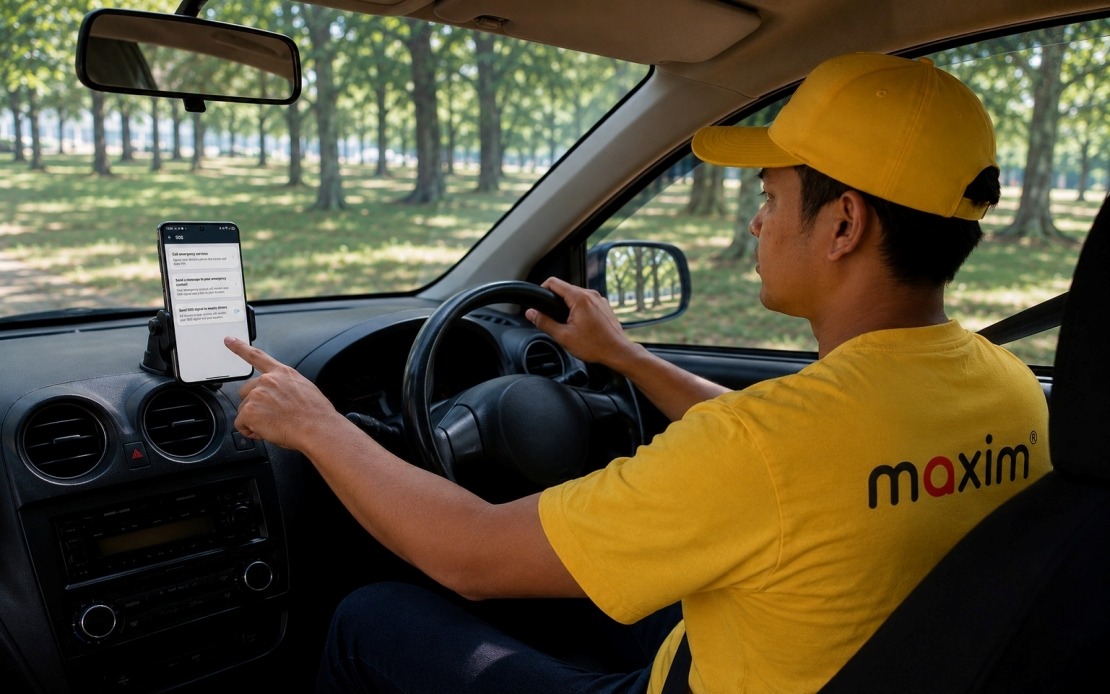
Ride-hailing platform Maxim Malaysia has significantly strengthened its emergency response capabilities by rolling out a comprehensively redesigned SOS system that gives both passenger and driver-partners more flexible options for obtaining help during critical situations. The enhancement, unveiled in July, represents a strategic investment in user safety that reflects growing industry recognition of security concerns within the Southeast Asian ride-hailing sector, where regulatory bodies and consumers increasingly demand robust protective measures.
Central to the upgrade is a reimagined SOS button that now functions identically for passengers and drivers, eliminating previous inconsistencies that could create confusion during high-stress moments. Users can immediately trigger either a direct connection to the 999 emergency hotline or activate an alert system that simultaneously notifies up to three pre-registered emergency contacts. This dual-pathway approach acknowledges that different emergencies may warrant different responses—a medical crisis might require professional paramedics, while a vehicle breakdown or aggressive passenger situation could benefit from immediate notification to trusted family members or friends who can provide rapid support.
The technical implementation emphasises reliability over perfect connectivity. Alert recipients receive notifications via SMS containing the user's precise GPS coordinates alongside a live tracking link, ensuring that emergency contacts maintain real-time visibility of the situation even as it unfolds. Crucially, the system prioritises functionality in challenging network conditions, transmitting location data and alerts even when internet connectivity fluctuates or weakens—a practical consideration for Malaysia's varied infrastructure across urban and rural areas. This resilience directly addresses a significant vulnerability in previous systems that could fail precisely when users most needed assistance.
For driver-partners specifically, Maxim has introduced a Driver Alert System that transforms nearby drivers into an informal but potentially life-saving network of first responders. When an emergency is triggered, notifications containing both the incident type and exact location automatically propagate to all Maxim drivers operating within a three-kilometre radius, creating an immediate pool of potential assistance. This peer-support mechanism acknowledges that professional emergency services, while essential, require time to arrive—a reality in Malaysia where response times vary dramatically depending on location. In the interim, another driver can render immediate assistance, assess the situation, stay with the person in distress, and facilitate smoother handover when official responders eventually arrive.
According to Mohd Hazwan Musli, the director of Maxim Malaysia, the philosophical underpinning of these enhancements rests on providing users genuine autonomy in crisis management. Rather than imposing a one-size-fits-all alert protocol, the system empowers individuals to make rapid tactical decisions about who should be notified first and through which channel. This flexibility proves especially valuable because emergencies vary considerably—a passenger experiencing harassment needs different intervention than a driver whose vehicle has mechanical failure, which differs again from a traffic accident requiring immediate medical attention. Each scenario benefits from distinct notification recipients and response types. By enabling these choices to be executed within seconds, the platform recognises that response time compression can be literally life-saving during critical incidents.
The safety infrastructure extends beyond emergency response into routine journey protection. A secure in-app messaging function incorporates anti-fraud protections, preventing scammers from exploiting the platform's communication channels. Internal trip monitoring captures granular journey data including continuous GPS tracking, creating both a real-time safeguard and a detailed record that authorities can access if investigations become necessary. For passengers, a Trip Sharing feature permits immediate transmission of live journey links to family members or friends immediately upon entering the vehicle, transforming bystanders into informal safety monitors who can track the trip's progress and verify safe arrival. These layered features collectively create multiple checkpoints where intervention becomes possible if something goes wrong.
Data protection underpins all these systems. Information transmitted through the SOS function, Driver Alert System, and Trip Sharing feature undergoes encryption conforming to contemporary security standards. Access restrictions ensure that only authorised security personnel and relevant law enforcement authorities can retrieve this sensitive information, and only through established legal procedures. This governance framework attempts to balance the genuine security benefits of comprehensive data collection against privacy concerns that ride-hailing users legitimately harbour. For Malaysian users navigating between safety requirements and privacy protection, understanding these protocols becomes essential to informed usage of the platform.
The upgrade arrives within a regional context where ride-hailing safety has become increasingly prominent. Incidents involving aggressive passengers, driver assaults, and unaccountable disappearances have prompted regulatory scrutiny across Southeast Asia. Malaysia itself has seen periodic public concerns about ride-hailing safety, particularly for solo female travellers and late-night users. By proactively enhancing emergency response systems, Maxim signals commitment to addressing these concerns ahead of potential regulatory mandates, positioning itself as an industry leader in safety technology deployment rather than a reluctant compliance actor.
For driver-partners, these enhancements offer tangible occupational protection. The Driver Alert System transforms what previously might have been an isolated emergency into a situation with immediate peer support and multiple witnesses. This capability potentially deters some aggressive passenger conduct simply because perpetrators understand that the driver can rapidly summon assistance. For passengers, particularly women using the service during vulnerable hours, the multi-contact alert system and live trip-sharing capability provide concrete tools for maintaining connection to trusted networks and professional responders simultaneously.
Implementation of these systems requires user engagement to reach full effectiveness. Passengers and drivers must proactively register emergency contacts, ensure their phone numbers are current, and maintain awareness of the system's capabilities. The platform's role in promoting user education around these features will significantly influence whether the technical infrastructure translates into genuine safety improvements. Malaysian users should familiarise themselves with the SOS button location and functionality, test the emergency contact notification system, and consider how they would employ these tools across different emergency scenarios they might realistically encounter.
Looking forward, the enhancement demonstrates that ride-hailing platforms can meaningfully improve safety through technological innovation rather than relying entirely on behavioural screening or regulatory enforcement. As Maxim continues operating across Malaysia, the real-world effectiveness of this upgraded system in preventing harm and enabling rapid emergency response will provide valuable evidence about whether distributed response networks and multi-pathway alert systems represent the future direction of ride-hailing safety infrastructure across Southeast Asia.

