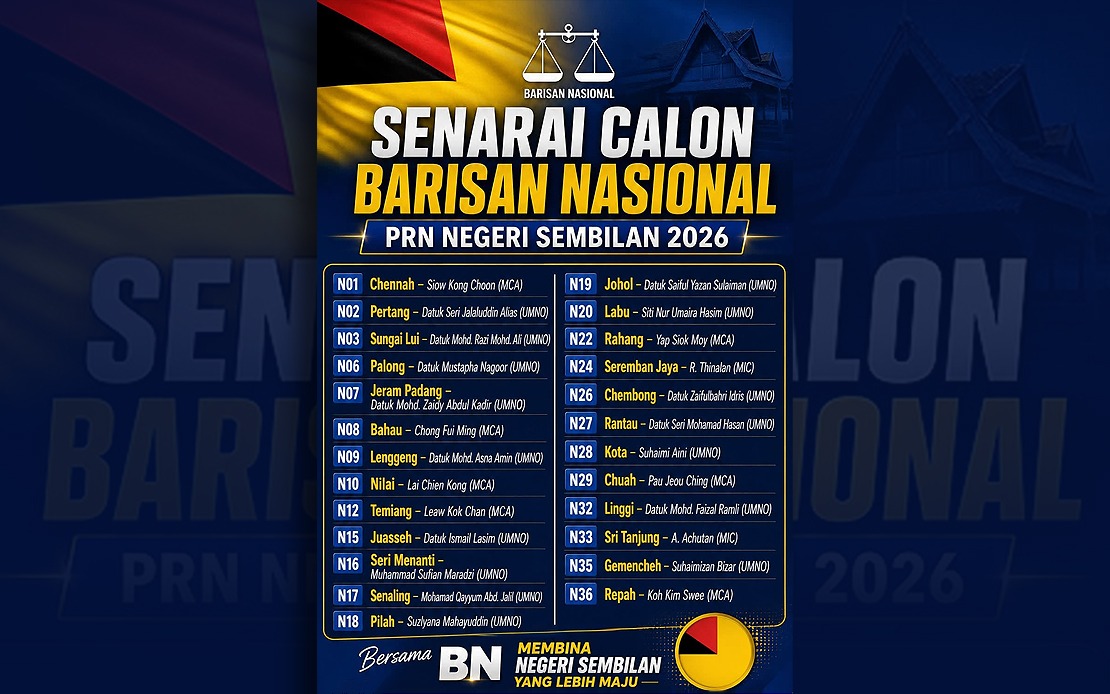
The Barisan Nasional coalition has finalized its seat allocation for the upcoming 16th Negeri Sembilan state election, with the MCA and MIC component parties set to contest a combined 11 constituencies. According to BN chairman Datuk Seri Dr Ahmad Zahid Hamidi, who also serves as Deputy Prime Minister, the MCA will field candidates in seven State Legislative Assembly seats while the MIC will contest four seats in the state assembly. The announcement came following a meeting with prospective BN candidates at Wisma UMNO Negeri Sembilan in Seremban on July 15.
The distribution of seats among the coalition's component parties reflects a strategic approach based on electoral viability, according to Ahmad Zahid's explanation. Rather than simply dividing constituencies equally, BN leadership evaluated the performance potential of individual candidates across different constituencies within their respective parties' strongholds. This methodology aims to maximize the coalition's overall winning prospects by placing candidates in seats where they stand the strongest chance of securing victory. The approach represents a continuation of the practice adopted in previous state elections, by-elections, and general elections, demonstrating a consistent framework for internal coalition negotiations.
Ahmad Zahid emphasized the commitment required from all prospective candidates standing under the BN banner. Each candidate was required to sign an undertaking and pledge their allegiance to the BN chairman, a formal process that establishes clear party discipline and unity within the coalition. This requirement underscores the importance BN places on maintaining cohesion among its diverse membership, particularly crucial given the coalition's need to present a united front against opposition parties in the state assembly. The vetting and commitment process helps ensure that candidates representing the coalition are aligned with BN's strategic direction and party values.
The candidate announcement was scheduled for the evening of July 15 at Stadium Tuanku Abdul Rahman Paroi in Seremban, where the full list of BN nominees would be unveiled to the media and public. This formal ceremony marks an important milestone in the election campaign preparation, signaling that the coalition's internal selection process had concluded and campaigns could move into full swing. The timing of the announcement, just days before the nomination deadline, reflects the coordination required among multiple coalition partners to finalize their respective slates of candidates.
The Election Commission has established a clear timeline for the state election process. Nomination day is scheduled for July 18, providing a three-day window for all parties to formally submit their candidate lists and election papers. Early voting will take place on July 28, allowing civil servants, security personnel, and other eligible voters to cast ballots ahead of the main polling day. The general election will be held on August 1, determining the composition of the 16th Negeri Sembilan State Legislative Assembly and the state government for the next term.
Context from the previous state election illustrates the competitive landscape facing Barisan Nasional in Negeri Sembilan. In the 15th state election, BN managed to secure only 14 seats out of 36 in the state assembly, marking a significant loss of ground compared to its historical dominance. The Pakatan Harapan opposition coalition won 17 seats, establishing itself as the ruling administration, while Perikatan Nasional captured five seats. This distribution demonstrates that BN faces an uphill battle to regain control of the state, requiring both strong candidate performance and strategic voter outreach to recover the seats it lost in the previous election.
The reduced BN presence in the Negeri Sembilan assembly reflects broader national political trends affecting the coalition. The fragmentation of the political landscape, with three major blocs competing for voter support, has complicated BN's traditional dominance in state politics. Recovery in Negeri Sembilan would require BN to improve its performance across multiple constituencies and demonstrate that the coalition can effectively address voter concerns and deliver good governance. The allocation of seats to coalition partners like MCA and MIC suggests that BN leadership believes these parties maintain sufficient support in their respective communities to contest these constituencies viably.
The MCA's allocation of seven seats reflects its traditional strength in constituencies with significant Chinese Malaysian populations in Negeri Sembilan. The party has historically performed well in urban and semi-urban areas where Chinese voters constitute a meaningful proportion of the electorate. Similarly, the MIC's four seats likely correspond to constituencies where Indian Malaysian communities represent important voting blocs. These allocations demonstrate how BN continues to operate as a multi-ethnic coalition, with component parties representing specific demographic communities and cultural constituencies within the broader Malaysian electorate.
For Malaysian politics watchers and regional observers, the Negeri Sembilan state election represents a crucial test of BN's revival prospects following years of electoral setbacks and internal consolidation efforts. The coalition's performance in this state will offer insights into whether its restructuring and leadership changes have resonated with voters, or whether the opposition coalitions have solidified their support base. Success in Negeri Sembilan could provide momentum for BN heading into potential federal-level elections, while a disappointing result would signal continued challenges for the historic coalition's political resurgence in Malaysian politics.

