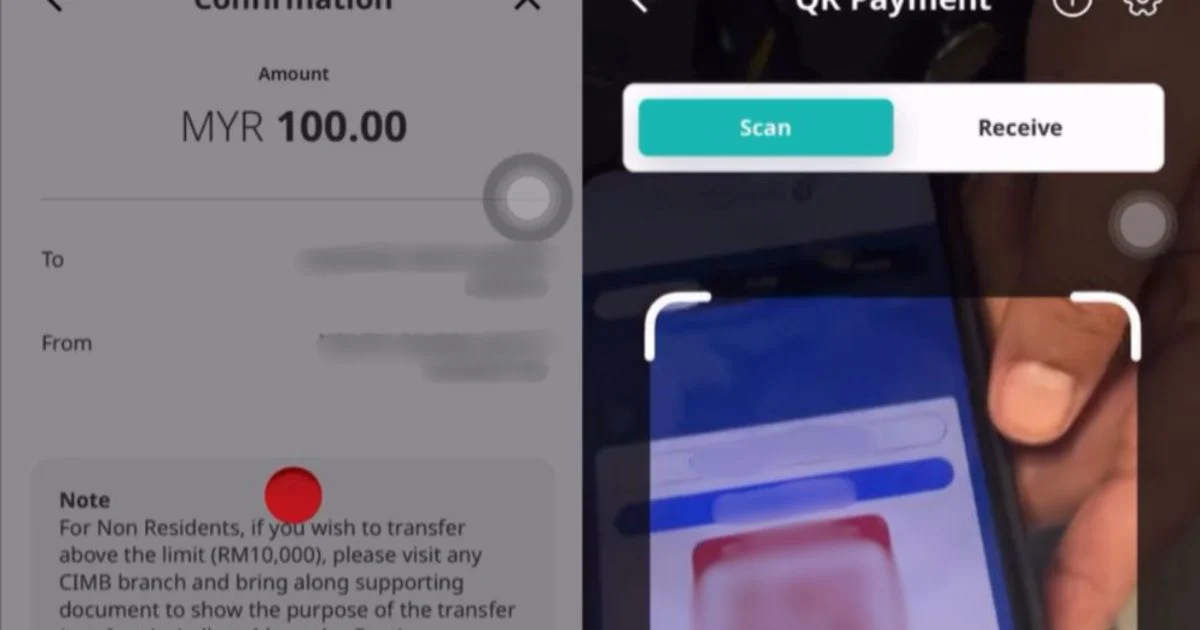
The Malaysian Border Control and Protection Agency (MCBA) is probing an officer stationed at Kuala Lumpur International Airport Terminal 2 following claims that the individual accepted a RM100 payment via a personal Quick Response code transaction. The allegation, which touches on potential revenue diversion and officer conduct, has triggered formal internal procedures to establish the circumstances and establish whether standard protocols were breached.
The incident underscores a growing vulnerability in airport operations where digital payment methods have become ubiquitous yet remain susceptible to misuse if oversight mechanisms are inadequate. Personal QR codes, which have proliferated across Southeast Asia as convenient payment tools, can blur the line between official and private financial transactions when used inappropriately in government settings. The alleged incident at KLIA Terminal 2, one of Malaysia's busiest international gateways, suggests that the agency must reassess how its personnel handle collections and payments.
KLIA Terminal 2 processes millions of passengers annually and serves as a critical juncture for Malaysia's international travel and commerce. The facility's border control operations require trust in the integrity of officials managing entry, exit, and associated administrative procedures. Any compromise—or perception thereof—can undermine confidence in these operations and potentially affect Malaysia's reputation as a reliable travel destination. For travellers, security personnel, and airport operators, such allegations raise concerns about whether accepted practices are being followed uniformly across shifts and departments.
The MCBA's decision to launch an investigation reflects institutional accountability, demonstrating that allegations are not dismissed casually. However, the scope and speed of such investigations matter significantly. Authorities will need to determine whether this represents an isolated incident or signals broader systemic issues requiring policy overhaul. They must also clarify what prompted the allegation—whether it came through official reporting channels, passenger complaints, or colleague observations—since the source often indicates the seriousness of the breach.
Personal QR payment systems, while offering convenience for legitimate private transactions, have created unexpected challenges in government agencies across Asia. In Malaysia, where digital payment adoption has accelerated substantially over recent years, officials have not always received adequate training on distinguishing appropriate use cases. The MCBA may need to implement clearer guidelines explicitly prohibiting officers from requesting or accepting payments via personal payment codes during official duties, with enforcement mechanisms that carry meaningful consequences.
Revenue integrity in government operations depends fundamentally on documented, traceable transactions through official channels. When individuals circumvent these systems, they expose the agency to accusations of corruption, undermine audit trails, and potentially violate financial regulations. For MCBA, an organisation responsible for border security and protection, such conduct strikes at the core of institutional credibility. The agency's management faces pressure to demonstrate that investigations are thorough, impartial, and result in appropriate corrective action.
The broader context matters here as well. Southeast Asian airports and border facilities have faced recurring challenges with informal payments and procedural shortcuts, particularly at high-traffic facilities. Malaysia has worked to improve its international standing on governance and transparency, and incidents like this test the sincerity of reform efforts. For the MCBA specifically, the investigation's outcome will signal whether the agency prioritises accountability or whether officials face minimal consequences for such breaches.
Travellers, particularly foreign visitors unfamiliar with Malaysian practices, may face confusion if officers solicit informal payments for services. This creates not only operational problems but also reputational risks, as unsatisfied passengers share experiences across social media and travel platforms. KLIA's international standing depends partly on consistent, professional service delivery. An officer requesting personal QR payments—whether innocently misunderstanding protocols or deliberately circumventing them—compromises that standard.
Moving forward, the MCBA should consider several measures beyond investigating this specific allegation. Digital payment policies for official transactions require modernisation, establishing approved platforms through which officers can legitimately conduct business on behalf of the agency. Training programmes must educate staff on distinguishing personal finance from official duties. Supervision mechanisms, particularly at high-traffic locations like KLIA Terminal 2, should include spot checks and transaction audits ensuring compliance with standards.
The investigation's outcome will carry implications beyond the individual officer involved. It will signal to other MCBA personnel whether integrity expectations are enforced consistently, potentially deterring similar conduct elsewhere in the organisation. It will also demonstrate to passengers and other stakeholders that Malaysia takes transparency and accountability seriously at its border facilities, an important message as the nation competes internationally for tourism and commerce.

