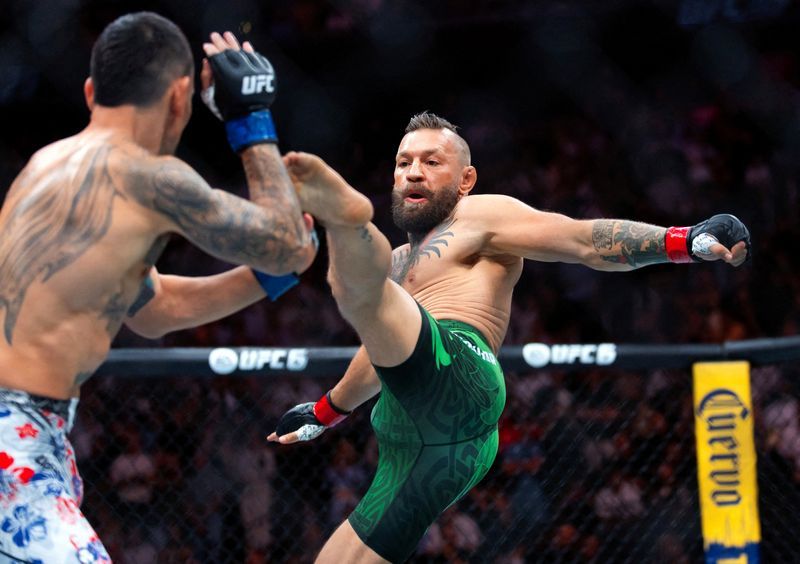
Conor McGregor's long-awaited return to competitive mixed martial arts lasted barely more than a minute before a devastating knee injury forced him to bow out against Max Holloway in Las Vegas over the weekend. The former two-weight UFC champion, whose comeback had been delayed by a succession of setbacks and personal complications, signalled his determination to continue his fighting career despite the setback, announcing plans for surgery and a renewed attempt to compete.
The Irish fighter's injury occurred in the opening moments of Saturday's bout when he attempted a jump kick and landed awkwardly, causing immediate trauma to his knee. McGregor attempted to persist through the pain for a few additional seconds but quickly communicated to the referee that he was unable to continue, forcing the bout to end with a technical injury stoppage. The abbreviated nature of the fight underscored the frustration that has characterized McGregor's recent years in the sport, marked by a pattern of interrupted training camps and unexpected health crises that have repeatedly disrupted his competitive schedule.
On Monday, McGregor took to social media to express his resolve and faith in recovering from the latest blow to his career trajectory. His Instagram post conveyed an optimistic tone despite the disappointment, stating that he would proceed with surgical intervention followed by a structured rehabilitation programme before returning to training. The fighter referenced his contractual obligations, suggesting his intention to fulfil the remaining fights owed under his UFC agreement before potentially concluding his professional career, indicating that this injury, while frustrating, has not extinguished his competitive aspirations.
The 37-year-old fighter's career has become almost defined by the frequency of interruptions that have prevented sustained momentum inside the octagon. Five years prior, McGregor suffered a leg fracture during a contest against Dustin Poirier that sidelined him for an extended period. A proposed matchup against Michael Chandler scheduled for June 2024 never materialized when McGregor sustained a broken toe during training camp, demonstrating how injury-prone his return phase has been even before stepping into sanctioned competition.
Beyond physical injuries, McGregor has confronted substantial legal and regulatory obstacles that have further complicated his pathway to regular competition. An Irish civil court in Dublin determined in a legal proceeding that McGregor bore liability in a sexual assault allegation stemming from an incident in 2018 involving Nikita Hand, a ruling that generated significant international attention and further complicated his public standing and career prospects.
Additionally, McGregor faced disciplinary action from the sport's anti-doping authorities. In October 2025, he accepted an 18-month suspension imposed by Combat Sports Anti-Doping following his failure to comply with three separate collection attempts in 2024 for biological samples. Though the ban was retroactively applied from an earlier date, meaning it technically expired in March, the suspension represented another regulatory hurdle that had prevented him from competing during this period and underscored his difficulty in meeting the operational requirements demanded of professional fighters.
The cumulative effect of these injuries, legal matters, and regulatory complications has substantially truncated McGregor's active fighting schedule over recent years. What was once a remarkable career trajectory that saw him capture titles across multiple weight divisions and generate unprecedented interest in mixed martial arts has slowed considerably, with regulatory compliance, rehabilitation, and legal obligations consuming far more of his time than actual competitive bouts.
For Malaysian and Southeast Asian combat sports enthusiasts, McGregor's situation illustrates broader challenges facing veteran fighters attempting comebacks after extended absences. The physical demands of competitive fighting, combined with the regulatory infrastructure now surrounding professional mixed martial arts, create formidable obstacles for aging competitors seeking to maintain their place in elite competition. McGregor's latest injury, occurring just 69 seconds into what was supposed to be a meaningful comeback showcase, highlights the particular vulnerability of fighters attempting rapid returns after prolonged inactivity.
The fighter's stated commitment to surgery and subsequent rehabilitation suggests he remains emotionally invested in his legacy and contractual obligations, though realistic assessment of his situation indicates that multiple factors beyond his control continue to impede his competitive career. His age, combined with the catalogue of injuries accumulated over a decade of professional fighting, creates a narrowing window for meaningful comeback attempts. The medical community would typically advise caution regarding rapid returns following serious knee trauma, particularly for an athlete in his late thirties whose career has already been interrupted by several significant injuries.
Looking forward, McGregor's path to his stated objective of fulfilling his final contractual fight faces substantial uncertainty. The recovery timeline following knee surgery typically extends many months, meaning any meaningful return would likely not occur until well into 2026 at the earliest. The UFC's capacity and willingness to accommodate an aging fighter with a complicated recent history remains an open question, particularly given the organisation's focus on building new stars and maintaining a dynamic competitive landscape.

