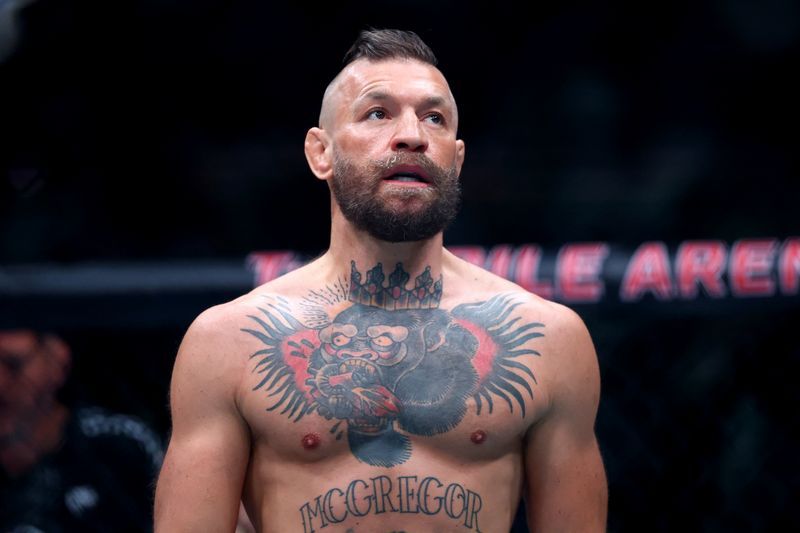
Conor McGregor's highly publicised comeback fight came to an premature end on Saturday evening at UFC 329 in Las Vegas when the Irish fighter suffered a severe knee injury just over a minute into the opening round against Max Holloway. In a sequence that unfolded with stunning swiftness, McGregor attempted an aggressive flying kick early in the bout but landed awkwardly on the mat, immediately signalling distress. After struggling to continue for several seconds, he gestured to the referee that he was unable to proceed, bringing the contest to a close before either fighter had genuinely engaged in meaningful combat.
McGregor's return to the octagon had been among the most anticipated sporting events of the year, with fight fans worldwide marking the date as the former two-weight champion finally stepped back into professional competition. The Dublin native had been absent from the UFC for nearly four years, having suffered a fractured leg during his July 2021 encounter with Dustin Poirier. That extended layoff, combined with his reputation for delivering dramatic performances, had generated enormous commercial interest and media buzz surrounding Saturday's appointment.
The latest injury represents yet another setback in a career increasingly marked by circumstances beyond the control of the sport itself. McGregor had been scheduled to face American wrestler Michael Chandler in June 2024, but that anticipated contest was shelved when the fighter sustained a broken toe during training camp. Such interruptions have become characteristic of recent years, with injuries and personal matters consistently interfering with his fight schedule and momentum.
Beyond the physical challenges plaguing his return, McGregor has confronted significant legal and regulatory obstacles. A civil court jury in Ireland determined in 2024 that he bore responsibility in a long-standing case involving allegations from 2018. Additionally, the international anti-doping authorities imposed an eighteen-month suspension after McGregor failed to appear for three separate out-of-competition testing procedures in 2024. Although the ban was retroactively applied and technically expired in March, the regulatory episode underscored the broader complications surrounding his position within professional combat sports.
Max Holloway, the former featherweight champion who faced McGregor on Saturday, expressed openness to a future rematch once the Irishman recovers from his injury. Holloway, who had lost to McGregor by unanimous decision in their first encounter in 2013, indicated his willingness to negotiate another meeting. His comments suggest that despite the anticlimactic conclusion to their second bout, the sports organisation and the fighter community remain interested in eventually staging a properly contested rematch that would satisfy fan expectations and deliver the competitive spectacle that had been anticipated.
For Malaysian and Southeast Asian fight enthusiasts, McGregor's repeated struggles with injuries and external complications offer a cautionary narrative about the precarious nature of elite combat sports careers. Unlike traditional sports where recovery timelines are more predictable, mixed martial arts demands not only healing from physical trauma but also the maintenance of technical sharpness, cardiovascular conditioning, and psychological readiness across multiple athletic disciplines. The gap between McGregor's last competitive fight in 2021 and this weekend's brief appearance represents an enormous stretch in professional terms, and the immediate injury suggests his body may not have been adequately prepared despite the extended preparation period.
The co-main event at the T-Mobile Arena provided a contrasting narrative, with British lightweight Paddy Pimblett delivering a dominant performance against French opponent Benoit Saint-Denis. Pimblett required less than sixty seconds to conclude his bout through a submission, demonstrating the technical proficiency and conditioning that McGregor appeared to lack. The stark difference between Pimblett's explosive execution and McGregor's immediate misfortune underscored the unforgiving nature of professional combat sports, where brief moments of technical execution or physical vulnerability can determine the entire trajectory of an evening's competition.
McGregor's trajectory over the past several years reflects broader themes within professional mixed martial arts regarding the sustainability of elite athlete careers. The sport demands not only natural talent and technical skill but also the fortunate absence of serious injuries, legal complications, and regulatory entanglements. For a fighter who achieved unprecedented commercial success and cultural prominence, the recent years have paradoxically been defined by absence rather than dominant performances. Each cancelled fight, each injury, and each external setback has eroded his position within the sport's consciousness, despite the continued fascination with potential comebacks.
Looking ahead, McGregor faces a decision point regarding his professional future. At thirty-seven years old, recovering from a significant knee injury will require extensive rehabilitation, potentially consuming many additional months before competitive readiness could be restored. The timeline for his next appearance remains entirely uncertain, though Holloway's comments suggest the UFC would welcome a properly contested second meeting once recovery is complete. For now, what began as a triumphant return to professional combat has instead become another chapter in the ongoing narrative of setbacks and complications that have come to define McGregor's recent career in the sport he once dominated.

