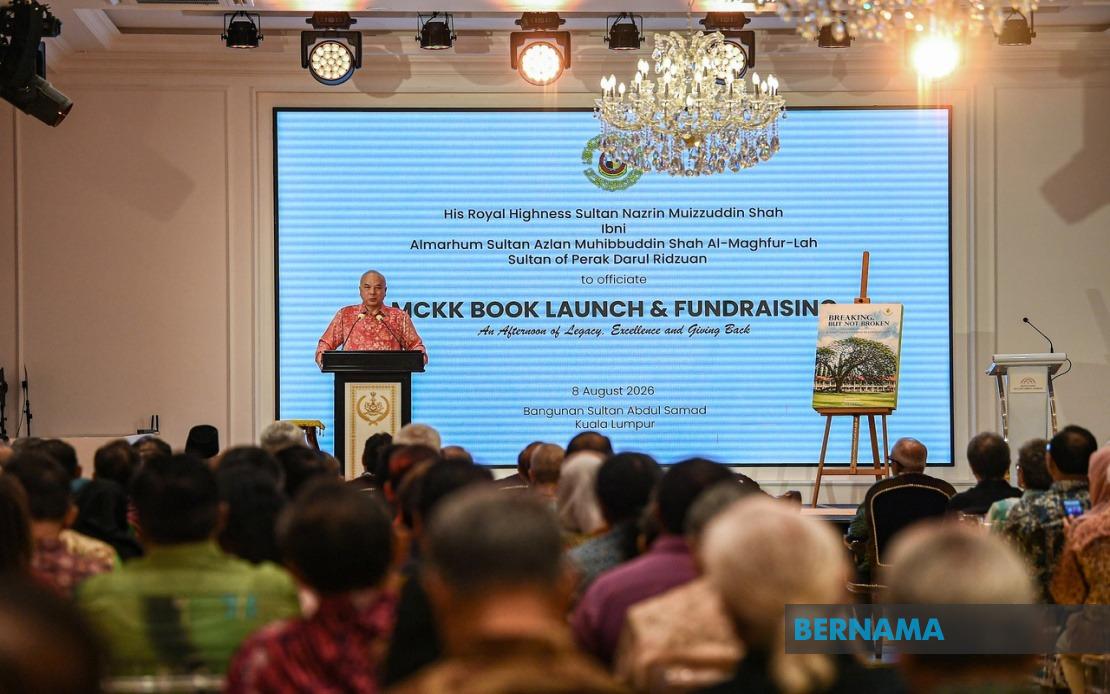
Malaysia's premier boarding schools face a critical juncture as they navigate the intersection of tradition and technological disruption. Sultan Nazrin Shah, Royal Patron of the Malay College Kuala Kangsar (MCKK) Board of Governors, articulated this challenge during a recent public address, arguing that venerable institutions can reclaim their historical significance by evolving their educational approach to meet contemporary demands while preserving the ethical moorings that built their reputation.
The Sultan's intervention on behalf of MCKK reflects broader anxieties among Malaysian educational stakeholders about whether the nation's most prestigious residential schools remain relevant in an era dominated by artificial intelligence and rapid technological change. Unlike their counterparts in other nations that have successfully transitioned into the digital age, Malaysia's heritage schools have struggled to maintain their competitive edge, with critics pointing to declining academic outcomes and a perceived erosion of the leadership qualities once synonymous with their graduates.
Sultan Nazrin's perspective transcends mere institutional preservation. He framed the challenge as fundamentally about preparing the next generation to thrive rather than merely survive in an AI-driven economy. The educational system, he contended, must be completely reimagined and equipped with new tools and methodologies to ensure that students possess the practical competencies demanded by tomorrow's labour markets. This recognition that technological fluency has become non-negotiable underscores how profoundly the global context has shifted since many heritage schools were established.
Equally important to the Sultan's thesis is his insistence that technical skill development cannot come at the expense of character formation and ethical grounding. He emphasized that educational institutions must simultaneously cultivate well-rounded individuals whose values, sensitivities and critical thinking capabilities enable them to contribute meaningfully to society beyond their professional roles. This dual focus—on both the practical and the intangible—acknowledges the gap that critics have identified in contemporary elite school graduates, who may possess subject knowledge but lack the reflective capacity and commitment to service that once distinguished MCKK alumni.
The Sultan's remarks carried an implicit acknowledgment of decline. He referenced an assessment by school analysts—authored by Ghazally Ismail, Ahmad Ibrahim and Hisham Badrul Hashim—that unflinchingly documented the challenges facing not only MCKK but the broader constellation of Malaysia's select residential schools. These institutions, once designated as "power schools" capable of consistently producing graduates of exceptional calibre, have experienced a marked diminishment in their ability to fulfill this historic function.
What makes this erosion particularly significant for Malaysian society is what the Sultan identified as specific skill deficits among contemporary graduates of these schools. The command of language—both in terms of literacy and articulate expression—has reportedly weakened. Critical thinking, the capacity to analyze problems independently and propose innovative solutions, appears diminished. Perhaps most troublingly, a commitment to public service and contribution beyond personal gain seems to have attenuated. These are not merely academic shortcomings; they represent a departure from the institutional character that justified the substantial investment Malaysia has historically made in residential secondary education.
The contrast between past performance and present reality becomes sharper when one considers that these heritage schools were established specifically to produce national leaders. Their residential model, their curricular emphasis on humanities alongside sciences, and their cultivation of leadership through service and community engagement were all deliberately designed to shape individuals capable of steering the nation. The current drift suggests that either these pedagogical models have become outdated, or the schools have failed to adequately adapt them to changing circumstances.
MCKK's fundraising and development efforts offer some indication of how the institution is attempting to position itself for renewal. The MCKK Foundation, established in 2008, has mobilized more than RM36 million in donations and contributions from sources ranging from corporate sponsors like PETRONAS to regional leaders including Brunei's Sultan Hassanal Bolkiah. This demonstrates substantial confidence in the institution's trajectory among influential stakeholders, yet also underscores the reality that heritage schools can no longer rely on government funding alone to maintain their physical and financial infrastructure.
The allocation of these funds reveals the Board's strategic priorities. Over RM19 million has been directed toward new infrastructure projects, including the construction of an International Baccalaureate Complex and modern auditorium facilities. An additional RM3.5 million has been invested in refurbishing residential and sporting facilities. These investments signal an attempt to provide students with contemporary physical learning environments comparable to international peer institutions. Beyond buildings, the Foundation has accumulated an endowment exceeding RM16 million, generating annual investment income exceeding RM7 million that supports scholarships, leadership programmes, teacher development and the maintenance of heritage structures.
Yet physical infrastructure and endowment funds, while necessary, cannot independently address Sultan Nazrin's core concern: the fundamental transformation of educational philosophy and teaching practice. The challenge facing MCKK and similar institutions is conceptual rather than merely financial. They must determine how to teach critical thinking in an age of readily available information, how to instill commitment to service in an increasingly individualistic society, and how to maintain curricular coherence when technological change makes specific subject knowledge obsolete within years of acquisition.
For Malaysian policymakers and educators, the Sultan's comments carry particular significance as the nation contemplates its education system's capacity to sustain competitive advantage. As regional economies increasingly compete for high-value sectors where innovation and leadership drive success, the quality of graduates produced by elite institutions takes on strategic importance. If Malaysia's heritage schools continue to decline, the nation loses not only repositories of institutional memory but also pipelines for developing the next generation of visionary leaders and innovators.
The path forward, as Sultan Nazrin suggests, requires neither wholesale abandonment of tradition nor mere superficial modernization. Instead, MCKK and comparable institutions must undertake fundamental reimagining of how they integrate contemporary technological capabilities with their enduring commitment to character development, ethical reasoning and public service. This transformation demands courageous leadership willing to experiment, to learn from failures, and to sometimes challenge assumptions that have remained unquestioned for decades.
Ultimately, the Sultan's advocacy for MCKK's revitalization reflects a broader Malaysian recognition that heritage institutions, when properly renewed, offer distinctive value that cannot be replicated by conventional day schools or purely online platforms. The residential experience, the peer leadership structures, the continuity of institutional culture—these elements remain pedagogically powerful if reimagined for contemporary circumstances. Whether MCKK and its peer institutions can execute this transformation while the window of opportunity remains open remains the defining question for Malaysia's elite secondary education sector.

