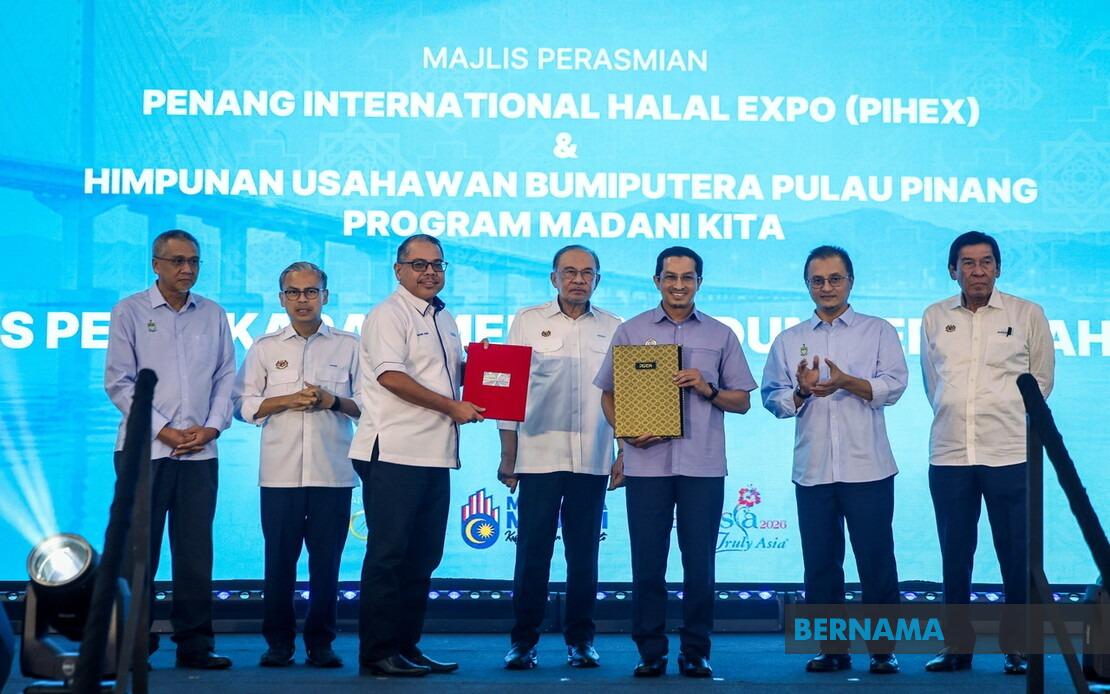
The Malaysian Communications and Multimedia Commission (MCMC) has taken a significant step in modernising public service delivery by entering into its first strategic partnership with Penang Halal International (PHI) to jointly organise the MADANI Kita Programme at the upcoming Penang International Halal Expo (PIHEX) 2026. The initiative represents a novel approach to bringing government closer to citizens, with the event held at Seberang Perai Polytechnic from late July through early August and officially launched by Prime Minister Datuk Seri Anwar Ibrahim. The programme underscores a deliberate shift towards breaking down silos within the federal bureaucracy, with Communications Minister Datuk Seri Fahmi Fadzil and MCMC chairman Tan Sri Mohamad Salim Fateh Din present at the inaugural event.
At its core, the MADANI Kita Programme operates under the coordination of the Performance Acceleration Coordination Unit (PACU) housed within the Prime Minister's Department, embodying a whole-of-government philosophy that fundamentally reimagines how citizens interact with multiple government bodies. Rather than requiring members of the public to navigate between disparate offices, agencies, and departments to fulfil their administrative needs, the programme consolidates essential services under a unified physical and digital space. This structural innovation addresses a longstanding complaint among Malaysians regarding the fragmentation and inefficiency that characterises traditional government service delivery. By congregating federal ministries and agencies alongside private sector partners, the initiative creates genuine convenience for citizens seeking information, assistance, or transactional services from authorities.
The synergy between MCMC's National Information Dissemination Centre (NADI) and PHI's halal-focused event has created unexpected mutual benefits. For the halal sector, the collaboration provides aspiring entrepreneurs and established businesses direct access to government guidance on compliance, licensing, and market expansion within an industry that continues to grow in regional importance. For government agencies, the partnership extends their reach into a concentrated audience of economically active individuals and consumers already engaged with Malaysia's halal ecosystem. This intersection of interests generates organic networking opportunities that might not materialise through traditional government communication channels.
The breadth of services available at the MADANI Kita Programme demonstrates careful curation aimed at addressing diverse public needs within a single venue. Health screenings have been integrated to support preventive healthcare access, particularly relevant given Malaysia's ongoing emphasis on wellness initiatives. The Rahmah Sales and Agro MADANI Sales offerings extend government subsidies and agricultural support directly to consumers and farmers, reducing intermediary costs and ensuring fairer market dynamics. Government agency booths facilitate direct dialogue between citizens and civil servants responsible for everything from social welfare to business licensing, enabling efficient information transfer and real-time problem-solving.
A particularly innovative dimension of the programme involves the NADI E-Sports MADANI Legend competition, which reflects evolving understanding of how younger demographics engage with public services and information. By embedding competitive gaming within a government service delivery framework, organisers acknowledge that digital natives require different touchpoints than previous generations. This inclusive approach ensures that government messaging and service awareness reach audiences across age groups and socioeconomic backgrounds. The provision of free Wi-Fi through NADI On Wheels (NOW) further dismantles digital access barriers that disproportionately affect rural and lower-income populations in Malaysia.
The collaboration carries implications beyond immediate service delivery improvements, signalling broader institutional evolution within Malaysia's public administration. MCMC's willingness to partner with non-traditional stakeholders like PHI demonstrates recognition that government cannot achieve policy objectives in isolation. The halal sector represents one of Malaysia's strategic economic pillars and a crucial component of the Malaysia MADANI development framework, which emphasises stability, prosperity, and sustainability. By integrating halal industry considerations into mainstream government service provision, authorities reinforce the sector's legitimacy and importance whilst simultaneously supporting entrepreneurs who drive economic participation across regions.
For Malaysia's federal-state governance architecture, the initiative offers a template for how national government programmes can be deployed through local events and partnerships. Penang's geographic position within Malaysia's northern economic corridor, combined with its established reputation for hosting international exhibitions, made it an ideal location for this inaugural collaboration. The success of PIHEX 2026 as a vehicle for MADANI Kita expansion suggests potential for replicating this model across other state-level events, transforming Malaysia's approach to decentralised service delivery without requiring expanded government infrastructure.
Digital inclusion emerges as a thematic priority within the broader MADANI Kita architecture. MCMC's emphasis on expanding Wi-Fi access and integrating digital services reflects understanding that Malaysia's digital divide remains a persistent challenge despite progress in urban connectivity. The inclusion of e-sports competition and digital engagement mechanisms within a government service programme normalises digital interaction with public institutions among populations that might otherwise remain disconnected from online government services. This approach directly supports Malaysia's aspirations for digital economy advancement by cultivating familiarity with government-supported digital platforms among diverse demographic segments.
Economic development implications deserve careful consideration as well. The programme's stated commitment to supporting local economic development through expanded government service access directly translates to reduced transaction costs for entrepreneurs navigating regulations, accessing financing information, or seeking market intelligence. Small and medium enterprises, which form the backbone of Malaysia's distributed economic activity, stand to benefit substantially from consolidated government support at the programme's venues. The accessibility of government agencies, agricultural support services, and digital infrastructure at PIHEX 2026 creates a business-friendly environment that potentially catalyses economic participation and formal sector engagement.
The MCMC's articulated commitment to improving public service delivery through strategic partnerships reflects a maturation of thinking within Malaysia's communications and multimedia sector. Rather than viewing service delivery as the exclusive domain of government, the commission has recognised that value creation emerges through intelligent collaboration with established private sector players possessing existing audience relationships and credibility. This partnership philosophy, when scaled across multiple MCMC initiatives and potentially replicated by other government entities, fundamentally reshapes the public-private service delivery landscape in Malaysia.
Looking forward, the success metrics for MADANI Kita at PIHEX 2026 will likely influence how subsequent government service programmes are structured and deployed. The combination of tangible services, digital engagement, economic opportunity, and inclusive accessibility creates a comprehensive model that addresses multiple policy objectives simultaneously. As Malaysia continues refining institutional mechanisms to deliver on MADANI commitments, initiatives like this MCMC-PHI collaboration demonstrate that innovation in government service delivery need not require massive resource reallocation or structural reorganisation, but rather thoughtful partnership design and venue selection that maximises reach and impact.

