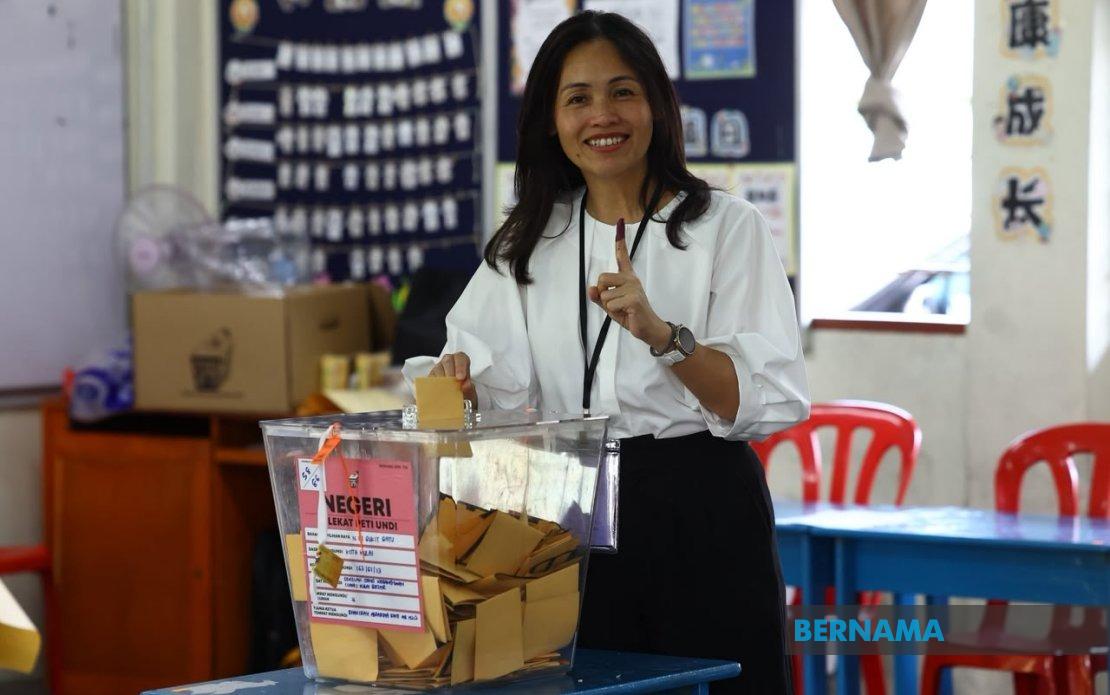
The Malaysian Communications and Multimedia Commission fielded 29 complaints centred on problematic online content during the campaign phase of the 16th Johor state election, according to Deputy Communications Minister Teo Nie Ching, who disclosed the figures after voting in Kulai on July 11. The complaints encompassed a spectrum of digital misconduct, with false information dominating the volume, followed by inflammatory speech targeting protected categories under Malaysian law.
Breaking down the complaint categories, Teo explained that 17 grievances involved the circulation of fabricated news stories designed to mislead voters. A further 11 complaints centred on hate speech content, while a single report addressed a fraudulent account used for impersonation purposes. This distribution suggests that false information, rather than direct attacks on individuals or communities, represented the primary concern flagged by the public during the electoral campaign.
The hate speech complaints warrant particular attention given Malaysia's constitutional protections for specific social categories. Of the 11 cases reported, nine touched on racial sensitivities, placing them squarely within the sensitive terrain of interethnic relations. The remaining two cases split evenly between religious content and content deemed disrespectful toward the monarchy. Collectively, these fall under what regulators term 3R violations—references to race, religion and royalty—categories that carry heightened legal and social significance in the Malaysian context.
Speaking to reporters at SJK (C) Kulai Besar, Teo appealed to the electorate to strengthen their defences against misinformation by developing what she characterised as digital literacy. She framed the challenge not merely as a regulatory or law enforcement matter but as a shared responsibility among citizens to scrutinise claims before accepting them at face value. This messaging reflects a broader recognition within Malaysia's communications establishment that technological change has outpaced traditional regulatory mechanisms, necessitating a cultural shift toward individual critical thinking.
The appeal to digital literacy carries particular weight in the Southeast Asian context, where rapid internet penetration has preceded comprehensive public education on online information verification. Malaysia, with its diverse population and historical sensitivities around communal identity, faces particular vulnerabilities to weaponised misinformation. During election campaigns—when political stakes run highest and information flows intensify—these vulnerabilities become acute. The 29 complaints logged during the Johor campaign, while seemingly modest in raw numbers, likely represent only a fraction of problematic content actually circulating online.
Teo's emphasis on voter responsibility reflects an implicit acknowledgement that the MCMC's enforcement capacity, while significant, cannot unilaterally solve the misinformation problem. The commission operates within legal and technical constraints; it cannot monitor every social media post or online forum conversation. Consequently, public awareness and individual judgment become the first line of defence. By positioning voters as active participants in information quality control rather than passive recipients of filtered content, Teo articulated a vision of collective digital citizenship.
The 16th Johor state election itself represented a substantial democratic exercise, with 172 candidates competing across 56 State Legislative Assembly seats and more than 2.6 million registered voters participating. The scale of this electoral process underscores why online content moderation becomes a critical concern. With millions of voters accessing information through digital channels, the potential amplification of false or divisive content multiplies exponentially compared to pre-internet eras.
Regional observers have increasingly scrutinised Malaysia's approach to online content governance, particularly concerning the intersection of electoral integrity and free expression. The MCMC's logged complaints suggest that the commission is functioning as an active recipient of public grievances during high-stakes political moments. However, questions persist regarding response times, enforcement effectiveness, and the application of standards across different types of content and political actors. The relatively low complaint count might reflect either successful deterrence, limited public awareness of reporting mechanisms, or variation in community tolerance for different categories of problematic content.
Beyond the MCMC's reactive complaint-handling, the Johor election period spotlighted the broader ecosystem of online information dissemination. Political parties, candidates, and independent actors continue experimenting with increasingly sophisticated targeting and messaging strategies across social media platforms. Meanwhile, artificial intelligence-generated content and deepfakes represent emerging frontiers in potential misinformation that existing complaint-based regulatory frameworks may struggle to address adequately.
Teo's comments also underscored the Malaysian government's commitment to framing online governance as a collaborative endeavour rather than purely punitive. By emphasising education and voter discernment alongside enforcement, the communications ministry positioned itself as a facilitator of digital maturity rather than merely a censor. This approach aligns with international best practices in democracies navigating the tension between open communication and information integrity.
For Malaysian voters and regional observers, the Johor election outcome will offer insights into whether targeted misinformation campaigns significantly shifted electoral results, or whether the 29 flagged incidents represented noise within a fundamentally sound information environment. The findings may also inform how Malaysian authorities calibrate their digital governance strategies heading into future federal and state elections, where stakes will likely prove even higher and information warfare potentially more sophisticated.

