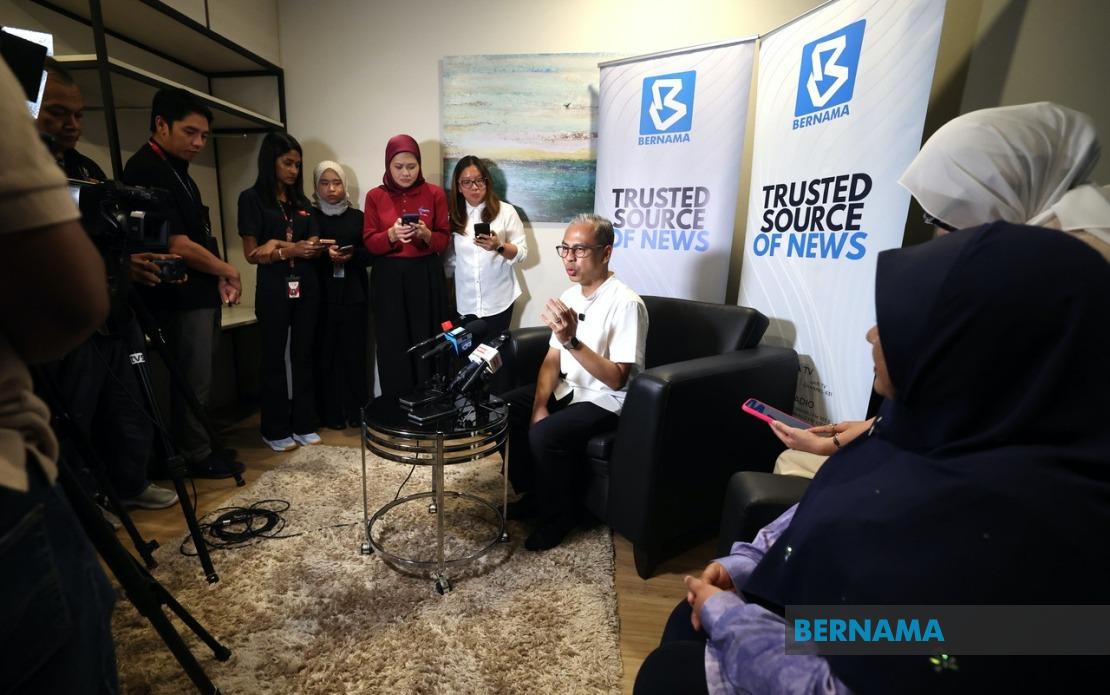
The Malaysian Communications and Multimedia Commission faces a critical mandate: deliver comprehensive 4G and 5G coverage across the forthcoming Johor Bahru-Singapore Rapid Transit System Link stations well before the cross-border rail service launches on January 1, 2027. Communications Minister Datuk Fahmi Fadzil announced this priority during a visit to Bernama's operations centre in Johor Bahru, underscoring the government's commitment to enabling a frictionless digital experience from day one of service.
The RTS Link represents a landmark infrastructure development connecting Malaysia and Singapore across a roughly four-kilometre corridor. Two stations anchor the project—one situated at Bukit Chagar in Johor Bahru on the Malaysian side and another at Woodlands North in Singapore. This compact but strategically significant link will facilitate substantial cross-border mobility, making robust telecommunications infrastructure essential for the diverse user base that will transit daily.
Fahmi signalled his intention to conduct a comprehensive inspection with MCMC officials, though he deferred specific timing to a future engagement. His directive to the commission reflects broader awareness that digital infrastructure underpins modern transport systems. Commuters increasingly depend on mobile connectivity for real-time information, digital ticketing, payments, and communications, transforming network quality from a convenience amenity into a fundamental service requirement that influences user satisfaction and operational efficiency.
The minister acknowledged that rural connectivity challenges persist across Malaysia, particularly regarding digital payment systems reliant on QR code technology. However, he expressed confidence that substantial progress will materialise through Phase Two implementation of the National Digital Network, commonly known as JENDELA. This nationwide programme targets underserved communities and represents a multi-year effort to systematically close the digital divide that has historically disadvantaged non-urban populations.
Telecommunications infrastructure development operates according to realistic timelines that often frustrate policymakers seeking rapid deployment. Tower construction typically spans 12 to 24 months, Fahmi explained, reflecting the complexity of land acquisition procedures, securing approvals from multiple local authorities, and navigating environmental assessments. These temporal constraints shape expectations around RTS Link readiness, suggesting planning must commence promptly to meet the January 2027 deadline.
The ministry employs strategic approaches to accelerate coverage expansion. Leveraging passive infrastructure—utilising existing towers and structures for antenna placement—represents a cost-efficient pathway that bypasses lengthy land acquisition procedures. However, Fadzil cautioned that even where such passive assets exist, telecommunications service providers must invest separately in equipping these locations with active transmission equipment, creating a two-stage deployment process that extends timelines and complicates coordination.
Embracing emerging technologies constitutes another pillar of the connectivity strategy. The government is actively exploring satellite internet solutions, specifically Starlink, as a complementary infrastructure layer capable of reaching areas where terrestrial tower networks remain economically unviable. This diversified technological approach acknowledges that uniform solutions prove impractical across Malaysia's geographically varied landscape, where dense urban corridors exist alongside dispersed communities in challenging terrain.
Geographic and demographic factors substantially complicate infrastructure deployment across certain Malaysian regions. Northern Johor and the east coast face particular challenges owing to terrain complexity, vast oil palm plantation zones, and scattered population patterns requiring fundamentally different connectivity strategies than densely populated urban centres. Constructing telecommunications infrastructure in these environments demands higher per-unit expenditure with lower revenue potential, necessitating either government subsidy, alternative technologies, or hybrid solutions combining multiple delivery methods.
The minister's pragmatic assessment recognises that commercial market forces alone cannot solve universal connectivity. Private telecommunications providers naturally prioritise profitable markets where dense user populations justify investment. Commercially unattractive areas demand alternative approaches, which Fahmi delegated to MCMC for detailed examination and implementation oversight. This division of responsibility reflects the regulatory framework in which MCMC operates as the technical authority responsible for spectrum allocation, infrastructure standards, and industry coordination.
For Malaysian readers and policymakers, the RTS Link project symbolises a broader aspiration: integrating digital-first infrastructure into major transport corridors that anchor regional competitiveness. Johor Bahru's geographic proximity to Singapore elevates expectations around service quality and technological sophistication. Delivering world-class mobile connectivity at RTS Link stations sends a signal about Malaysia's capability to execute modern infrastructure projects and serve as a reliable partner in regional development initiatives.
The January 2027 timeline creates a distinct but manageable planning window. With approximately two and a half years remaining, MCMC must coordinate with telecommunications service providers to ensure network architecture encompasses all station locations with sufficient capacity to handle concentrations of commuters during peak periods. This requires not merely basic coverage but optimised throughput capacity preventing network congestion that would undermine digital services.
Successful delivery of robust connectivity at RTS Link stations establishes precedent for similar future projects, potentially including additional cross-border rail connections and other major transport infrastructure. The project functions as a test case demonstrating Malaysia's willingness to integrate digital infrastructure requirements into transport planning from inception rather than retrofitting connectivity after physical completion—a marked shift from historical practice that often treated telecommunications as afterthoughts in infrastructure development.
Beyond the RTS Link itself, Fahmi's emphasis on network optimisation reflects evolving understanding that digital connectivity constitutes essential infrastructure comparable to electricity, water, and roads. Ensuring equitable access across geographic regions and user demographics increasingly influences political legitimacy and economic competitiveness. The government's multifaceted approach—combining conventional towers, passive infrastructure, satellite services, and regulatory innovation—suggests recognition that connectivity challenges demand flexible, context-appropriate solutions rather than one-size-fits-all policies.

