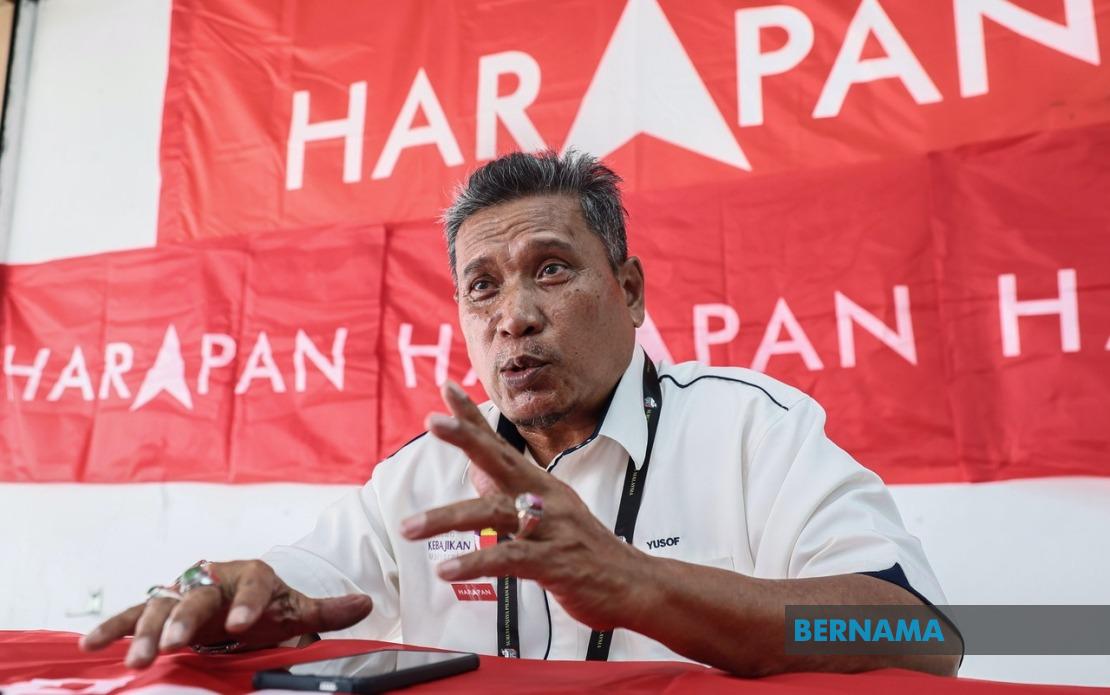
The Tenggaroh state constituency race in Johor's 16th election has gained focus with Pakatan Harapan's candidate Md Yusof Dawam presenting an ambitious development agenda centred on addressing generational challenges within the Felda settlement community. The 64-year-old retired educator argues that tackling inherited property shortages and modernizing the local economy are essential to reversing demographic decline and ensuring institutional stability in one of the state's traditional agricultural heartlands.
At the core of Md Yusof's platform lies the second-generation housing crisis affecting Felda Tenggaroh. Young adults raised in the settlement face structural barriers to independent living, as inherited family homes and available real estate remain limited. This housing squeeze has accelerated outward migration to urban centres, fragmenting settler communities and threatening the continuity of plantation operations passed down through families. Md Yusof contends that without deliberate intervention, the settlement risks becoming economically hollowed out as its working-age population relocates to Kuala Lumpur, Johor Bahru, and other cities offering greater opportunity.
To address this, Md Yusof proposes establishing a purpose-built second-generation township on 10 to 20 acres within or adjacent to Tenggaroh, with organized residential plots designed for young settlers. His reasoning extends beyond mere shelter provision. By anchoring the younger generation to the settlement through affordable, tailored housing options, he argues that family-operated oil palm plantations and other agricultural enterprises remain under local stewardship. Without such retention, inherited land and productive assets risk falling into disuse or being sold to external investors, eroding community control over local resources and economic returns.
Equally important to Md Yusof's vision is the modernization of retail and commercial activity within Felda settlements. He notes that the business landscape in Tenggaroh has remained virtually static since the 1980s, with outdated infrastructure and limited commercial facilities constraining economic dynamism. His proposal involves granting temporary land allocations for constructing contemporary shop lots that would transform the settlement into a recognizable small-town commercial centre. Rather than requiring residents to travel 70 kilometres to Mersing for basic goods and services—or relying on sporadic informal traders—a consolidated retail zone would keep spending circulating within the Felda community while providing entrepreneurial opportunities for younger residents.
The retail modernization strategy reflects a broader understanding that agricultural settlements cannot rely solely on plantation income to sustain their populations. Secondary economic sectors, including retail, services, and small-scale manufacturing, generate employment and wealth retention that offset agricultural price volatility. By creating the physical and regulatory conditions for such enterprises, Md Yusof seeks to diversify household income sources and reduce dependency on a single commodity sector—a lesson particularly relevant as global palm oil prices fluctuate and environmental pressures reshape plantation futures across Southeast Asia.
Tourism represents another underdeveloped revenue stream Md Yusof intends to mobilize. The Mersing islands—Pulau Besar, Pulau Tinggi, and Pulau Aur—have attracted international film and television productions, yet local youth have captured minimal economic benefit. Production companies typically engage external contractors for logistics, catering, and hospitality services, bypassing the local labour market. Md Yusof argues that fostering locally-owned tourism enterprises and sea transport operators would enable residents to directly serve visiting filmmakers, tourists, and related industries. Such opportunities could reduce youth unemployment in coastal areas while leveraging existing natural assets without requiring massive infrastructure investment.
Md Yusof's campaign approach emphasizes direct community engagement over formal rallies. As a longtime Mersing resident with 16 years of teaching experience in Felda Nitar, he has cultivated relationships across local institutions and extended kinship networks. His strategy of small-group meetings allows him to listen to specific grievances and tailor messaging to different demographic segments—a tactic particularly effective in semi-rural constituencies where personal reputation and demonstrated understanding of settler concerns carry substantial electoral weight. His educational background suggests capacity to navigate complex policy issues affecting the settlement, from land administration to agricultural subsidies to education funding.
The Tenggaroh contest occurs within the broader 16th Johor state election framework, in which 172 candidates compete for 56 seats on July 11. This election represents a critical test of Pakatan Harapan's standing in the southern heartland, where urban and semi-rural constituencies show diverging political preferences. Johor has historically been a Barisan Nasional stronghold, but recent urban swings toward Pakatan Harapan in federal elections indicate potential weakness in formerly secure state seats. Tenggaroh's composition—a mix of plantation workers, small-town traders, and landowners—reflects the transitional communities that could determine overall state outcomes.
For Malaysian policymakers and observers, Md Yusof's proposals highlight unresolved structural issues within Felda settlements that span multiple political cycles. The scheme's original model, designed in the 1950s-1970s for first-generation adult settlers, has not adequately evolved to accommodate second and third-generation land inheritance, housing needs, and economic diversification. Similar pressures affect Felda schemes nationwide, from Perlis to Pahang, suggesting that whichever coalition governs Johor will need to confront these systemic challenges. Md Yusof's concrete proposals—dedicated townships, commercial zone designation, tourism enterprise support—reflect pragmatic approaches that transcend narrow partisan positioning and align with regional development priorities.
The campaign also underscores the importance of addressing rural-urban migration patterns that shape electoral demographics. As young people leave Felda settlements for urban employment, rural constituencies experience demographic aging and electoral depolarization. Political parties that offer credible mechanisms for youth retention—through housing, employment, and entrepreneurial opportunity—may gain competitive advantage in constituencies currently assumed safe or leaning toward rival camps. Tenggaroh's outcome will signal whether development-focused campaigns centred on tangible local benefits resonate with voters tired of broad slogans and unfulfilled promises.
Md Yusof's candidacy also reflects broader trends in Malaysian electoral politics toward fielding candidates with deep local roots and professional credentials. Rather than parachuting external party loyalists into constituencies, Pakatan Harapan has positioned a longtime educator and community participant who can credibly speak to Tenggaroh's specific circumstances. This localization of candidate selection, if sustained, may enhance party legitimacy in semi-rural and plantation areas where suspicion of distant political elites remains high. The extent to which such locally-grounded campaigns translate into electoral gains will become clear as polling proceeds across Johor's diverse constituencies on July 11.

