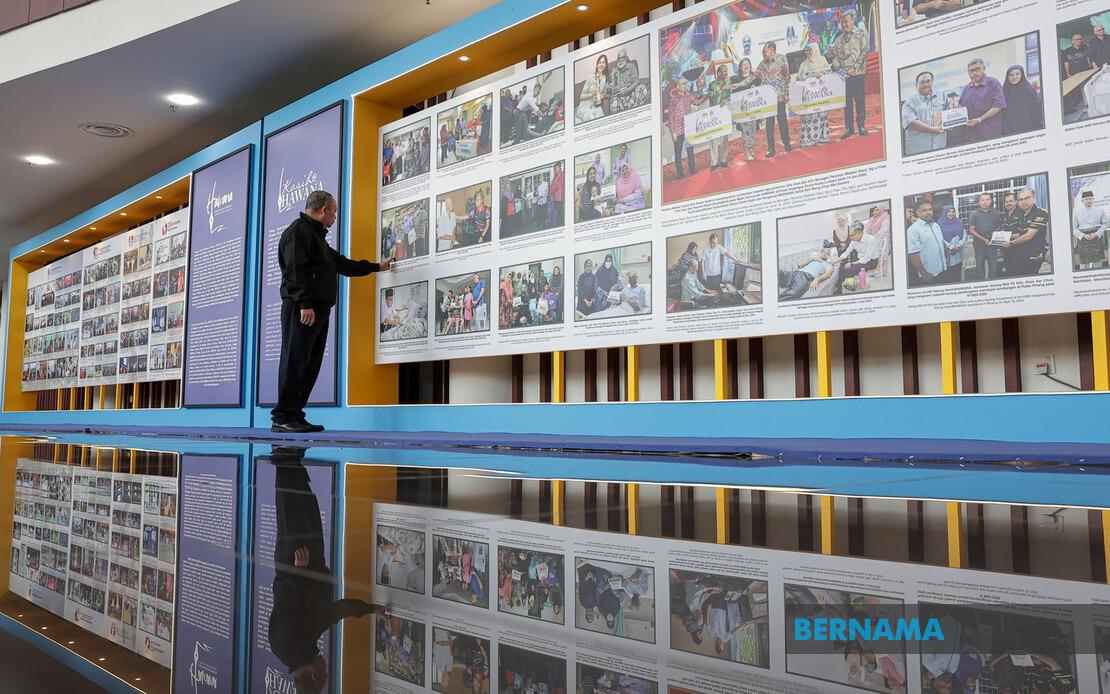
The journalism fraternity has gathered in Butterworth ahead of Malaysia's National Journalists' Day (HAWANA) 2026, with a packed schedule of industry-focused programmes designed to reinvigorate professionalism and tackle the existential challenges bearing down on newsrooms across the region. The week-long convergence represents a significant moment for the media sector, bringing together thought leaders, editors and practitioners to grapple with the rapid technological disruption reshaping how news is gathered, reported and consumed.
Central to the proceedings is a thematic commitment to media integrity and credibility at a time when public trust in journalism faces mounting pressure from misinformation, algorithmic distortion and the fragmentation of audience attention. Communications Minister Datuk Fahmi Fadzil officiated the Malaysia Media Retreat 2.0, a gathering organised by the Malaysian Federation of Media Clubs (GKMM) that convened representatives from 15 media clubs spanning the country. This retreat served a dual purpose: strengthening institutional bonds within the federation whilst simultaneously providing a candid assessment of GKMM's development trajectory since its formal establishment on October 24, 2022.
According to GKMM president Mohamad Fauzi Ishak, the retreat functioned as a reflective platform ahead of the federation's third annual general meeting, which notably will proceed without contested elections. The gathering offered an opportunity to evaluate the federation's achievements and chart its direction in an increasingly complex media environment. The symbolic participation of Bernama Chief Executive Officer Datin Paduka Nur-ul Afida Kamaludin and Editor-in-Chief Arul Rajoo Durar Raj underscored the national news agency's institutional stake in supporting professional development across the industry.
One of the most substantive discussions took place at Han Chiang University College of Communication, where the Malaysian Press Institute (MPI) convened a town hall session examining a provocative question: "2035: Will Journalists Still Exist?" This framing captures the profession's anxieties about its sustainability in a landscape increasingly dominated by artificial intelligence, rapid digitalisation and shifting audience consumption behaviours. The moderator bringing expertise to this discussion was MPI president Datuk Yong Soo Heong, joined by senior editorial leadership from New Straits Times Press (NSTP), including deputy group managing editor Farrah Naz Abd Karim, and Media Prima's head of news and current affairs Azhari Muhidin.
The topic itself reflects legitimate concerns reverberating through newsrooms globally and across Southeast Asia. Newsroom employment figures have contracted dramatically over the past decade as digital disruption redefined media economics, and the emergence of generative AI tools promises further labour displacement in research, writing and editorial production. Yet the framing as a question rather than a statement suggests the industry remains determined to interrogate rather than passively accept this trajectory. For Malaysian practitioners, such conversations carry particular resonance as the nation navigates tensions between regulatory frameworks protecting press freedom and the commercial imperatives driving media consolidation.
The main HAWANA 2026 celebration scheduled for tomorrow at PICCA @ Butterworth Arena will draw approximately one thousand media professionals from both domestic and international backgrounds. Prime Minister Datuk Seri Anwar Ibrahim will officially open proceedings, lending the occasion significant government visibility and implicitly endorsing the profession's centrality to democratic governance. The thematic emphasis on "Media Integrity, Foundation of Credibility" suggests the government recognises that sustainable journalism depends on public confidence and institutional reputation building.
This celebration, organised collaboratively by the Communications Ministry with Bernama serving as implementing agency, represents Malaysia's preeminent formal recognition of media practitioners' contributions. The timing and scale reflect an institutional commitment to professionalising journalism standards at a moment when economic pressures threaten to corrode the resource bases supporting investigative reporting and regional coverage. For Southeast Asian media ecology, where regulatory pressures and advertising economics create precarious conditions for independent newsrooms, such national platforms carry outsized importance in affirming journalism's legitimacy.
Complementing the formal proceedings, the RIUH @ HAWANA Carnival occupying PICCA Convention Centre @ Butterworth Arena for three days promises to inject cultural vitality into the celebration. These carnival components typically blend professional networking with public engagement, offering journalists informal spaces to exchange insights whilst simultaneously opening the industry to broader public participation and awareness. Such visibility matters particularly in Malaysia, where media literacy initiatives and public understanding of journalistic work processes remain underdeveloped relative to many developed democracies.
The constellation of programmes spanning the Malaysian Media Retreat, the Malaysian Press Institute's forward-looking symposium, the Malaysian Media Council's engagement sessions, and the HAWANA main event itself suggests a sector attempting comprehensive institutional renewal. This multi-pronged approach acknowledges that strengthening journalism's future requires simultaneous action across professional networking, intellectual reflection on industry transformation, regulatory engagement, and public validation. For Malaysia and the broader Southeast Asian region, where state capacity to support journalism infrastructure remains limited, such industry-led initiatives assume heightened importance.
Moreover, the particular focus on artificial intelligence and digitalisation at this juncture reflects global urgency around these themes. News organisations across Malaysia and the region are beginning deploying AI tools for newsroom automation, audience analytics and content personalisation, yet systematic training in responsible AI use remains sparse. By bringing these conversations into a prestigious national gathering, the industry signals its determination to shape technological integration proactively rather than reactively managing disruption after implementation.
The regional dimension deserves emphasis as well. Media practitioners from across the country assembling in Penang creates opportunities for journalists from smaller markets and regional outlets to engage with peers from major urban centres and national organisations. This cross-pollination strengthens professional networks extending beyond Kuala Lumpur and supports the professional infrastructure undergirding journalism across Malaysia's diverse geographies and linguistic communities.
Ultimately, HAWANA 2026 frames journalism not as a profession in terminal decline but as an industry engaged in deliberate transformation. The substantive engagement with artificial intelligence, digitalisation and changing audience behaviour demonstrates intellectual seriousness about the profession's evolution. Whether these conversations translate into concrete institutional support, training investment, and ethical frameworks for responsible innovation remains an open question that will substantially determine journalism's viability across Malaysia and Southeast Asia in the coming years.

