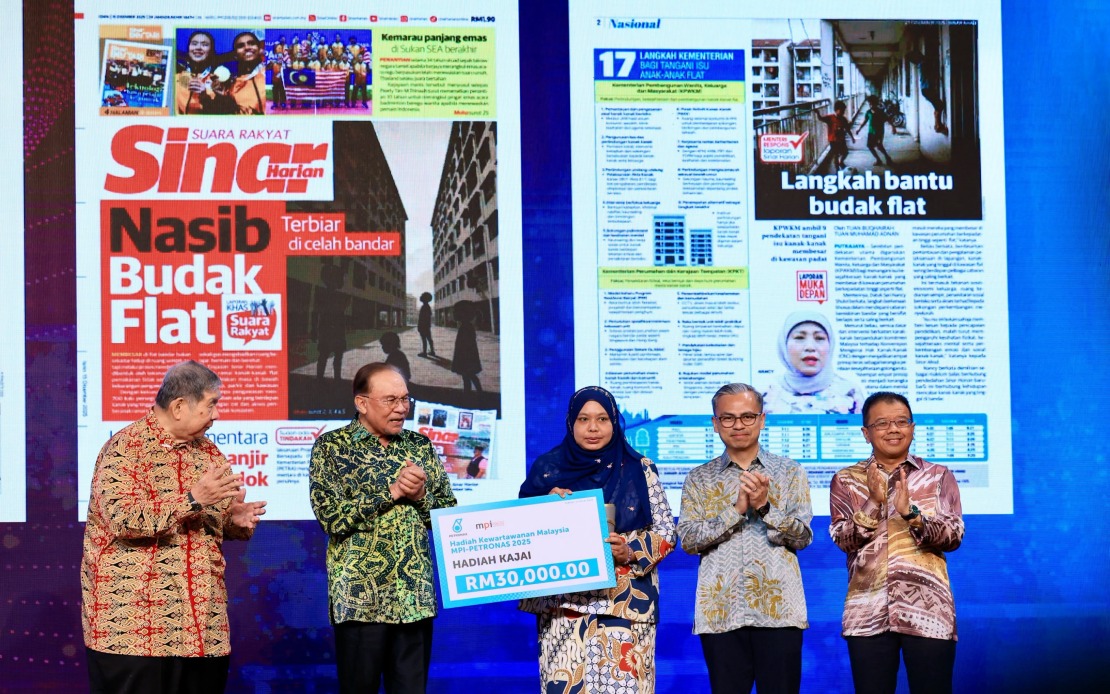
Communications Minister Datuk Seri Fahmi Fadzil has underscored the fundamental importance of maintaining ethical standards, editorial independence, and responsible reporting as cornerstones of a functioning democracy and an informed citizenry. His remarks, made at a high-profile gathering of Malaysia's media establishment, reflect growing concern about the media landscape's health amid escalating challenges to information integrity across the region.
Fahmi's message came during the Malaysian Journalists' Night (MWM) 2026, an occasion that brought together approximately 1,000 representatives from newsrooms, government institutions, corporate entities, and universities. The event, which Prime Minister Datuk Seri Anwar Ibrahim attended alongside the Communications Minister, served as a platform to celebrate journalistic excellence and honour the profession's contributions to public discourse. The gathering underscored the government's acknowledgment of media's pivotal role in the democratic process, signalling official recognition of journalism as essential infrastructure for societal development.
The Minister specifically highlighted how the contemporary information environment has fundamentally altered the challenges facing responsible journalism. The exponential growth in data circulation, combined with the proliferation of deliberately false narratives and coordinated disinformation campaigns, has created unprecedented pressures on traditional news organisations. Fahmi's emphasis on these evolving threats reflects a reality that extends far beyond Malaysia's borders—Southeast Asian newsrooms across the region grapple daily with sophisticated campaigns designed to undermine public trust in legitimate institutions and factual reporting.
Fahmi's commendation of media practitioners for their ongoing commitment to truth-telling carries particular weight in a moment when journalistic institutions worldwide face declining trust, economic pressures, and sometimes direct government hostility. His appeal for continued integrity and truthful reporting, framed explicitly in the service of the nation and its people, positions journalism not merely as a commercial enterprise but as a civic responsibility. This framing matters because it reconnects media work to broader democratic values at a time when many outlets face pressure to prioritise engagement metrics or partisan narratives over substantive reporting.
The Malaysian Journalists' Night functions as an annual convening point for the industry and its stakeholders, organised by the Malaysian Press Institute (MPI). Beyond ceremonial recognition, these gatherings serve practical functions: they reinforce professional networks, establish shared standards, and create spaces where journalists, government officials, and business leaders can engage in constructive dialogue. The inclusion of the MPI-PETRONAS Malaysian Journalism Awards 2025 within the event's programme demonstrates how professional recognition remains a tool for incentivising and celebrating quality journalism.
The awards programme itself carries significance for newsroom culture. By publicly acknowledging excellence in journalism and honouring outstanding contributions to the profession, the Awards system reinforces the profession's standards and provides tangible recognition for work that frequently goes underappreciated. Such mechanisms become especially important in developing media markets where journalist salaries have stagnated and professional advancement opportunities remain limited. Recognition from peers and institutional acknowledgment can sustain professionals through periods when economic constraints threaten newsroom stability.
The breadth of attendance—spanning government representatives, corporate organisations, and academic institutions—reflects journalism's interconnectedness with multiple sectors of society. Government agencies depend on media to disseminate public information and maintain institutional accountability. Corporations navigate regulatory and reputational landscapes partially shaped by media coverage. Universities train future journalists and contribute research on media systems and information integrity. This ecosystem, when functioning well, creates mutual reinforcement of professional standards and ethical practice.
Malaysia's media landscape occupies a distinctive position within Southeast Asia. The country maintains a relatively pluralistic press, with competing outlets representing different ownership structures and editorial perspectives. However, concentrated media ownership, regulatory frameworks that constrain certain types of reporting, and occasional tensions between government and critical journalism remain realities. Fahmi's emphasis on independence takes on added significance in this context, as it signals official commitment to editorial autonomy as essential rather than optional.
The challenge of misinformation and fake news, which Fahmi identified as particularly acute, extends across the entire region. Malaysia has experienced high-profile instances of coordinated disinformation campaigns affecting elections, public health messaging, and communal relations. The COVID-19 pandemic demonstrated both the dangers of unchecked false information and the difficulties professional journalists face in competing against viral misinformation on social platforms. Fahmi's recognition of these realities suggests policy conversations happening within government about media support, digital literacy, and platform accountability.
The Communications Minister's appeal for continued commitment to journalistic integrity arrives at a moment when media organisations across Southeast Asia confront questions about sustainability and relevance. Digital disruption has fundamentally altered advertising revenue models that historically supported newsroom operations. Younger audiences increasingly consume news through social media platforms rather than traditional outlets. Many regional journalists report feeling exhausted by the combination of economic pressures, increased workload as newsrooms shrink, and exposure to harassment and threats online. In this context, public recognition from senior government figures carries practical importance—it can influence policy support, shape how institutions prioritise media engagement, and affirm professional identity during difficult periods.
The explicit framing of media duty as serving both people and nation reflects a conception of journalism that transcends commercial interests. This nationalist inflection, while potentially subject to varying interpretations, suggests understanding that a healthy media system contributes to national development beyond immediate profit generation. For Malaysia specifically, this frames journalism as integral to managing the country's complex multicultural society, where accurate information and trustworthy reporting become tools for community cohesion.
Looking forward, Fahmi's remarks likely signal government thinking about media policy directions. The emphasis on ethics, independence, and responsibility may presage regulatory or support initiatives designed to strengthen professional journalism while discouraging harmful misinformation. It also suggests awareness that media health cannot be treated as a purely market-driven phenomenon—that some government engagement with media institutions, through recognition, support for press freedom, and backing for professional standards, serves legitimate public interest goals.
The Malaysian Journalists' Night 2026 event ultimately represents a moment of institutional reflection on media's role in democratic life. By convening stakeholders, awarding excellence, and allowing senior government figures to affirm journalism's importance, the occasion creates space for recommitment to professional standards. Whether such affirmations translate into concrete policy support, stronger legal protections for journalists, or improved economic sustainability for newsrooms remains to be seen—but the public commitment to media ethics and independence provides at least a baseline expectation that Malaysian institutions recognise these values as non-negotiable components of healthy democracy.

