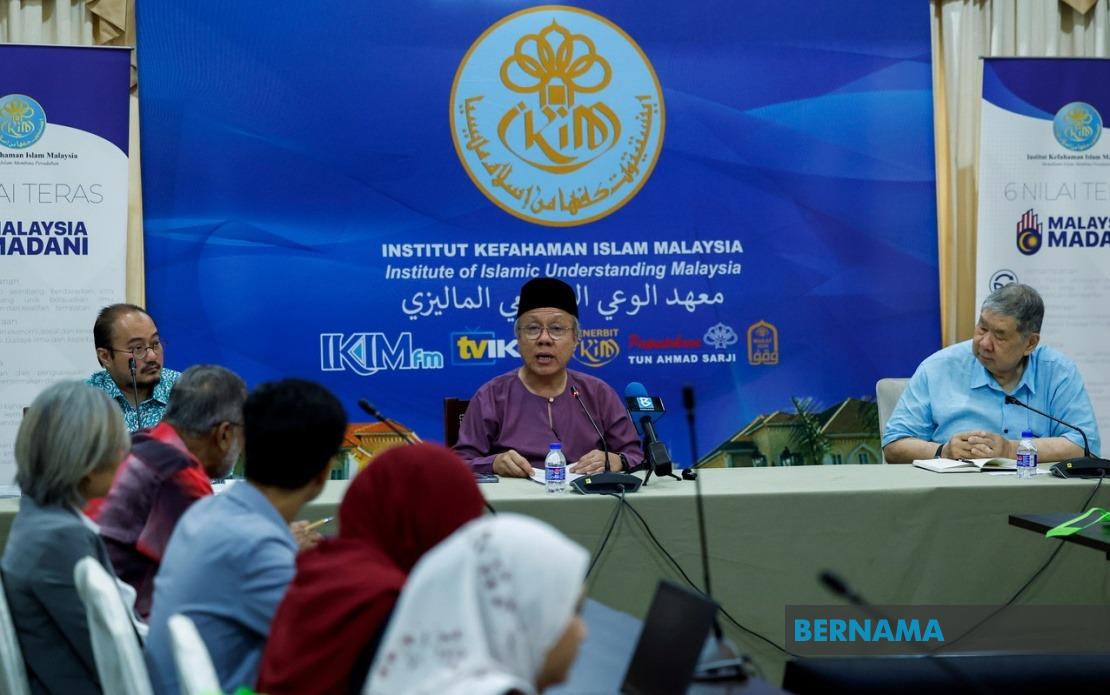
Three major Malaysian institutions joined forces on Wednesday to equip journalists with authoritative information about the ongoing Tabung Haji Royal Commission of Inquiry, recognising that media understanding of the complex issue directly shapes public perception. The Malaysian Press Institute, the Institute of Islamic Understanding Malaysia, and Tabung Haji itself convened more than two dozen media practitioners at IKIM's Kuala Lumpur headquarters for an intensive closed-door session designed to cut through misinformation and clarify the pilgrimage fund's recovery efforts.
The collaborative approach reflects growing acknowledgement among institutional leaders that the RCI process, while necessary for accountability, risks being overshadowed by rumour and misunderstanding if journalists lack reliable foundational knowledge. Tabung Haji Group Managing Director and Chief Executive Officer Mustakim Mohamad used nearly two hours of the programme to brief attendees on the inquiry's scope and progress, fielding detailed questions that ranged across governance failures, remedial measures, and the institution's pathway forward. This direct engagement between senior management and the fourth estate underscores the fund's determination to navigate its credibility crisis through transparency rather than media avoidance.
MPI President Datuk Yong Soo Heong positioned the initiative as essential infrastructure for responsible journalism on matters of public significance. He framed the briefing as providing journalists with the accurate, granular information necessary to report comprehensively on Tabung Haji's restoration efforts and its commitment to reinstating depositor and investor confidence. The MPI leader saw particular value in the partnership, noting it exemplified how professional media bodies, religious institutions, and financial organisations could collaborate constructively around shared interests in factual discourse. His remarks implied recognition that financial institutions facing public scandal require media that understands their perspective, even as journalists maintain their watchdog responsibilities.
The dialogue also served a preventive function for future coverage. Yong flagged the possibility of expanding the model across Malaysia through similar state-level sessions, suggesting the three organisations recognised that media literacy initiatives could become ongoing mechanisms for managing complex institutional narratives. Such programmes offer journalists deeper contextual understanding than standard press releases while allowing institutions to communicate nuance that headline-driven coverage often loses. In the Malaysian media environment, where regional and local outlets frequently follow national narratives, decentralised briefing sessions could meaningfully shape how the RCI develops across print, broadcast, and digital platforms.
IOK Director-General Associate Professor Datuk Dr Mohamed Azam Mohamed Adil articulated a strategic reframing of the RCI narrative, explicitly urging journalists to resist sectarian or communal interpretations of the Tabung Haji crisis. His intervention carried institutional weight, as IKIM's mandate spans Islamic scholarship and interfaith understanding. By emphasising that the RCI addresses management integrity and financial accountability rather than religious or racial matters, Mohamed Azam sought to insulate the inquiry from the identity-inflected polarisation that often characterises Malaysian institutional scandals. This rhetorical move is significant in a political context where government agencies and religious bodies frequently become proxies in broader communal disputes.
At its core, Mohamed Azam's intervention centred on trust as both the problem and the solution. Tabung Haji's fundamental legitimacy depends on Muslim depositors viewing it as a scrupulous custodian of funds saved for the Hajj pilgrimage, one of Islam's five pillars. The RCI itself emerged from evidence that this trust had been violated through mismanagement, leaving millions of Malaysian Muslims with diminished savings and justified grievances. The literacy programme implicitly acknowledged that restoring this trust requires not just managerial reform but also media narratives that honestly report accountability measures while avoiding sensationalism that deepens public alienation from the institution.
Journalists attending the session occupied a unique position as intermediaries between Tabung Haji's recovery efforts and a sceptical public. Their coverage will substantially determine whether ordinary Malaysians perceive the RCI as genuine institutional self-correction or merely damage control theatre. The briefing offered them technical details, organisational context, and leadership perspectives that might otherwise require months of independent investigation. Yet it also implicitly invited them to become stakeholders in the fund's rehabilitation narrative, a dynamic that raises questions about editorial independence when institutions directly cultivate media understanding through selective information provision.
The Tabung Haji crisis itself emerged from decades of inadequate financial oversight, with the fund investing depositors' savings in property ventures and corporate investments that generated losses rather than returns. These failures devastated millions of Malaysian families who had scrimped to save for pilgrimage, their lifetime spiritual aspiration deferred or diminished. The RCI aims to investigate these lapses and propose structural reforms preventing recurrence. Media coverage has oscillated between empathetic reporting on affected depositors and technical analysis of the inquiry's findings. Initiatives like Wednesday's briefing risk tilting this balance toward institutional perspectives if journalists lack parallel engagement with victim communities and civil society critics.
The programme's emphasis on accuracy and public confidence reflects legitimate institutional interests but also demonstrates how modern governance institutions manage their reputational crisis through preemptive media engagement. Tabung Haji, like other Malaysian institutions facing public scandal, must navigate between accountability and rehabilitation. The RCI process itself represents a formal accountability mechanism. Parallel media literacy initiatives represent softer persuasion, building sympathetic understanding among journalists without the coercive force of legal proceedings. This two-track approach—formal inquiry plus informal institutional narrative management—now characterises how major Malaysian bodies attempt to recover legitimacy.
For journalists themselves, such programmes offer genuine value in understanding complex institutional and financial matters. Malaysian media literacy around Islamic finance, pension systems, and investment governance remains underdeveloped, leaving reporters vulnerable to either uncritical institutional messaging or oversimplified populist narratives. Substantive briefings from qualified institutional leaders can elevate journalistic capacity significantly. The risk lies in allowing improved understanding to shade into sympathy, where journalists transition from explaining institutions fairly to advocating for them.
The collaboration between MPI, IKIM, and Tabung Haji also reflects emerging Malaysian norms around proactive institutional communication. Rather than awaiting journalistic investigation or public demand for explanation, major bodies now initiate dialogue with media practitioners, seeking to shape the informational environment upstream. This represents professional media relations rather than censorship or propaganda, yet it substantially influences which narratives circulate widely and which remain marginal. Future Tabung Haji coverage will likely reflect insights journalists gained Wednesday, potentially offering fuller institutional perspective but requiring careful editorial maintenance of critical distance.

