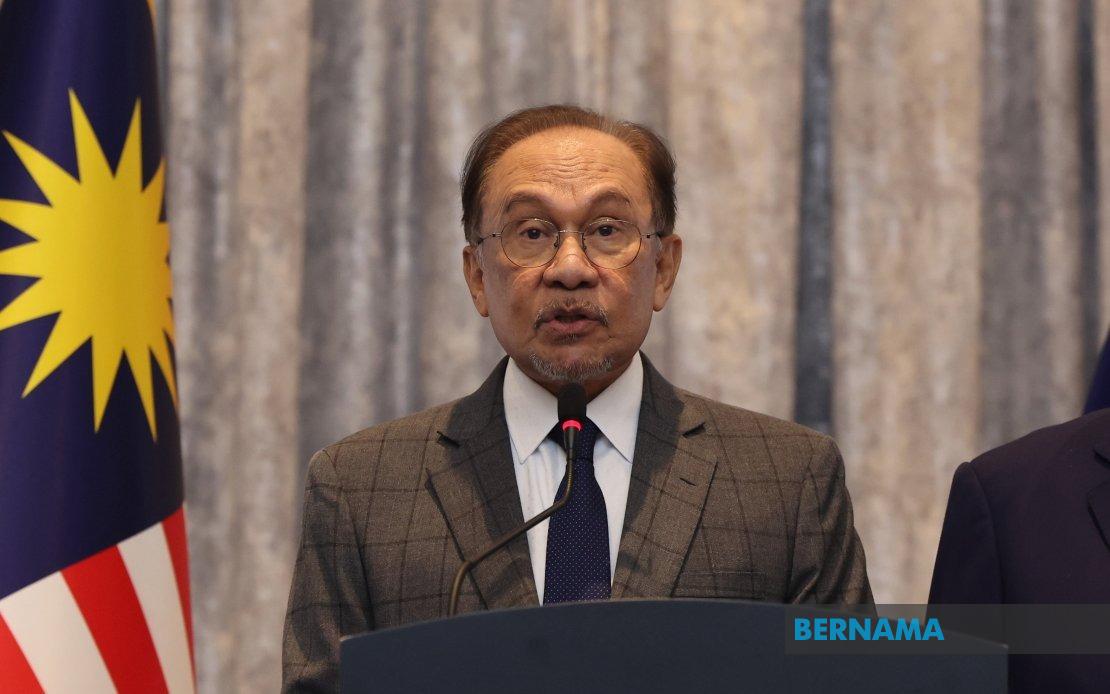
Prime Minister Datuk Seri Anwar Ibrahim delivered a pointed message to Malaysia's media fraternity this week, calling for a careful navigation of the digital transformation sweeping through newsrooms and broadcasting stations across the nation. Speaking at the Malaysian Press Night 2025 ceremony held in Kuala Lumpur, Anwar stressed that while technological progress offers undeniable benefits, the industry cannot afford to abandon the foundational principles that define responsible journalism and protect national interests. His remarks underscored a growing concern in Southeast Asia about how rapid digitalization—driven by artificial intelligence, big data analytics, and platform algorithms—threatens to reshape information landscapes in ways that may not always serve local communities or democratic institutions.
The prime minister's intervention reveals a deeper anxiety about media sovereignty in an interconnected world. He specifically referenced how Western media conglomerates have historically leveraged their technological and financial dominance to establish global narrative frameworks that often reflect Western values and geopolitical priorities rather than the concerns of developing nations. This historical pattern, Anwar suggested, now faces a modern parallel in which technological companies—whether based in the West or elsewhere—wield unprecedented influence over which stories reach audiences, how they are contextualized, and what editorial perspectives dominate public discourse. For Malaysian policymakers, this represents a real challenge: how to permit innovation and maintain competitive media industries while guarding against the subtle but powerful ways that technological systems can shape culture and ideology.
Central to Anwar's argument was the concept of the "captive mind," a phrase traditionally associated with external political or colonial subjugation of thought. The prime minister reframed this concept for the digital age, suggesting that today's captive mind emerges not from overt political control but from technological systems designed and deployed in ways that marginalize local values, suppress indigenous perspectives, and promote worldviews misaligned with the cultural and spiritual foundations of Malaysian society. This formulation carries significant implications for Southeast Asia more broadly, where many nations grapple with the tension between embracing the efficiencies and reach offered by global technology platforms and protecting distinct cultural identities from homogenization. Anwar's warning thus extends beyond media organizations themselves to encompass the broader question of technological governance and digital sovereignty.
The government's role in this ecosystem, according to the prime minister, involves both support and vigilance. He specifically credited Communications Minister Datuk Seri Fahmi Fadzil and the Malaysian Communications and Multimedia Commission with responsibility for fostering an environment in which media can innovate while maintaining ethical guardrails. This framing suggests that Malaysia's approach to media regulation will increasingly focus not on restricting technology but on ensuring that technological adoption occurs within a framework of shared values. For Malaysian newsrooms, this implies an expectation that editorial teams actively grapple with questions about algorithmic bias, the psychological impacts of engagement-driven content curation, and the concentration of power among a handful of technology firms—issues that have received relatively limited public attention in the region compared to concerns about traditional press freedom or government censorship.
Anwar's address also reflected an implicit critique of columnists and opinion leaders who he believes have underestimated the cultural and ethical dimensions of technological change. By directing specific attention to the "issue" deserving greater scrutiny from commentary writers, the prime minister signaled that Malaysia's intellectual class—its writers, academics, and media voices—bear responsibility for elevating public understanding of how technology intersects with democracy, identity, and autonomy. This appeal suggests growing impatience with purely technical discussions about digital transformation and a desire for more humanistic, values-centered analysis of how societies ought to relate to emerging technologies. For Malaysian readers accustomed to more straightforward political discourse, this represents a notable shift toward more abstract but ultimately consequential questions about civilizational direction.
The Malaysian Communications and Multimedia Commission and the Malaysian Media Council emerged from Anwar's remarks as institutional partners in this broader effort to ensure that technological progress serves rather than subverts national interests. Their role encompasses not merely reacting to problems after they emerge but proactively shaping media development trajectories. This positioning reflects a recognition that technological change cannot be effectively managed through reactive regulation alone; instead, it requires sustained institutional engagement with emerging platforms, algorithms, and business models to understand their implications before they become entrenched. For Southeast Asian media regulators watching Malaysia's approach, the emphasis on institutional coordination and forward-looking policy represents a potential model for balancing innovation with governance.
Anwar's emphasis on maintaining "press freedom and democracy" while simultaneously promoting values-conscious technology adoption highlights a central paradox confronting contemporary media systems. The prime minister did not advocate restricting journalistic independence or limiting freedom of expression; rather, he suggested that such freedoms carry attendant responsibilities to reflect on the values embedded in the technical systems through which journalism now operates. This distinction proves crucial for understanding Malaysia's media policy direction, which appears to resist both heavy-handed censorship and unfettered technological adoption in favor of what might be termed "responsible innovation." The practical implications of this approach remain to be fully articulated, but it suggests newsrooms will increasingly face expectations to document and justify their technological choices as deliberate editorial decisions rather than accepting platforms and algorithms as neutral infrastructure.
The setting for these remarks—a gathering of media leadership, government officials, and industry stakeholders—carried its own significance. The Malaysian Press Night and the Malaysian Press Institute-PETRONAS Journalism Awards brought together the institutional ecosystem responsible for shaping journalism's future. By addressing this constituency directly, Anwar signaled that media transformation represents a topic of national importance worthy of prime ministerial attention and guidance. For an industry sometimes marginalized in broader policy discussions, this public validation of media's centrality to national development carries both opportunity and pressure. Media organizations now confront heightened expectations to demonstrate that they are grappling seriously with the ethical and strategic dimensions of technological change rather than passively adopting new tools in pursuit of efficiency or competitive advantage.
The specific mention of appreciation for journalists' commitment to providing "constructive criticism and recommendations" alongside news coverage reveals assumptions about media's expanded role in contemporary governance. The prime minister appeared to be casting journalists not merely as information intermediaries but as active participants in national problem-solving and policy development. This framing elevates the stakes of how media engage with technology, suggesting that their choices about which innovations to adopt, which to resist, and how to implement them carry consequences far beyond individual newsrooms. For Malaysian journalists operating in an environment of sometimes fraught relations between government and press, this invitation to participate in shaping national direction offers both opportunity for greater influence and risk of uncomfortable compromises.
Looking forward, Anwar's remarks suggest Malaysia will likely pursue a middle path between Western models of largely deregulated media technology adoption and more restrictive approaches common in some regional contexts. This approach recognizes that technological advancement offers genuine benefits for journalism's reach, efficiency, and capability to serve the public while maintaining that such advancement must occur in conversation with ethical frameworks, cultural values, and national interests. For Malaysian media practitioners, this implies an ongoing obligation to think critically about their technological choices and to articulate how innovations serve journalism's fundamental purposes rather than merely competing for audience attention or operational convenience. As Southeast Asia navigates its own media futures, Malaysia's emphasis on values-conscious technological adoption may offer lessons for neighboring countries wrestling with similar tensions between innovation and identity, freedom and sovereignty.

