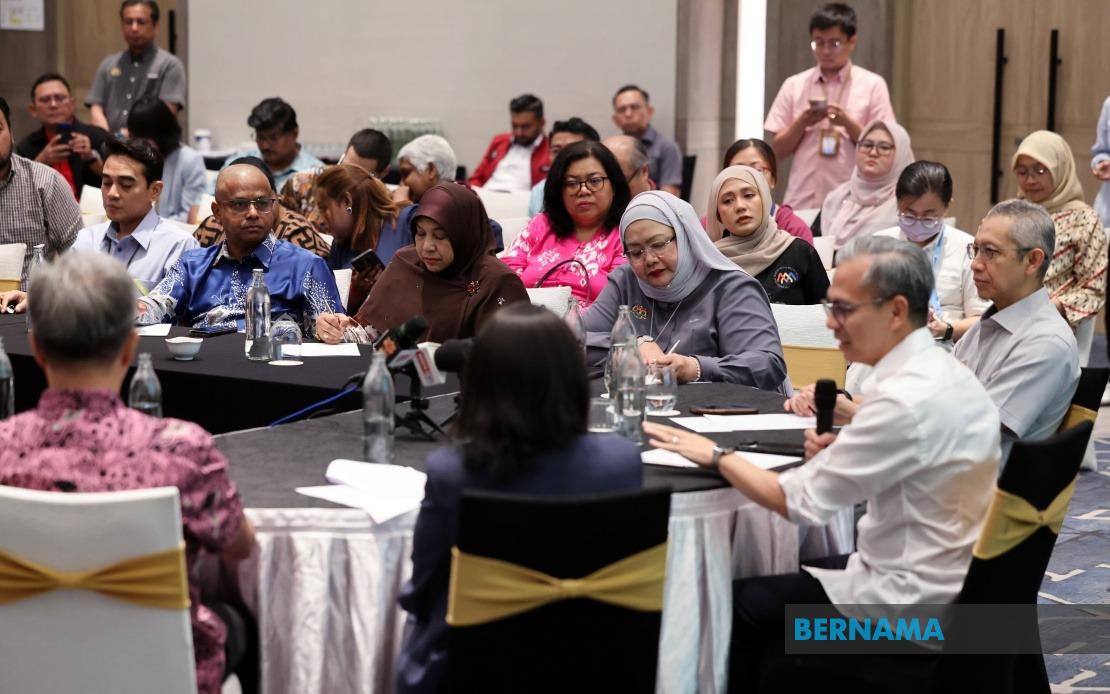
Media practitioners, guests and strategic partners from across Malaysia and the broader ASEAN region have started converging at the PICCA@Arena Butterworth Convention Centre for the National Journalists' Day (HAWANA) 2026 Summit, marking one of the region's most significant gatherings for media professionals. The influx of attendees underscores the importance of this biennial event as a focal point for journalism discourse and industry networking in Southeast Asia.
The summit's opening phase revealed delegates exploring the convention centre's exhibition booths and a specially curated photo gallery, with many taking the opportunity to reconnect with peers from different newsrooms and media organisations. For many journalists juggling demanding editorial schedules, these informal networking moments provide rare opportunities to forge professional relationships and exchange experiences across regional borders, reflecting the increasingly interconnected nature of Southeast Asian media landscapes.
The presence of representatives from ASEAN member states at HAWANA 2026 demonstrates the summit's expanding regional significance. Rather than remaining a purely Malaysian event, it has evolved into a platform where media professionals from neighbouring countries engage in collaborative dialogue and share best practices. This cross-border participation strengthens the fabric of journalistic professionalism throughout the region and signals recognition that media challenges—ranging from misinformation to technological disruption—require collective regional responses rather than isolated national solutions.
Under the thematic banner of 'Media Integrity Strengthens Credibility', the 2026 summit addresses one of journalism's most pressing contemporary challenges. As audiences worldwide grapple with distinguishing reliable reporting from deliberately fabricated content, Malaysia's decision to centre this theme reflects a broader Southeast Asian concern about maintaining public trust in news institutions. The emphasis on integrity positioning journalistic credibility as not merely a professional virtue but as foundational to functioning democracies.
Prime Minister Datuk Seri Anwar Ibrahim's scheduled officiation lends considerable political weight to the proceedings. His presence signals governmental recognition of journalism's essential role in society and demonstrates executive-level commitment to supporting media professionals. For Malaysia's journalism community, such high-level patronage validates their professional standing and suggests receptiveness to industry concerns at the highest policy levels, though observers note that such support must translate into protective legislation and resource allocation.
The Ministry of Communications' sponsorship of HAWANA, implemented through the Malaysian National News Agency (Bernama), positions the summit within Malaysia's official communication infrastructure. Bernama's role as implementing agency ensures the event maintains connections to the country's official information apparatus while retaining sufficient autonomy to facilitate genuine professional discussion. This arrangement reflects Malaysia's approach to media governance, where state institutions provide infrastructure and support while maintaining separation from editorial independence.
With approximately 1,000 media practitioners anticipated to attend, the summit will constitute one of the largest single gatherings of journalists in the region. This scale enables substantive programming addressing industry-wide challenges while creating networking ecosystems where journalists from print, broadcast and digital platforms can identify common ground. Such congregations prove particularly valuable in Southeast Asia, where media ecosystems remain fragmented across multiple platforms, languages and business models.
The recognition framework embedded in HAWANA's purpose—honouring the dedication, professionalism and contributions of media workers—serves an important validating function within journalistic culture. Journalism in Malaysia and across Southeast Asia frequently operates under challenging conditions including commercial pressures, technological disruption and political scrutiny. Institutional recognition of journalists' commitment to accurate, verified and credible information delivery strengthens professional morale and reaffirms journalism's foundational value to society.
The evolution of HAWANA reflects broader shifts in how Southeast Asian governments conceptualise media relations. Rather than purely adversarial or entirely cooperative frameworks, summits like HAWANA attempt to create spaces where media practitioners and state officials acknowledge mutual interests in public information ecosystems. The success of such initiatives depends on whether genuine dialogue emerges or whether the proceedings remain largely ceremonial.
For Malaysia's media landscape specifically, HAWANA 2026 provides opportunity to address industry questions including the sustainability of quality journalism amid advertising revenue declines, the regulatory frameworks governing digital media, and protection mechanisms for journalists covering sensitive topics. Whether the summit translates thematic focus on integrity into concrete policy recommendations or industry standards remains to be seen as proceedings develop.
The ASEAN dimension of HAWANA 2026 extends its significance beyond Malaysia's borders. With member states grappling with varying degrees of press freedom and media development challenges, the summit creates rare opportunities for cross-national learning. Journalists from more restrictive environments can observe alternative operational models, while those in freer systems can understand contextual pressures facing regional counterparts. Such exchange of perspectives strengthens regional journalism even as individual countries maintain distinct media policies.

