The Paris Vivatech festival has become a showcase for emerging technologies that could reshape industries from healthcare to logistics, with three floors of displays highlighting innovations from startups and established firms across Europe and Asia. Among the most significant developments on display are solutions addressing longstanding challenges in surgery, mobility and health monitoring—areas where technological breakthroughs could have far-reaching implications for patients and consumers alike.
One of the most promising medical innovations comes from Blueprint Biomed, a Berlin-based company developing synthetic alternatives to bone grafts, a procedure performed on millions of patients annually. Chief executive Aaron Herrera explained to AFP that the startup's approach eliminates the need for autologous grafts taken from patients' own bodies, a method that frequently encounters complications requiring additional surgeries. Blueprint's solution uses 3D-printed scaffolding made from polycaprolactone, a biodegradable polyester, layered with collagen structures that provide the necessary biological framework for bone healing. The scaffolding materials are naturally resorbed by the body within three months for the collagen component and up to two years for the polyester, leaving no permanent foreign material behind. As the company advances toward human trials with expectations to begin implanting products in patients by 2028, it is seeking $2.5 million (RM10.29 million) to fund the critical next phases of development and regulatory approval.
For Malaysian healthcare providers and medical institutions, Blueprint's technology represents a significant opportunity to reduce surgical complications and improve patient outcomes in orthopaedic procedures. The Malaysian healthcare system, already contending with aging demographics and increased demand for joint replacement and bone repair surgeries, could benefit substantially from technologies that streamline procedures and reduce repeat interventions. The ability to customise artificial grafts in various shapes through 3D printing also opens possibilities for treating complex fractures and degenerative conditions common in tropical regions where workplace and traffic injuries remain prevalent.
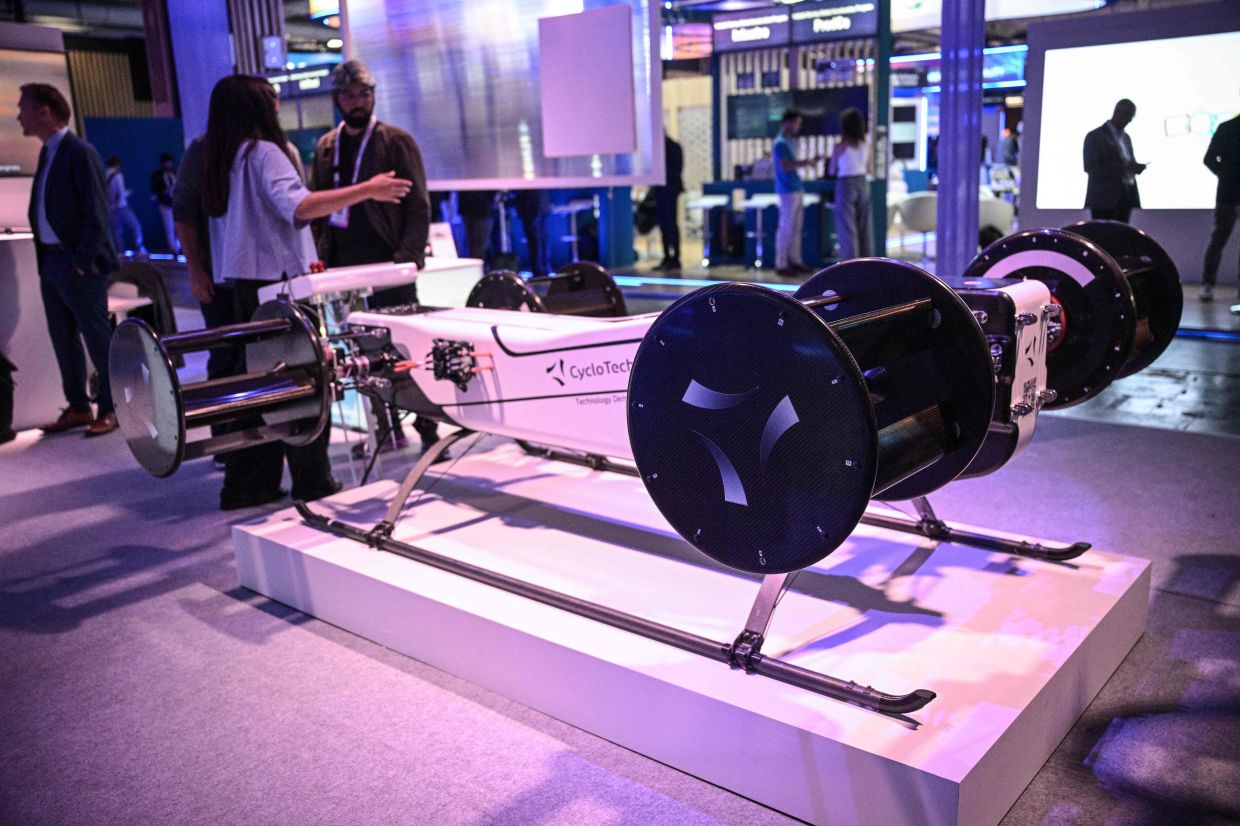
Drone technology is experiencing a parallel revolution through innovations in propulsion systems that fundamentally alter how aerial vehicles can manoeuvre. Austrian startup CycloTech has developed revolutionary motors shaped like open cylinders with wing-shaped blades that grant aircraft unprecedented agility. According to marketing chief Andrea Marchsteiner, these motors enable vehicles to hover motionlessly like helicopters, accelerate horizontally like conventional aircraft, execute mid-air braking manoeuvres, and reverse direction—capabilities that conventional drone motors cannot match. The flexibility these motors provide extends applications far beyond coordinated aerial displays and military reconnaissance in conflict zones like Ukraine, reaching into urban delivery systems and passenger transport in densely populated areas. With 65 employees and €40 million (US$46 million/RM189.3 million) already secured through funding rounds, CycloTech is actively pursuing additional capital and strategic partnerships to integrate its motor technology into existing aircraft designs from established manufacturers.
For Southeast Asia's rapidly developing logistics sector and dense urban environments, CycloTech's motors could revolutionise last-mile delivery in cities like Kuala Lumpur, Bangkok and Jakarta, where congested roads create bottlenecks for parcel delivery. The technology's ability to land with precision in confined spaces and navigate three-dimensional flight paths around buildings makes it particularly suited to the region's vertical cities and island nations like the Philippines and Indonesia, where waterways and difficult terrain currently limit distribution networks.
As artificial intelligence capabilities accelerate, threats to security and fraud detection have multiplied at an equally alarming pace. French company Whispeak has shifted its focus from simple voice recognition for banking authentication to detecting and filtering fraudulent audio generated through deepfake technology. Chief executive Florent Van Calster highlighted the vulnerability created by generative AI, which can now convincingly mimic individual voices with less than ten seconds of audio samples, often using freely available tools. Following three years of intensive development utilising Whispeak's proprietary AI systems, the company claims to have created the world's most accurate audio deepfake detector, achieving first-place results in multiple international detection competitions. The technology maintains error rates below one per cent on available training datasets, though Van Calster candidly acknowledged that improvement in fake voice technology will continually challenge detection systems in an ongoing technological arms race. The company is currently partnering with French telecommunications operator Bouygues to filter incoming calls for deepfake content and alert users when fraudulent audio is detected.
For Malaysia, where telecommunications fraud and financial crime continue rising, Whispeak's technology offers critical protection for financial institutions and government services. The Telecommunications and Multimedia Commission, together with Bank Negara Malaysia, could potentially leverage such detection systems to safeguard the banking sector and telecommunications infrastructure from increasingly sophisticated voice-based fraud and social engineering attacks that have targeted Malaysian citizens and businesses.
Athletic performance monitoring is undergoing transformation through non-invasive wearable technology developed by Hong Kong-based startup PointFit. Rather than relying on blood draws or invasive sensors, the company's adhesive patches contain microscopic sensors that analyse biomarkers such as glucose and cortisol levels present in skin sweat. Chief executive Kenny Oktavius, who began developing the technology while still a university student in 2019, explained that the system constructs an AI-driven personalised performance index that accounts for individual demographic factors and ambient environmental conditions. The approach addresses a critical gap in current athletic monitoring, where conventional heart rate metrics frequently fail to provide comprehensive performance insights—a problem illustrated by professional marathon runners who, despite wearing sophisticated sensors, sometimes experience collapse during competition. Oktavius emphasised that biomarkers provide the deeper physiological picture that medical professionals rely upon when diagnosing and treating performance-related health issues. PointFit has already established partnerships with Red Bull's Athlete Performance Centre and Puma's Nitro Labs innovation division, with expansion into consumer retail markets through major distributors like Decathlon and eyewear firm EssilorLuxottica planned for subsequent phases.
For Southeast Asian sports development and professional athletic training programmes, PointFit's technology offers affordable performance monitoring without the expense and complexity of laboratory blood testing. Malaysian sports institutes and elite athlete programmes could utilise such patch sensors to optimise training regimens and prevent injury through continuous biometric monitoring, particularly valuable in tropical climates where sweat production is naturally elevated. The technology aligns well with the region's growing investment in sports infrastructure and talent development, offering cost-effective tools for improving competitive performance across Southeast Asian nations.
These innovations collectively demonstrate how emerging technology companies are addressing persistent problems in healthcare, logistics, security and performance monitoring that affect billions of people globally. The concentration of such breakthroughs at major technology festivals reflects the accelerating pace of development across multiple sectors, driven by advances in materials science, artificial intelligence, sensor miniaturisation and computational power. For Malaysia and the broader Southeast Asian region, these technologies represent opportunities not merely to adopt solutions developed elsewhere, but potentially to integrate them into regional supply chains, adapt them for local conditions, and build supporting ecosystems that attract further innovation investment to the region.

