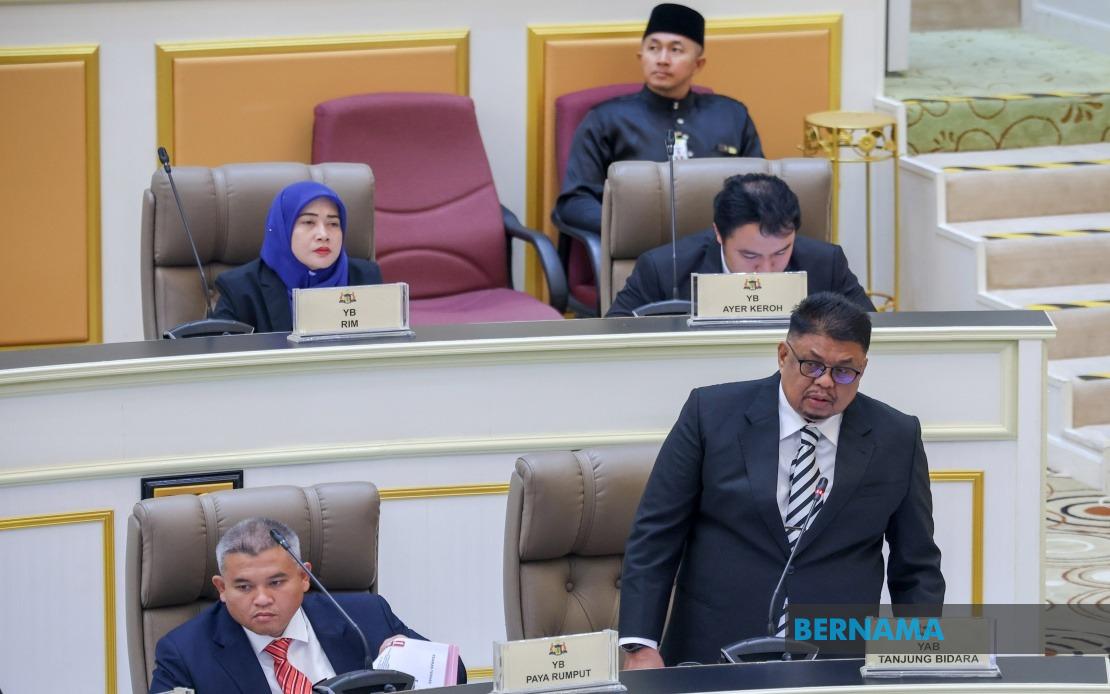
The Melaka State Legislative Assembly has taken a significant step in redefining its composition by approving an amendment to the state constitution that would permit the appointment of nominated state assemblymen. On July 14, the assembly voted decisively in favour of the Melaka State Constitution (Amendment) Bill 2026, with 23 assemblymen supporting the measure and five opposing it, marking a clear expression of legislative consensus on this structural reform.
The proposal, introduced by Chief Minister Datuk Seri Ab Rauf Yusoh and formally seconded by Senior State Executive Councillor for Housing, Local Government, Drainage, Climate Change and Disaster Management Datuk Rais Yasin, represents an effort to reshape how expertise enters the state's policymaking chambers. Rather than rely solely on electoral processes, the amendment would establish a mechanism for bringing individuals with specialised knowledge and professional experience directly into legislative deliberations. The targeted areas of expertise—encompassing law, economics, education, investment, technology, and state development—reflect a deliberate strategy to address skill gaps that elected representation alone may not fulfil.
Central to the government's case for this constitutional shift is the argument that appointed members would elevate the calibre of legislative debate and enhance institutional checks and balances. By introducing professionals with technical backgrounds and objective perspectives on complex policy matters, the assembly could theoretically examine bills, administrative decisions, and development strategies with greater analytical rigour. This reflects a broader contemporary trend in some democracies and authoritarian systems alike, where technocratic participation in legislative bodies is presented as a complement to purely representative institutions.
Equally important to the Chief Minister's rationale is the inclusivity dimension of the amendment. Ab Rauf highlighted that the appointment mechanism would create pathways for representation by groups whose voices might be constrained by electoral dynamics. Women, young people, the Orang Asli, religious and ethnic minorities, and representatives from professional and industrial sectors could gain direct access to legislative platforms without depending on their capacity to secure electoral victory. This framing acknowledges that electoral systems do not always produce demographically or professionally representative bodies and that appointed seats can serve as corrective mechanisms.
The opposition's response to the bill underscores a pragmatic acceptance of the measure, contingent on proper implementation. Melaka Opposition Leader Dr Mohd Yadzil Yaakub stated his bloc's support, provided that the appointment mechanism operates with transparency and remains oriented toward public interest. His reference to the federal Dewan Negara system—where senators are appointed and many bring distinguished professional credentials—suggests that opponents accepted the constitutional precedent already established at the national level. This cross-party backing indicates the amendment is unlikely to face sustained political resistance in its implementation phase.
Historically, this amendment fulfils a campaign commitment made by Barisan Nasional during the 2021 Melaka state election, classified under Thrust 1 of their manifesto focused on Political Stability and Promoting Mature Politics. The delay between the 2021 election promise and the July 2026 passage reflects the legislative time required to draft, refine, and build consensus around constitutional changes. For Malaysian political observers, the amendment's timing and bipartisan support suggest that state-level constitutional engineering commands sufficient political capital when positioned as reform rather than centralisation of power.
The practical implications of allowing up to seven nominated assemblymen in Melaka carry relevance beyond the state itself. The assembly currently comprises elected representatives determined by electoral dynamics in specific constituencies. Introducing appointed members would alter the balance between directly representative and meritocratically selected legislators. For Malaysia's broader democratic architecture, this experiment may signal a wider acceptance among political parties across the spectrum that some legislative seats need not emerge from competitive elections, provided the selection mechanism maintains public legitimacy and focuses on genuine expertise.
For Malaysian voters and civil society, the amendment raises important questions about accountability and legitimacy. While appointed members may possess superior technical knowledge or demographic representativeness, they lack the electoral mandate that binds elected representatives to their constituents. The amendment's success will depend critically on whether nomination procedures prove transparent, whether appointed members genuinely contribute to legislative quality, and whether the public perceives them as serving broader state interests rather than narrow factional or bureaucratic interests.
The international context matters here as well. Many Westminster-derived democracies employ appointed second chambers or reserved seats for appointed specialists; others have moved away from such mechanisms believing them incompatible with democratic accountability. By embracing appointed assemblymen, Melaka joins jurisdictions that view appointed legislative participation as compatible with popular sovereignty, though this remains contested constitutional terrain globally.
As the amendment moves toward implementation, the actual composition of the nominated slate will prove crucial. The credibility of the exercise depends on whether appointed members include recognised experts, whether diversity objectives are genuinely pursued, and whether geographic and sectoral representation reflects genuine gaps in elected representation. The success of this initiative may also influence whether other Malaysian states consider similar constitutional amendments, making Melaka's experience a potential template for wider institutional experimentation within Malaysia's federal system.
The passage of this bill demonstrates that Malaysian state legislatures remain laboratories for constitutional innovation, even when such changes venture beyond traditional electoral representation. The test of this amendment will not be its passage, which was always likely given government numbers and opposition acquiescence, but rather the quality and public perception of the appointments that follow and their genuine contribution to legislative effectiveness and state governance.

