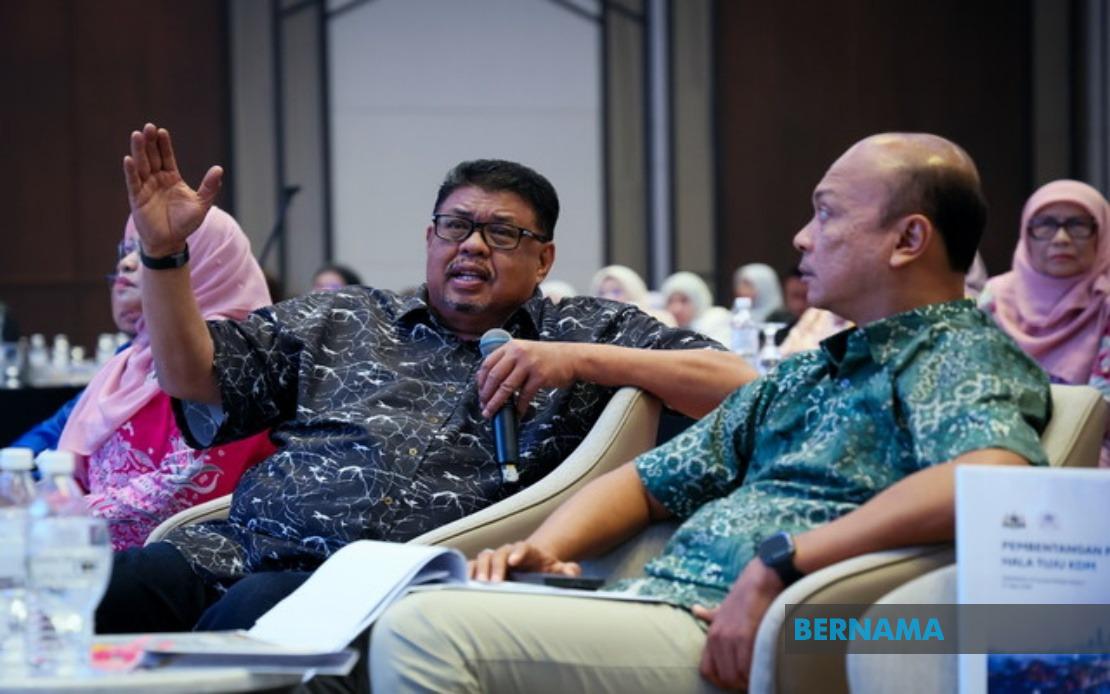
Melaka Barisan Nasional has thrown down a clear marker ahead of the coming state election, with coalition leadership insisting it will contest every one of the 21 State Legislative Assembly seats it currently occupies. The declaration comes as political manoeuvring intensifies in the southern state, where uncertainty over the timing of polls has kept all parties preparing for imminent campaigning.
Datuk Seri Ab Rauf Yusoh, steering both the Melaka BN machinery and the state government as Chief Minister, has made plain that defending these 21 seats represents a floor rather than a starting position. His comments, delivered at a workshop in Alor Gajah, reveal a coalition confident in its grasp on the state but acutely aware that any partnership arrangement with other political forces must be brokered on BN's terms. The stance signals that the coalition intends to drive negotiations from a position of strength, having secured a commanding majority in the previous contest.
The significance of Melaka's electoral arithmetic cannot be overstated. The state assembly comprises 28 seats in total, meaning BN's 21 seats from the 15th state election represent three-quarters of the chamber. This dominant position has allowed BN to form and maintain a stable government since the last polls, providing a foundation of institutional control that few other states can match. For context, Pakatan Harapan holds five seats while Perikatan Nasional commands two, leaving limited room for any upstart challenge.
Ab Rauf's language about the boundaries of negotiation reflects internal coalition dynamics as much as external political reality. By anchoring discussions to the 21-seat threshold and requiring Supreme Council blessing for any arrangement, BN leadership is simultaneously signalling flexibility to potential partners while protecting its flanks against pressure from within component parties. The framing suggests that while BN remains open to cooperation, such arrangements will not come at the expense of seat allocations already secured.
Reports of upcoming discussions with senior Perikatan Nasional figures, particularly PAS leaders, add texture to this positioning. Rather than dismissing such talks, Ab Rauf has welcomed them while stressing the procedural gatekeeping that any agreement must pass through. This suggests BN is hedging against electoral volatility by keeping channels open with potential allies, even as it maintains a hardline public stance. The diplomatic language disguises what amounts to a take-it-or-leave-it proposition.
The Chief Minister's comments regarding the timing of the state election reveal the peculiar dance of Malaysian politics at the state level. With the constitutional term expiring on December 31, speculation has swirled about a September dissolution and campaign. Ab Rauf's playful demurral—suggesting he has not yet received "inspiration" about the date—reflects both genuine uncertainty and the political calculations involved. Announcing an election date too far in advance allows opponents time to organise, while delaying indefinitely risks appearing indecisive or trapped by coalition considerations.
Melaka's position within the broader Malaysian political landscape matters considerably for understanding these dynamics. As a compact southern state with manageable electoral geography, Melaka often serves as a testing ground for coalition strategies. The stability BN has maintained there, particularly after the tumultuous 2018-2020 period that saw multiple government changes, has restored a measure of confidence to the coalition's grassroots. A strong performance in Melaka could provide psychological momentum for eventual federal-level challenges, making state-level performance unusually consequential.
For political observers tracking coalition cohesion, Ab Rauf's insistence on Supreme Council approval for any partnership carries real weight. UMNO, the dominant BN component in Melaka, has experienced significant internal factionalisation in recent years. By requiring top-level clearance rather than allowing ad-hoc state-level arrangements, BN's leadership is attempting to prevent fragmentation or the emergence of unauthorised local alliances that might undermine central strategy. This gatekeeping reflects hard-won lessons from previous electoral cycles.
The broader context of Southeast Asian state elections also warrants consideration. Melaka's defence of an incumbent majority amid swirling coalition negotiations mirrors dynamics playing out across the region, where traditional parties attempt to adapt to new voter preferences and emerging political alignments. The specificity of BN's 21-seat declaration reflects confidence born from recent success, yet the need to negotiate with other players reveals the fragmentation that has become endemic to Malaysian politics since 2018.
Electoral mathematics will ultimately determine whether BN's ambitions align with on-ground reality. Winning 21 seats required capturing strong urban, semi-urban, and rural constituencies across diverse demographic zones. Maintaining that performance while potentially accommodating coalition partners in seat negotiations presents a genuine challenge, particularly if voter preferences have shifted since the previous contest. The assertion of non-negotiability on seat numbers may prove easier to maintain in rhetoric than in practice.
For Malaysian voters and observers of regional politics, the Melaka situation encapsulates contemporary challenges facing established political coalitions. BN's Melaka leadership is attempting to project unity and strength while simultaneously managing internal pressures and engaging with potential external partners. The outcome of these negotiations, and ultimately the electoral result, will send signals about whether traditional coalitions can retain their appeal in an increasingly fragmented political environment across Southeast Asia.

