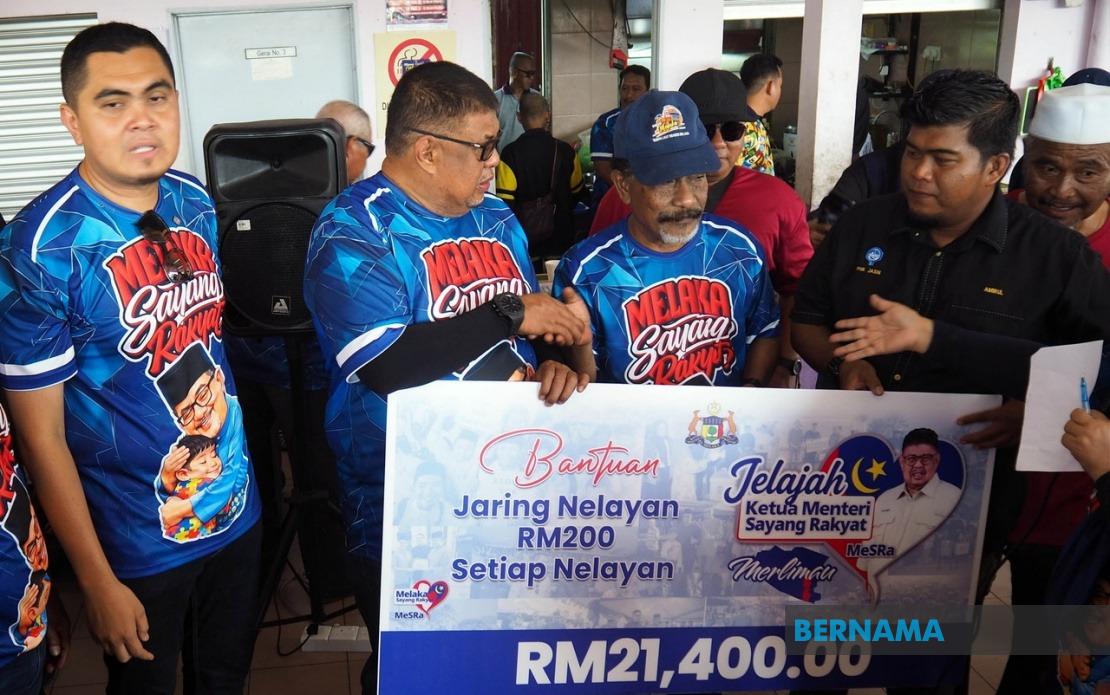
Melaka's state government will forgo filling the administrative positions vacated by Pakatan Harapan following the coalition's decision to exit the state Cabinet. Chief Minister Datuk Seri Ab Rauf Yusoh made the announcement in Jasin on July 17, citing practical considerations tied to the approaching end of the current electoral term. The vacant seats encompassed multiple governance levels, from state executive council roles to local authority positions and community-based committees, yet the Chief Minister indicated that maintaining these positions unfilled was the most prudent course of action given the limited time remaining before the next state election.
The scope of vacancies extends across several administrative tiers within Melaka's governance structure. Positions formerly held by PH representatives included spots on the state's executive council, which forms the inner sanctum of state decision-making, as well as seats on local authority bodies and Village Development and Security Committee roles that connect state administration to grassroots communities. Under constitutional practice, these posts were automatically vacated upon PH's formal departure from the coalition government, rather than requiring explicit removal procedures. The Chief Minister's decision to leave these positions empty reflects a calculation that the administrative disruption of conducting fresh appointments would outweigh any operational benefits, particularly when the current state administration faces imminent electoral renewal.
Ab Rauf's stance reveals a deliberate attempt to manage the political fallout from the coalition rupture with restraint and professionalism. He emphasised that the Melaka state government harboured no ill will toward Pakatan Harapan's decision and welcomed the coalition's choice to pursue an independent path, even if that path diverged from continued collaboration. The Chief Minister framed the separation as a matter of political choice rather than personal conflict, setting a tone that prioritises institutional stability over recrimination. This measured approach appears designed to insulate the state administration from prolonged political turbulence and to prevent the dispute from metastasising into personal attacks between individual leaders—a distinction that remains significant in Malaysian politics, where personality and patronage networks often blur with policy disagreements.
The Melaka partnership between Barisan Nasional and Pakatan Harapan had operated for nearly three years, a tenure long enough to establish operational rhythms and institutional relationships. During this period, the Chief Minister acknowledged that the state administration functioned acceptably, suggesting that the cooperation, despite its ultimate failure, had delivered reasonably effective governance. However, Ab Rauf attributed the eventual split to "differing political positions," a phrase that encompasses everything from incompatible ideological objectives to competing visions for constitutional governance to tactical calculations about electoral advantage. This nebulous explanation hints at deeper structural tensions that transcended mere personality conflicts, suggesting instead fundamental disagreements about the direction and character of Melaka's political future.
The coalition's exit stems directly from constitutional disputes that cut to the heart of how Melaka should be governed. On July 16, Pakatan Harapan announced its final withdrawal after rejecting proposed amendments to the Melaka State Constitution Enactment designed to introduce appointed state assembly seats. This issue represents far more than a procedural technicality; appointed seats would fundamentally alter the balance between elected and unelected representation, potentially shifting power dynamics in ways that could benefit some parties while constraining others. PH's refusal to accept this constitutional change signalled the coalition's unwillingness to accommodate what it likely perceived as power-consolidating manoeuvres by other political forces, making the split inevitable once negotiations reached this impasse.
The decision emerged from comprehensive internal consultation within Pakatan Harapan's Melaka apparatus. PH chairman Adly Zahari, acting PKR chairman Adam Adli Abdul Halim, DAP chairman Khoo Poay Tiong, and Amanah chairman Datuk Ashraf Mukhlis Minghat jointly announced the withdrawal following a meeting that involved both the coalition's senior leadership and all state assembly members. This inclusive decision-making process lent legitimacy to the exit and prevented individual parties from being portrayed as saboteurs, while also ensuring that all PH lawmakers understood and accepted the strategic shift. The breadth of this consultation suggests the constitutional amendment issue had mobilised genuine concern across PH's component parties rather than reflecting isolated leadership preferences.
Chief Minister Ab Rauf left open the possibility of future political realignments in Melaka, neither ruling out nor enthusiastically embracing potential cooperation between Barisan Nasional and Perikatan Nasional comparable to arrangements elsewhere. He acknowledged being unaware of such an arrangement currently existing in Melaka but suggested that "better understanding" between BN and PN remained theoretically possible. This cautious language reflects the fluid and opportunistic nature of Malaysian state-level politics, where coalition arrangements remain subject to renegotiation as electoral calculations shift and factional balances within parties evolve. The Chief Minister's refusal to categorically exclude BN-PN collaboration signals that Melaka's political configuration remains genuinely contested rather than settled.
The implications of PH's departure reverberate through Melaka's political ecosystem with particular significance for Southeast Asian observers monitoring Malaysian coalition dynamics. The state has become a microcosm of broader tensions between reform-oriented and establishment-oriented political forces in Malaysia, with constitutional disputes serving as flashpoints for deeper disagreements about democratic structures and power distribution. PH's willingness to exit state government over constitutional principles rather than merely accepting unfavourable amendments demonstrates that coalition politics in Malaysia increasingly hinge on substantive governance questions rather than mere seat-sharing arrangements, suggesting maturation in how political partnerships negotiate their differences.
For Malaysian readers and regional analysts, the Melaka situation underscores how state-level politics can crystallise national political tensions. The constitutional amendment controversy reflects ongoing debates about democratic representation that extend far beyond Melaka, touching questions about appointed versus elected seats that resonate across Malaysian federalism. The coalition's exit, executed through professional channels without descent into personal vituperation, offers a potential model for how political disagreements might be managed constructively—even as the choice to leave vacant positions rather than appoint replacements demonstrates the real costs of such separations in terms of administrative capacity and representation. As Malaysia approaches its next electoral cycles, both at state and national levels, the Melaka precedent may influence how other coalitions negotiate their differences and contemplate similar ruptures.

