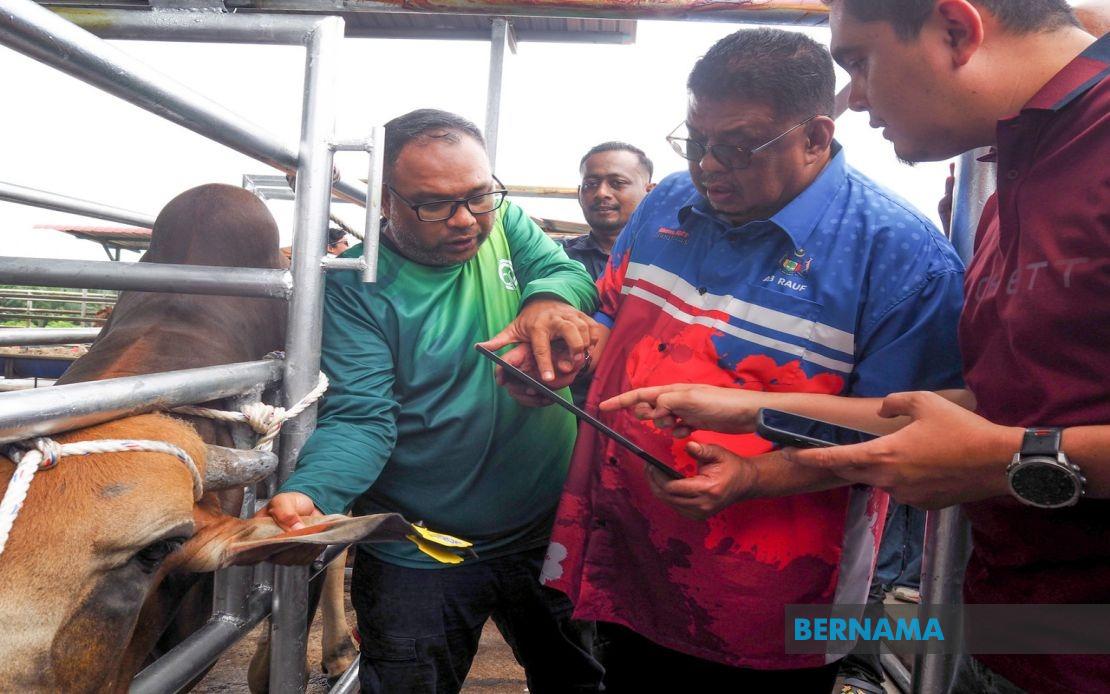
Melaka's state government has taken a technological stride in agricultural management by deploying QR codes on livestock, transforming how authorities identify and track animals across the state. The initiative, jointly developed with the Melaka Veterinary Services Department, represents Chief Minister Datuk Seri Ab Rauf Yusoh's vision to integrate digital tools into traditional farming practices. According to Mahathir Mustafa, chief assistant secretary of the Local Government Unit at the Chief Minister Department, this system answers a pressing need to improve livestock accountability and streamline bureaucratic processes in the event of animal-related incidents.
The practical mechanics of the system are straightforward yet effective. Each registered animal receives a physical tag embedded with a QR code and a unique identification number that farmers and authorities can scan using smartphones. The instant retrieval of critical information—breeder's name, farm location, premises identification, and registration details—eliminates the delays and guesswork that previously hampered enforcement actions. This real-time access to ownership data directly addresses one of the state's most pressing rural management challenges: identifying responsible parties when livestock causes damage or poses public safety risks.
The urgency of this initiative becomes clear when examining Melaka's recent livestock incident statistics. Since 2023, the state has recorded 835 accidents involving stray animals and fielded more than 50 formal complaints from residents. These numbers underscore a growing tension between expanding agricultural activities and the safety concerns of communities living near farming areas. Roads have become flashpoints for livestock-related collisions, with both animals and motorists at risk. The state government recognised that reactive enforcement—responding only after incidents occur—proved insufficient to manage the problem effectively.
By early June, approximately 2,000 livestock had already received QR tags, signalling enthusiastic initial uptake among participating farmers. The state harbours significantly more ambitious targets, aiming eventual coverage of the entire registered cattle and buffalo population across Melaka, estimated at over 32,000 head. This phased approach allows authorities to refine processes, address technical challenges, and troubleshoot farmer concerns before full-scale implementation. The deliberate pace also provides time for animals to cycle through their productive lifespans, gradually replacing the non-tagged population with digitally registered stock.
A crucial design feature of the tagging system is its permanence. Once affixed, a tag remains the animal's official identifier throughout its lifetime, even if ownership changes hands. Rather than requiring physical tag replacement during sales or transfers, the system simply updates ownership information in the eVetPermit Malaysia database. This separation of animal identity from owner identity creates administrative flexibility while maintaining continuity in livestock tracking history. Future veterinarians, inspectors, or enforcement officers will have instant access to an animal's complete registered history, improving disease surveillance and tracing capabilities.
From the farmer's perspective, the system offers tangible benefits that extend beyond regulatory compliance. Breeders gain protection against theft and liability disputes, as QR registration establishes clear ownership chains and documented possession history. The improved reputation of registered, accountable farmers helps legitimise the broader livestock industry in Melaka, which has sometimes faced criticism over animal welfare and community relations. Mahathir noted that breeders have responded positively to the initiative, recognising it as a means to safeguard their commercial interests and professional standing within their communities.
The financial incentives are carefully structured to encourage participation during a critical adoption phase. Through the remainder of 2024, the state government absorbs the entire installation cost of RM6.50 per tag, requiring farmers only to register their animals with the veterinary department to receive tags without charge. This subsidy effectively removes economic barriers to participation for smallholder and medium-scale operations. From 2027 onwards, replacement tags or installations for previously untagged livestock will shift to farmer responsibility at RM5 per head, a modest increase that reflects declining administrative costs once infrastructure is mature.
Beyond owner identification, the system creates robust infrastructure for disease monitoring and control. Veterinary authorities can rapidly trace connections between animals in cases of infectious outbreaks, mapping movement patterns and identifying at-risk holdings within defined geographical zones. This epidemiological advantage becomes increasingly valuable as Melaka's livestock sector faces potential threats from regional animal diseases. The QR system effectively creates a digital supply chain map that did not previously exist, enabling responses to health crises that would have been impossible or dangerously slow under paper-based systems.
The enforcement implications are equally significant. Authorities no longer face the frustrating scenario of apprehending stray animals with no means to locate responsible owners. Scanning a tag provides immediate contact information and location data, enabling swift restoration of animals to their premises and subsequent enforcement action against negligent owners. This accountability mechanism should incentivise improved animal husbandry and containment practices, as farmers understand that violations now carry traceable consequences. The stray livestock problem, which has vexed Melaka's local authorities and incurred growing public safety costs, becomes substantially more manageable.
Operationally, success depends on seamless coordination between three institutional pillars: the Local Government Unit managing the project, the Veterinary Services Department providing technical expertise, and local authorities executing enforcement activities. Mahathir emphasised that this collaboration is foundational to achieving stated objectives. Earlier initiatives that failed to secure cross-agency alignment offer cautionary lessons about the fragility of multi-institutional projects in the Malaysian context. The continued emphasis on cooperation suggests the government understands these risks and is intentionally structuring incentives for sustained coordination.
The QR tagging initiative fits within Melaka's broader digitalisation strategy and its aspiration to position itself as a technologically progressive and livable state. Agricultural systems globally are undergoing digital transformation, from precision farming to blockchain-based supply chain verification. Melaka's adoption of QR identification places the state alongside international best practices while adapting solutions to local circumstances and capacity constraints. This positioning matters for state competitiveness in attracting agricultural investment and skilled personnel.
For neighbouring Malaysian states and Southeast Asian jurisdictions wrestling with similar livestock management challenges, Melaka's experience will serve as a pilot case worth monitoring. If implementation succeeds in reducing stray animal incidents, improving disease surveillance, and maintaining compliance costs at modest levels, the model becomes readily transferable. Other regions facing explosive urban-rural interface conflicts and inadequate animal governance infrastructure may see the QR system as an affordable, low-tech pathway to administrative effectiveness. Conversely, implementation difficulties—whether technical, cultural, or bureaucratic—would provide equally valuable learning for policymakers elsewhere in the region.

