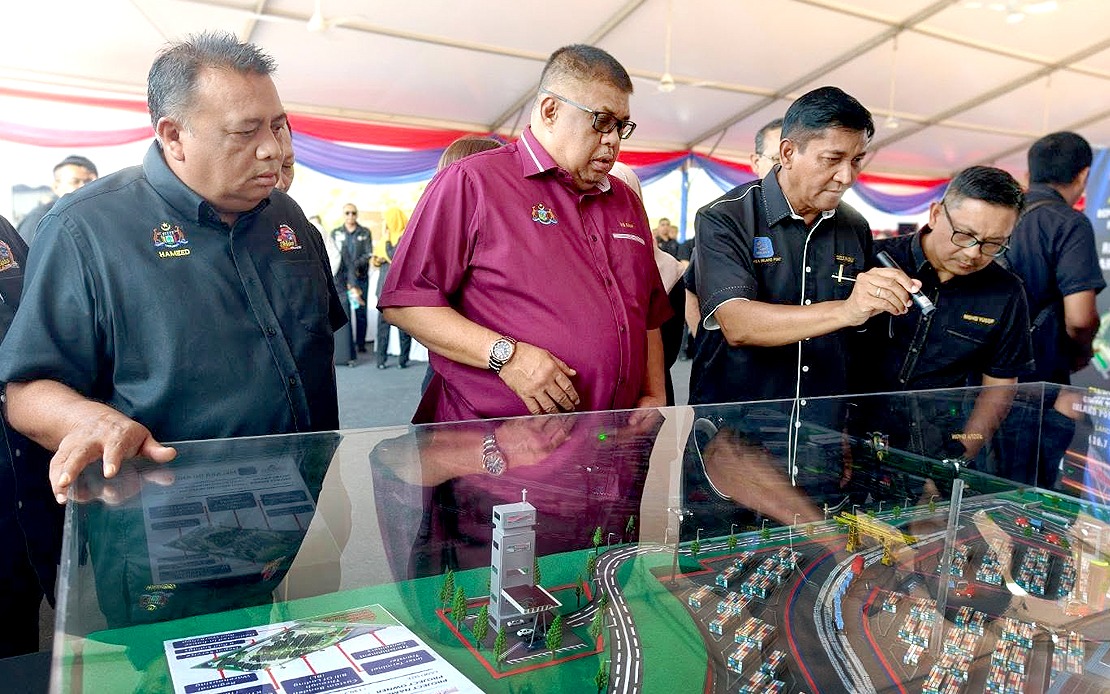
The Melaka government has unveiled an ambitious infrastructure project designed to strengthen the state's position as a critical logistics hub in Malaysia's southern corridor. A new 12-kilometre road connecting Kuala Linggi International Port to Ayer Molek and Kuala Sungai Baru will require an investment of RM129 million, marking a significant step toward modernising the state's transport infrastructure. The initiative reflects growing recognition of Melaka's strategic importance in regional supply chains, particularly as ports across Southeast Asia grapple with capacity constraints and rising competition.
The project, announced during the groundbreaking ceremony for Melaka Inland Port, addresses a fundamental inefficiency in the current network. Datuk Hameed Mytheen Kunju Basheer, chairman of the State Public Works, Infrastructure, Public Facilities and Transport Committee, explained that the new route will slash travel distances from 28 kilometres to approximately 12 kilometres. This reduction holds profound implications for operational costs across the logistics sector, where fuel consumption and driver hours represent substantial expenses. For businesses operating within Melaka's port ecosystem, shorter distances translate directly into improved margins and faster cargo processing.
What distinguishes this initiative from routine road construction is its integrated approach to port connectivity. Rather than serving as a standalone transport corridor, the 12-kilometre road will traverse the Melaka Inland Port area itself, creating seamless linkages between the deepwater facilities at Kuala Linggi and the inland port's expanding capacity. This design philosophy recognises that modern logistics depends not merely on individual transport arteries but on networks where different cargo handling facilities can feed one another efficiently. The geographical positioning of Melaka's ports—spread across multiple locations—has historically required cargo handlers to coordinate complex routing. The new road simplifies these arrangements substantially.
Implementation, however, remains measured. The Works Ministry is currently in the design phase, with actual procurement activities—quotation, tender processes, and contractor selection—scheduled for 2025. This timeline allows for thorough planning and cost refinement before major expenditure begins. For Malaysian contractors and engineering firms, the project represents a significant opportunity, though competitive bidding will determine final selection. The staged approach also provides flexibility should economic conditions shift or technological innovations in logistics alter project requirements.
The road network enhancement extends beyond the primary RM129 million project. State authorities are simultaneously planning upgrades to existing routes connecting various port zones with the Melaka Inland Port. Specifically, the roadway from Tangga Batu to Sungai Udang, which provides access to Tanjung Bruas Port, is slated for widening. These complementary improvements acknowledge that a single new road, however well-designed, cannot solve systemic connectivity challenges. Instead, a coordinated network upgrade distributes traffic more evenly and prevents bottlenecks from simply migrating to alternative routes.
Another planned component involves a six-kilometre road from Telok Gong to Kampung Pulau and Paya Lebar, estimated at RM49 million. This expansion targets inland areas currently underserved by modern logistics infrastructure. The Paya Lebar to Kampung Pulau segment is already in quotation process, while the Kampung Pulau to Telok Gong alignment remains in design stage. The staggered completion schedule—with overall finalisation anticipated around 2028 or 2029—reflects the scale and complexity of coordinating multiple construction phases.
Beyond raw distance reduction, these roads promise significant quality-of-life improvements for residents in affected areas. The new routes will bypass traditional villages, channelling heavy commercial traffic away from residential communities currently burdened by constant port-related congestion. This separation of logistics corridors from village centres represents enlightened urban planning, protecting small communities from the negative externalities of industrial development whilst preserving their viability.
For Malaysia's broader regional positioning, Melaka's infrastructure investment carries strategic weight. As competing Southeast Asian ports—particularly in Thailand, Vietnam, and Indonesia—vie for transshipment cargo and investment, modern logistics infrastructure becomes a deciding factor. Companies choosing where to establish regional distribution centres evaluate transportation costs, port efficiency, and road quality carefully. By systematically upgrading its logistics networks, Melaka makes itself more attractive to multinational enterprises seeking Southeast Asian operational bases.
The timing also aligns with evolving global supply chain patterns. Post-pandemic reshoring trends and growing emphasis on supply chain diversification have increased demand for port capacity throughout Southeast Asia. Melaka, positioned on the Strait of Malacca's crucial shipping lanes, stands to benefit disproportionately from these structural shifts. However, realising this potential requires infrastructure investments matching demand growth. The RM129 million road project and its complementary upgrades represent government commitment to capturing these opportunities.
Local economic implications deserve consideration. Construction activity will generate employment across multiple sectors—engineering, procurement, logistics, and ancillary services. Once operational, the improved port connectivity will lower business costs for Melaka-based enterprises, potentially encouraging new investment. Existing port operators and logistics service providers may expand operations given improved efficiency. These multiplier effects could reshape Melaka's economy over the next decade.
Chief Minister Datuk Seri Ab Rauf Yusoh's presence at the Melaka Inland Port groundbreaking underscores leadership commitment to these infrastructure priorities. State-level advancement of such projects, whilst requiring federal support and approval, demonstrates Melaka's determination to leverage geographic advantages systematically. This bottom-up momentum, combined with national recognition of Melaka's importance, creates conditions for sustained infrastructure development.
Stakeholders should monitor project progression carefully. Construction timelines frequently slip, and costs can escalate depending on ground conditions and market fluctuations. Nevertheless, the underlying logic driving these investments remains sound. Melaka's transformation into a modern logistics centre serves not merely state interests but contributes to Malaysia's overall economic resilience and competitiveness. The RM129 million road, whilst significant, represents only one element of a broader vision deserving sustained attention.

