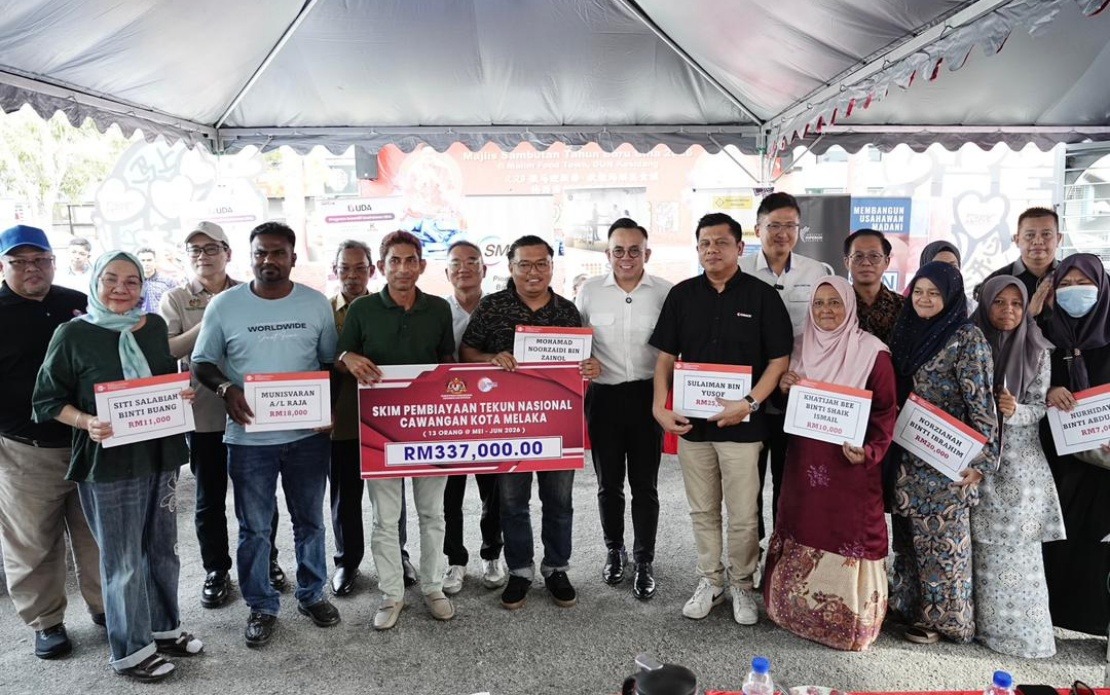
Malaysia's small and medium enterprise sector has received a significant injection of capital in Melaka, with the Ministry of Entrepreneur Development and Cooperatives (KUSKOP) approving nearly RM100 million in financing for more than 4,300 entrepreneurs in the state by the end of May. The substantial fund disbursement underscores the government's deepening commitment to nurturing business growth at the grassroots level, where most employment creation and economic dynamism occur.
KUSKOP Minister Steven Sim emphasised during his three-day working visit to Melaka that channelling capital to entrepreneurs remains central to the ministry's development agenda. The minister articulated a vision of interconnected economic benefits, arguing that when entrepreneurs access financing and expand operations, the advantages ripple outward to employees earning wages, suppliers gaining orders, and communities receiving tax revenue and services. This multiplier effect has become increasingly important as policymakers seek to sustain growth in an environment where traditional manufacturing employment continues to shift toward services and digital sectors.
The timing of this announcement coincides with the Hebatkan Perniagaan Malaysia Carnival, an engagement platform designed to connect government agencies directly with business owners and traders. During the festival, Sim distributed nearly RM1 million in fresh financing to 18 entrepreneurs through TEKUN Nasional and SME Corp Malaysia, with recipients operating across diverse sectors including food and beverages, construction contracting, professional services, retail, online commerce, and automotive businesses. This sectoral diversity reflects the evolving nature of Malaysia's entrepreneurial base, increasingly spanning traditional trades and contemporary digital ventures.
Melaka, as a historically important commercial centre and tourist destination, serves as a microcosm for broader Malaysian economic trends. The state's concentration of food and beverage entrepreneurs, visible in the Malim Food Town venue where much of Sim's engagement occurred, demonstrates how tourism and hospitality have become critical employment sources in secondary cities. The Malim Food Town environment itself—a cluster model bringing multiple food vendors together—exemplifies how entrepreneurs are increasingly adopting aggregation strategies to improve visibility and operational efficiency in competitive local markets.
Beyond Melaka's specific allocation, the national financing picture reveals accelerating government intervention in MSME development. KUSKOP approved RM5 billion in financing nationwide during the first five months of 2024, benefiting approximately 180,000 entrepreneurs across Malaysia. This pace suggests the ministry is on track to exceed its PowerUp10K initiative target of RM15 billion in annual MSME financing. Such scaling reflects recognition that Malaysia's economic diversification depends heavily on enabling small business owners to invest in capacity, technology, and workforce expansion.
The importance of this financing access extends beyond immediate capital provision. For many Malaysian entrepreneurs, particularly in smaller cities and rural areas, government-backed financing through TEKUN Nasional and similar schemes provides more accessible terms than conventional banking channels. Commercial banks, operating on strict credit risk criteria, often hesitate to finance unproven entrepreneurs or those lacking substantial collateral. Government schemes bridge this gap, reducing the cost of capital and enabling risk-taking that might otherwise remain suppressed.
Sim also highlighted Malaysia's cultural and linguistic diversity as a competitive advantage in attracting foreign investment and facilitating business expansion into regional markets. This observation carries particular relevance for Melaka, where the multicultural character of the population—reflecting centuries of maritime trade—creates natural networks for commerce with Singapore, Indonesia, and broader Southeast Asia. Entrepreneurs with roots in different communities and languages can more readily navigate regional supply chains and identify market opportunities across borders.
The financing programmes operate within a broader ministerial strategy recognising that capital constraints remain among the primary obstacles to MSME scaling in Malaysia. Access to financing allows entrepreneurs to invest in equipment, inventory, skills training, and technology adoption—precisely the areas where competitive disadvantages accumulate if left unaddressed. Food and beverage operators, particularly prevalent among Melaka's beneficiaries, face intense competition from larger chains and increasingly from e-commerce food delivery platforms. Government financing enables these operators to upgrade facilities, adopt digital ordering systems, and expand product ranges.
Melaka's historical role as a maritime trading hub gives contemporary significance to capital flowing into the state's entrepreneurs. The state remains strategically positioned on regional shipping lanes and maintains connections to international markets through its port facilities. Modern entrepreneurs in Melaka can leverage this geographic advantage more effectively when possessing capital to invest in export-oriented production or supply chain operations. The nearly RM100 million deployed in the state may therefore catalyse not only local consumption but also cross-border economic activity.
The geographic targeting of ministerial attention and financing allocation reflects a political economy calculation: secondary cities and states beyond Kuala Lumpur and Selangor often voice concerns about economic marginalisation and investment concentration. By visiting Melaka, participating in community events, and distributing financing, Sim signals that KUSKOP operates as a nationwide programme rather than one focused exclusively on major urban centres. This inclusive approach helps build political support for financing schemes while addressing legitimate regional development concerns.
Moving forward, the success of these programmes depends partly on how well entrepreneurs utilise the financing and whether they achieve sustainable business growth. The diversity of sectors represented among beneficiaries—from food and beverages to automotive services—suggests programmes are reaching entrepreneurs across multiple industries rather than concentrating in narrow niches. This breadth reduces systemic risk and ensures that financing supports various employment types and community economic structures.
The financing flow into Melaka also reflects recognition that MSME development remains essential to Malaysia's economic transition. As the country seeks to move beyond resource extraction and low-cost manufacturing toward higher-value services and innovation-driven sectors, entrepreneurs must have access to capital enabling such transitions. Government financing schemes, by providing patient capital and reasonable terms, facilitate precisely this structural economic evolution that Malaysia's development goals require.

