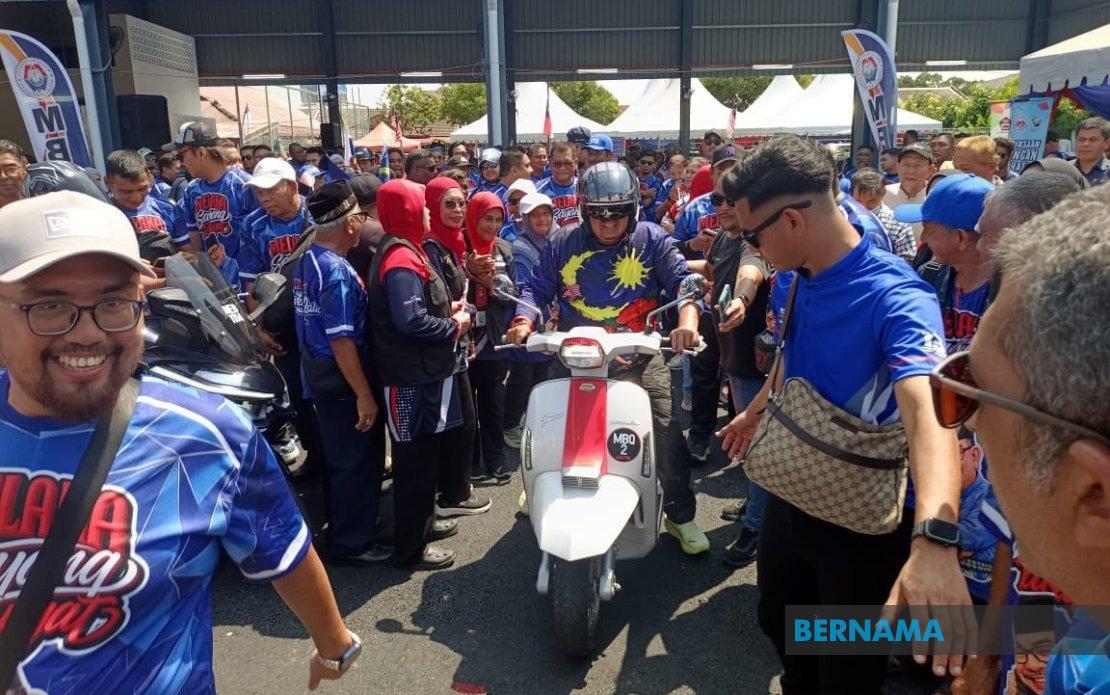
Melaka Chief Minister Datuk Seri Ab Rauf Yusoh has characterised the 'Jelajah Ketua Menteri Sayang Rakyat' tour as a standing commitment to public service rather than a temporary electoral strategy. Speaking in Pengkalan Batu after the 10th iteration of the programme, he explained that the initiative extends the reach of the 'Wakil Rakyat Untuk Rakyat' (WRUR) framework, which the state government established two years ago to create direct channels between officials and communities. This layered approach suggests a deliberate effort to institutionalise grassroots engagement within Melaka's governance structure, moving beyond the traditional model where elected representatives address constituent needs primarily through formal channels or scheduled town halls.
The timing of Ab Rauf's emphasis on the permanence of this initiative carries significance in Malaysia's political context. By explicitly distancing the tour from electoral cycles, he is attempting to reframe public engagement as governance philosophy rather than campaign activity. This distinction matters particularly in a state where electoral competition remains intense and where voters have become increasingly sceptical of sudden, constituency-focused government attention during political seasons. The clarity with which he positioned the programme as having begun well before any election season underscores an awareness that Malaysian publics often distinguish between authentic service delivery and performative politics.
The structural framework supporting these tours reveals an administration attempting to create accountability mechanisms within its service delivery apparatus. Each tour generates follow-up actions tracked across multiple government initiatives—the WRUR programme itself, the 'Hari Exco Bersama Rakyat' (HEBAT) initiative, and now the Sayang Rakyat tour structure. This multi-layered engagement architecture suggests that Melaka's leadership recognises the efficiency gains from consolidating grassroots feedback into a unified system, rather than allowing constituent complaints to disperse across different departmental channels without coordination.
The substantive outcomes reported from the Pengkalan Batu visit demonstrate the concrete nature of issues being addressed through these tours. Eight separate matters derived from previous WRUR and HEBAT engagements were reportedly resolved within this single constituency. While some achievements involve modest interventions—such as repairs to dilapidated residences—others required negotiated settlements with private parties, as illustrated by the Muslim cemetery acquisition. The fact that a Chinese landowner offered a 50 percent discount on land value suggests that the tours may be creating community pressure or goodwill dynamics that facilitate compromises on contentious matters, though the mechanisms through which such negotiations succeed remain opaque.
The mix of infrastructure development, housing assistance, and religious facility expansion documented in Pengkalan Batu reflects a diverse approach to constituency needs. The state government's involvement in acquiring cemetery land addresses a genuine gap in municipal services and reflects sensitivity to intercommunal concerns. Simultaneously, the repair of five houses and provision of a RM100,000 housing unit under the TNB 'Baiti Jannati' programme targets economic vulnerability within the constituency. The handover of an open hall by the Melaka Historic City Council (MBMB) addresses community gathering space—a need often overlooked in development planning but significant for social cohesion. Together, these interventions suggest a comprehensive rather than ad-hoc approach to constituency servicing.
The broader coverage metrics disclosed by Ab Rauf indicate that the WRUR programme has achieved substantial geographic penetration across Melaka. With 25 series completed and only five state constituencies remaining, the initiative is approaching systematic coverage of the entire state. This near-universal reach contrasts with typical government engagement patterns, where certain constituencies receive disproportionate attention while others remain peripheral. However, the density and quality of engagement across constituencies—whether resource-poor areas receive the same intensity of follow-up as politically sensitive constituencies—remains an important variable not addressed in the Chief Minister's public statements.
The emphasis on direct, hands-on engagement by elected representatives serves multiple functions within Melaka's governance model. Ab Rauf's assertion that this approach ensures representatives fully understand their communities' needs speaks to a recognition that bureaucratic distance often creates information asymmetries between government and constituents. When elected officials interact directly with residents and witness conditions firsthand, they accumulate tacit knowledge that enables more targeted policymaking. This argument resonates particularly in Malaysia, where some constituencies—particularly in rural areas—have experienced decades of relative neglect because decision-makers in state capitals lacked visceral understanding of local challenges.
The sustainability of such resource-intensive engagement models deserves scrutiny. Conducting 25 series of dedicated tours with attendant government officials and media coverage requires substantial administrative and financial investment. The implicit question facing Melaka's administration is whether this model can be maintained across electoral cycles and leadership transitions. Should political circumstances change—through elections, leadership shifts, or budgetary constraints—the continuity of these tours could be vulnerable. For constituencies beginning to depend on these engagement mechanisms as primary channels for service delivery, disruption could create governance credibility problems.
The integration of state entities—from Tenaga Nasional Berhad to the Melaka Historic City Council—within the tour framework demonstrates how grassroots engagement can mobilise resources across government agencies and state-linked corporations. When the Chief Minister's office uses tours to identify needs and coordinate responses, it effectively leverages the full apparatus of state capacity rather than limiting action to core government departments. This approach potentially accelerates service delivery and demonstrates to corporations that corporate social responsibility contributions aligned with government priorities receive official recognition and visibility.
From a Southeast Asian governance perspective, Melaka's model offers an interesting case study in direct engagement methodology. Compared to federal-level governance structures in Malaysia, state-level administration can arguably maintain more intensive constituent contact. The relative geographic compactness of Melaka, combined with Ab Rauf's decision to invest political capital in these tours, creates conditions for engagement patterns that larger, more densely populated states might struggle to replicate. Whether this model proves replicable across Malaysia's varied states, or remains particular to Melaka's governance culture, will likely determine its influence on broader administrative practice.
The framing of these tours as permanent governance infrastructure rather than temporary initiatives suggests that Melaka's leadership anticipates sustained public demand for direct engagement channels. This reflects a broader global trend toward more participatory governance models, though Malaysia's political context—where voter volatility and electoral competitiveness remain pronounced—makes such commitments particularly meaningful. By institutionalising engagement, Ab Rauf appears to be betting that consistent, visible service delivery through direct constituent contact will produce long-term political dividends that justify the administrative investment required to sustain such programmes across full electoral cycles.

