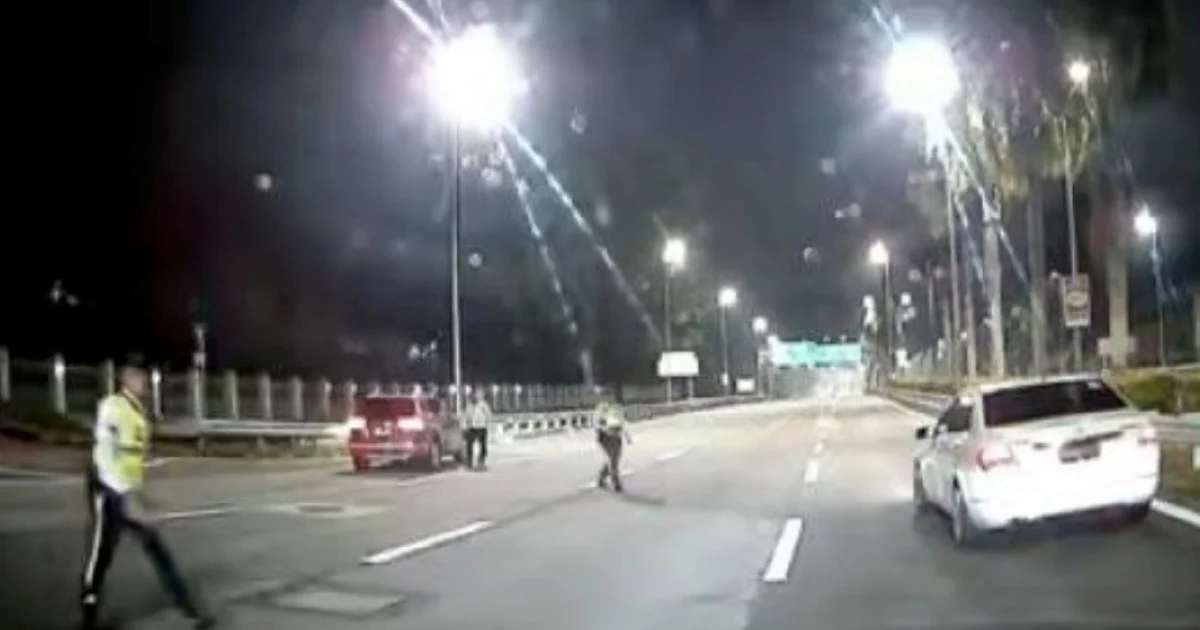
A 20-year-old motorist is now assisting authorities with their investigations following a dramatic incident that unfolded on the Sprint Expressway near the National Institute of Public Administration (Intan). The driver, operating a white Mercedes, encountered a police roadblock and proceeded to drive through it before accelerating along the expressway, an action that drew considerable public attention and sparked discussion across social media platforms.
The incident has raised questions about road safety and the effectiveness of checkpoint operations in Malaysia. Such breaches of police cordons represent a serious concern for law enforcement agencies tasked with maintaining order on major expressways. The Sprint Expressway, a critical commuter route in the Klang Valley, handles substantial daily traffic volumes, making any disruption to safety protocols a matter of genuine concern for transport and police authorities.
The circumstances surrounding the driver's decision to break through the checkpoint remain under investigation. Police are examining multiple aspects of the case, including whether the motorist was aware of the roadblock's presence, whether he was attempting to evade a traffic offence, or if other factors contributed to his actions. Understanding the motivation behind such a dangerous manoeuvre is crucial for law enforcement as they work to establish a comprehensive picture of events.
The arrest has also highlighted the vulnerabilities faced by police personnel operating roadblocks across Malaysian highways. Officers manning checkpoints accept considerable risk as part of their duties, and incidents where drivers breach these barriers directly endanger their safety and that of other road users. The physical and psychological impact of such encounters cannot be understated, and the incident serves as a reminder of the hazards inherent in frontline policing.
From a traffic safety perspective, the occurrence underscores the importance of motorist compliance with police directives and the need for heightened awareness among drivers on major expressways. The viral nature of the incident means it will likely influence public perception of road safety and police operations in the region. Social media amplification of such events can have dual effects: increasing public scrutiny of law enforcement procedures while simultaneously raising awareness about the dangers of aggressive driving behaviour.
For Malaysian commuters and businesses reliant on the Sprint Expressway, any disruption caused by such incidents results in cascading delays and economic inefficiency. The expressway serves as a vital link in the Klang Valley's transportation network, connecting residential areas to commercial and industrial zones. Incidents that compromise the smooth flow of traffic have ripple effects throughout the region's logistics and commuting patterns.
The detention of the driver allows investigators to explore relevant details including the vehicle's registration, insurance status, and mechanical condition. Authorities will also examine whether the motorist possessed valid driving credentials and whether there were any outstanding warrants or traffic violations associated with him or the vehicle. These procedural investigations form the foundation of a comprehensive case file.
This incident must be contextualised within broader patterns of roadblock enforcement across Malaysia. While most drivers comply with checkpoint procedures, occasional breaches demonstrate that education and deterrence mechanisms require continuous refinement. Police operations teams will likely review their protocols at this particular location and others to identify improvements that enhance both officer safety and driver compliance.
The case also intersects with discussions about vehicle safety standards and driver behaviour modification. A white Mercedes, particularly if it is a higher-performance model, represents a vehicle with considerable acceleration capacity. The ability to breach a roadblock and maintain high speed suggests either deliberate evasion or catastrophic loss of control. Distinguishing between these scenarios will be critical for the prosecution's case and for understanding how to prevent similar incidents.
For transport authorities and policymakers, this incident provides empirical evidence supporting investment in additional safety infrastructure on expressways. Improved barrier systems, enhanced lighting at checkpoint locations, and upgraded communication protocols between patrol units could reduce the likelihood of similar breaches succeeding. The Malaysian government's ongoing emphasis on road safety initiatives makes this case study particularly relevant to ongoing policy discussions.
As the investigation progresses, the outcome will set precedent for how Malaysian courts handle cases involving deliberate breach of police checkpoints combined with dangerous driving. The severity of penalties imposed will send important signals to the driving public about the consequences of such behaviour. Traffic courts across the country will monitor this case with interest as it may influence approaches to comparable offences.
The detained driver's cooperation with authorities will significantly influence the investigation's trajectory. Interviews with checkpoint personnel, examination of any available video footage, and analysis of traffic camera data will collectively reconstruct the precise sequence of events. Should evidence of malicious intent emerge, prosecutors will have stronger grounds for more serious charges.
Ultimately, this roadblock incident represents more than a single motorist's momentary lapse in judgment. It encapsulates ongoing tensions between individual drivers and law enforcement, highlights vulnerabilities in current checkpoint procedures, and provides concrete data for improving Malaysia's road safety infrastructure and enforcement strategies.

