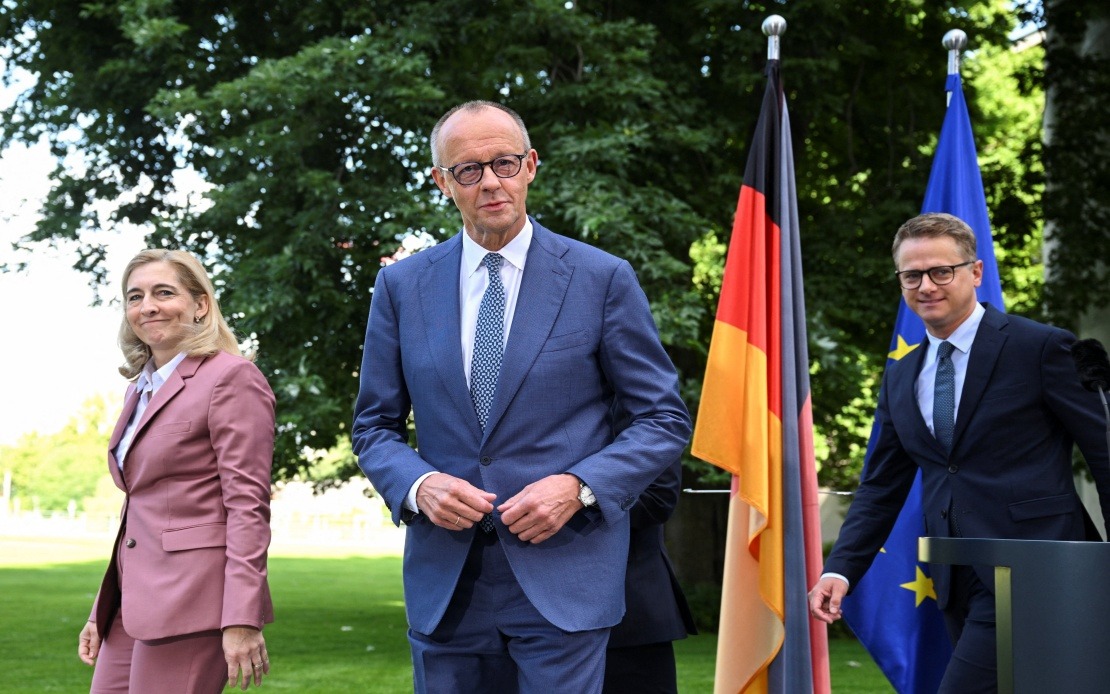
German Chancellor Friedrich Merz has initiated one of his administration's most significant structural reorganisations, reshaping both the federal government and the leadership hierarchy of his Christian Democratic Union party in response to mounting political pressures. The announcement came after Jens Spahn, the CDU's parliamentary group leader, stepped down from his position amid a surrogacy row that threatened to undermine the party's conservative credentials and Merz's authority.
The scope of the reshuffle extends well beyond the immediate need to replace Spahn, signalling that Merz has seized the opportunity to consolidate his leadership and reposition key personnel across multiple governmental portfolios. These changes represent a calculated attempt to reset the political narrative and demonstrate decisive action to both party members and the broader German electorate.
Spahn's departure occurred after public revelations that he and his partner had welcomed a child through surrogacy services in the United States, a procedure that remains prohibited under German law. The disclosure proved particularly damaging for a politician and party associated with traditional values, creating immediate pressure on both Spahn and Merz to respond swiftly. Rather than treating the affair as an isolated incident requiring minimal correction, Merz chose to use the crisis as a catalyst for a more comprehensive restructuring.
Thorsten Frei, previously serving as head of the chancellery, has been designated to assume Spahn's vacant position as parliamentary group leader. This promotion was announced earlier in the week, giving Merz time to orchestrate a coordinated transition that would minimise disruption to government operations. Frei's appointment signals continuity in certain respects whilst simultaneously positioning him as Merz's trusted enforcer within the parliamentary organisation.
To fill the vacuum created by Frei's departure from the chancellery, Merz has selected Nina Warken, a former health minister whose previous experience in that portfolio provides valuable institutional knowledge. Warken's move into the chancellery represents a lateral shift designed to bring seasoned expertise into one of the most influential administrative positions in German government. Her appointment underscores Merz's determination to place reliable figures in positions of maximum proximity to executive power.
The chancellery position itself holds particular significance within the German governmental structure, functioning as the administrative nerve centre through which the chancellor exercises control over the broader bureaucratic apparatus. By installing Warken in this role, Merz consolidates his hold over governmental machinery and ensures that key decision-making processes remain firmly within his sphere of influence.
Carsten Linnemann, the CDU's secretary general, transitions into the health ministry portfolio, a position that carried symbolic weight for the party given Spahn's departure from that same ministry. Linnemann's appointment represents an effort to restore confidence in conservative stewardship of health policy and signals that the party intends to move beyond the Spahn controversy. The assignment also elevates Linnemann's profile within both government and party structures, potentially positioning him for future advancement.
Transport Minister Patrick Schneider is expected to step down from his ministerial responsibilities, according to multiple German media sources and dpa reporting. The nature and reason for Schneider's departure remain somewhat less immediately apparent than those driving other personnel changes, suggesting that Merz may have combined the necessity of managing the Spahn situation with broader housekeeping adjustments within the Cabinet.
These interconnected moves demonstrate Merz's capacity to move decisively when political circumstances demand rapid action. Rather than allowing the Spahn matter to fester as a standalone crisis, Merz converted it into an opportunity to refresh his government's personnel whilst simultaneously addressing any underlying tensions or inefficiencies he perceived within the existing Cabinet structure. This approach carries echoes of classical political crisis management, where leaders transform potential damage into demonstrable evidence of command and control.
For Malaysian and Southeast Asian observers, the German reshuffle offers instructive lessons regarding how established democracies manage reputational crises within their political establishments. The relatively swift and transparent handling of Spahn's resignation, combined with the subsequent restructuring, reflects institutional maturity and established protocols for managing leadership transitions. The incident also highlights how personal conduct and legal frameworks around reproductive technology can intersect with political credibility, a concern that resonates across multiple cultural and legal contexts.
The broader implications of Merz's restructuring extend to the stability and coherence of German governance during a period when the country faces significant economic and security challenges, particularly regarding its relationship with Russia and support for Ukraine. Ministerial continuity and effective administration prove essential when navigating such complex geopolitical circumstances, making Merz's choices regarding replacement personnel significant both domestically and internationally.
As the restructured government consolidates around Merz's leadership, the chancellor faces the challenge of ensuring that these personnel changes translate into tangible improvements in governmental performance and public confidence. The success of his reshuffle will ultimately be measured not by the elegance of the transitional process itself, but by whether the reconfigured Cabinet and party leadership effectively address the mounting policy challenges facing Germany in the months ahead.

