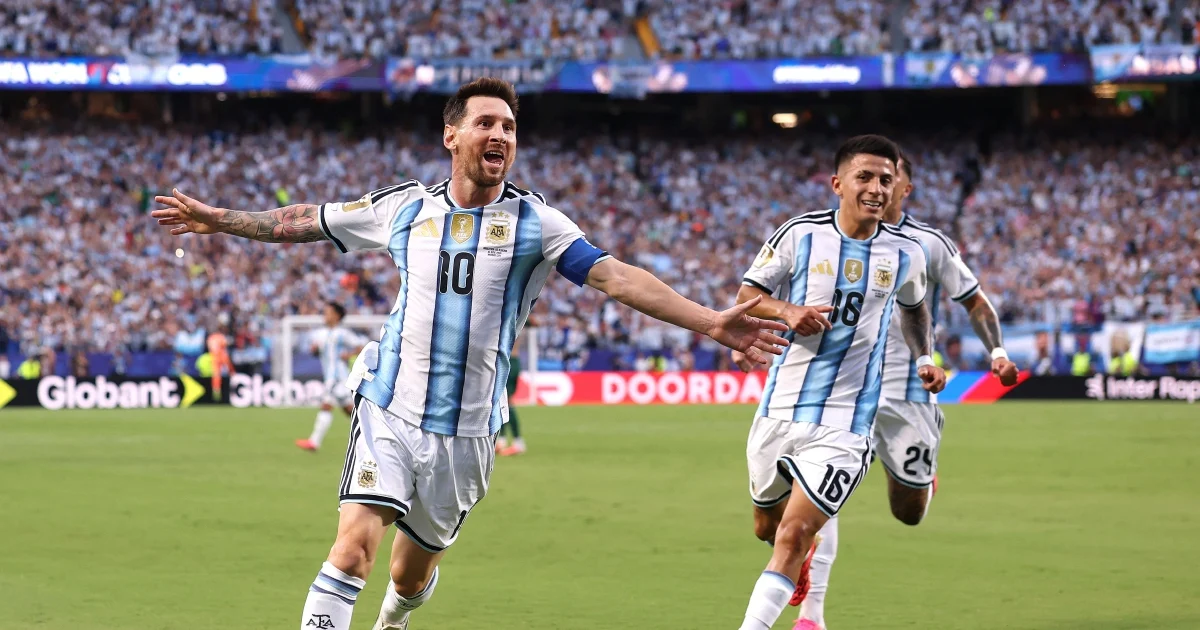
Lionel Messi has lifted the veil on his emotional state, disclosing that he is contending with substantial personal difficulties away from the football pitch. The revelation came in the aftermath of his commanding display against Algeria, where the Argentine icon netted his maiden World Cup hat-trick in a convincing 3-0 victory. The admission provides context to the visible emotion captured during and after the match, humanising a moment that appeared to transcend typical sporting achievement for the seven-time Ballon d'Or winner.
The significance of Messi reaching the hat-trick milestone in World Cup competition cannot be understated. Prior to this encounter, the Paris Saint-Germain forward had never accomplished this feat across his previous World Cup campaigns, despite his legendary status in international and club football. This drought in the tournament format had become one of the few remaining statistical gaps in an otherwise unparalleled career. The breakthrough therefore represents both a personal vindication and a crucial moment in his legacy, particularly at a stage of his career when such achievements carry heightened meaning.
Messi's willingness to speak candidly about personal challenges reflects a broader shift among elite athletes toward acknowledging the mental and emotional dimensions of professional sport. For Malaysian fans and the broader Southeast Asian audience who have followed Messi's illustrious career, this transparency offers a window into understanding that even the greatest performers navigate private struggles. The contrast between his public achievements and private difficulties underscores the compartmentalisation required of professional athletes operating at the highest level.
The 3-0 scoreline against Algeria demonstrated Argentina's dominance in the match, with Messi's three-goal haul anchoring a performance that suggested the team's attacking capability remained formidable. In regional context, this type of overwhelming victory reflects the gulf in quality between top-tier international sides and other competitive nations. For Malaysian readers following World Cup proceedings, such matches illustrate the breadth of skill differentials that characterise global football's highest echelon.
Messi's trajectory through World Cup tournaments has long fascinated analysts and supporters. His performances at successive editions had generated both celebration and scrutiny, with particular focus on whether his undeniable individual genius could translate into tournament success for Argentina. The hat-trick against Algeria, combined with continued strong performances, positions him as a central figure in Argentina's campaign, potentially influencing narrative perceptions of his overall World Cup contribution regardless of final outcomes.
The emotional dimension Messi has now acknowledged adds interpretive depth to understanding athlete psychology. Performance under pressure becomes more layered when personal circumstances weigh upon the individual. His capacity to maintain elite-level output while navigating such difficulties speaks to both his professional resilience and the psychological fortitude required to excel in football's most demanding environments. This interplay between personal struggle and sporting excellence resonates across cultures and contexts.
For Argentina, Messi's continued effectiveness carries strategic importance beyond his individual brilliance. His presence on the pitch influences team structure, opponent tactical responses, and the morale of his teammates. Against Algeria, this influence manifested in the comfortable margin of victory. As Argentina progresses through the tournament, his physical condition, mental state, and personal circumstances will inevitably impact the team's prospects.
Messi's openness also carries implications for football culture more broadly. Player welfare, mental health support, and the human dimensions of professional sport increasingly occupy space in discussions previously dominated by statistics and tactical analysis. His willingness to discuss personal difficulties normalises conversations that once remained private, potentially encouraging other athletes to seek support and openly acknowledge their struggles.
The Algeria match itself provided a platform for Messi to express emotion that extended beyond typical post-match sentiment. Hat-tricks carry psychological weight—they represent a threshold of dominance and control that few players achieve regularly. For Messi, achieving this specific milestone in World Cup competition while managing unspecified personal challenges suggests a compartmentalisation of focus that permitted peak performance despite underlying difficulties.
Looking forward, how Messi manages the intersection of personal challenges and sustained high-level performance will merit observation. The remainder of the tournament will reveal whether he can maintain the form demonstrated against Algeria. For Malaysian viewers invested in Argentina's progress or simply following the tournament's major narratives, Messi's disclosed personal circumstances provide context for interpreting future performances with greater understanding.
The admission ultimately humanises elite athletes in ways that statistics and highlight reels cannot. Messi scoring three goals remains objectively impressive. Messi scoring three goals while navigating personal difficulty transforms the achievement into something more nuanced—a demonstration of resilience, compartmentalisation, and the psychological strength required to excel when circumstances beyond the pitch create additional burden.

