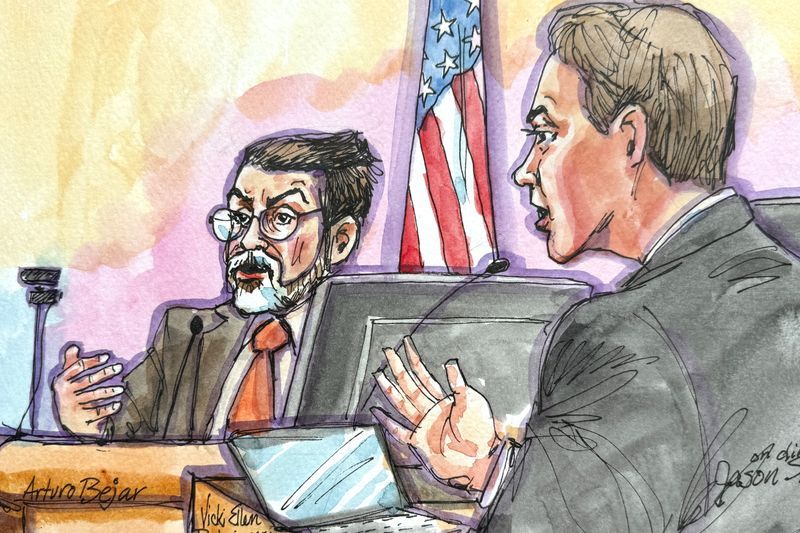
The testimony of Arturo Bejar, a former engineering director at Meta Platforms, continues this week in what legal experts are calling the most significant test yet of whether social media companies can be held accountable for harming young users. Bejar, who served at Meta across two separate periods from 2009 to 2015 and again as an independent contractor from 2019 to 2021, represents a particularly damaging witness for the company because he comes from within its own ranks and has direct knowledge of internal safety research that leadership allegedly ignored.
The six-week trial unfolding in Oakland, California federal courthouse involves a coalition of state attorneys general from California, Colorado, Kentucky and New Jersey, alongside an additional 29 states making separate claims under federal law. The lawsuit accuses Meta of deliberately engineering Facebook and Instagram with features and algorithms designed to exploit psychological vulnerabilities in teenagers, deliberately concealing known harms including anxiety, depression and in extreme cases suicide, and illegally harvesting personal data from children under 13 without proper consent. The breadth of the allegations and the number of jurisdictions involved underscore the gravity with which American regulators now view the social media industry's practices.
Bejar's opening appearance at the courthouse on Tuesday, following opening statements from both sides, positioned him as the prosecution's lead witness in demonstrating that Meta possessed detailed internal knowledge of the damage its platforms caused young users. During his initial testimony, Bejar described his role running surveys that examined how teenagers experienced Instagram between 2019 and 2021, a period when he was tasked with monitoring the platform's wellbeing implications. His direct observation of teen experiences provides the states with testimony that is difficult for Meta to challenge, since he conducted this research using the company's own methodologies and resources.
A central component of Bejar's testimony involves his critique of Meta's internal surveillance mechanisms, which he characterised as fundamentally flawed in their design. Rather than measuring the actual intensity and severity of harm experienced by young users, Meta's monitoring systems focused narrowly on cataloguing the prevalence of policy-violating content. This distinction is crucial: a platform might report that harmful content appears rarely, yet that rare content could cause disproportionate damage to vulnerable teenagers who encounter it. Bejar presented jurors with communications he had sent to Meta's chief product officer Chris Cox, documenting what he characterised as a substantial disparity between the company's public messaging about safety and the reality users were experiencing.
In his testimony, Bejar stated plainly that "young people were experiencing harm at extraordinarily high rates," and added that parents would have demanded different choices for their children had they possessed accurate information about these risks. This framing transforms the case from a technical dispute about platform design into a question of consumer deception and parental rights. The implication that Meta concealed information that would have changed parental decision-making adds a layer of responsibility that resonates beyond tech policy circles into mainstream consumer protection frameworks familiar to jurors.
Meta's legal strategy has involved challenging the admissibility of Bejar's testimony by arguing that his expertise extends beyond the scope of his actual employment responsibilities at the company. The defence also attempted to undermine his credibility by pointing to communications he deleted on the encrypted messaging service Signal, which Meta suggested indicated evidence tampering. However, U.S. District Judge Yvonne Gonzalez Rogers, presiding over the trial, rejected these efforts with a characterisation of Meta's motion as a "long-shot" attempt to eliminate a witness whose testimony poses an obvious threat to the company's defence.
Bejar's willingness to testify against his former employer reflects a pattern of public criticism that extends well beyond this single trial. He appeared before a U.S. Senate committee in 2023 to discuss Meta's awareness of harassment, bullying and other documented harms affecting teenagers, while describing the company's failure to adequately address these problems despite possessing internal data about their prevalence. His consistent and public positioning as a critic of Meta's safety record means his testimony arrives with substantial credibility among jurors, who may view him as someone motivated by conscience rather than financial incentive.
The stakes of this trial extend far beyond the individual case. Meta currently faces thousands of similar lawsuits alleging harm to minors, and Bejar has already appeared as a key witness in three cases that have proceeded to trial. One particularly significant precedent emerged from a case brought by New Mexico, which resulted in Meta facing $942 million in damages and penalties plus a mandatory modification to how it operates its platforms within that state. Should the Oakland jury reach a similar verdict across multiple states simultaneously, the financial and operational consequences for Meta could be substantially more severe, effectively creating a template for how other jurisdictions might structure settlements.
For Malaysian and Southeast Asian observers, the implications of this trial merit careful consideration. Meta's platforms, including Facebook and Instagram, dominate social media consumption across the region, and the company has faced separate criticism from Malaysian authorities regarding its moderation practices and handling of local content disputes. A U.S. verdict establishing that Meta prioritised engagement and addiction over user safety, particularly for minors, could establish legal and regulatory precedents that eventually influence how Malaysian and regional governments approach platform accountability. The testimony about internal research being ignored raises questions about whether such gaps in safety consideration exist across Meta's global operations, not merely in the United States.
The trial also illuminates a broader tension within the technology industry regarding how companies balance innovation and growth against documented user welfare concerns. Bejar's testimony suggests that Meta possessed the technical capacity and institutional knowledge to design safer platforms but chose not to prioritise these modifications in favour of engagement metrics that drove advertising revenue. This framing challenges the industry narrative that safety and growth represent competing interests that cannot be simultaneously optimised, instead suggesting that the true constraint is corporate prioritisation rather than technical feasibility.
As the trial proceeds through its scheduled six-week duration, Bejar's continued testimony will likely expand on specific instances where Meta leadership received warning about harms and responded inadequately. The emails and internal communications he references may provide jurors with concrete evidence of decision-making rather than abstract claims about corporate negligence. His willingness to articulate that parents would have chosen differently had they possessed accurate information transforms this from a technical dispute into a straightforward question about consumer fraud and fiduciary responsibility to vulnerable populations.
The outcome will reverberate through global technology regulation and corporate accountability frameworks. If Meta faces substantial liability for knowingly deploying addictive features while concealing documented harms to minors, the precedent suggests that other technology companies operating in similar spaces may face comparable litigation. For platforms with significant youth user bases across Southeast Asia and beyond, the trial effectively serves as a cautionary example of what can occur when internal safety research is deprioritised in favour of engagement-driven business models.

