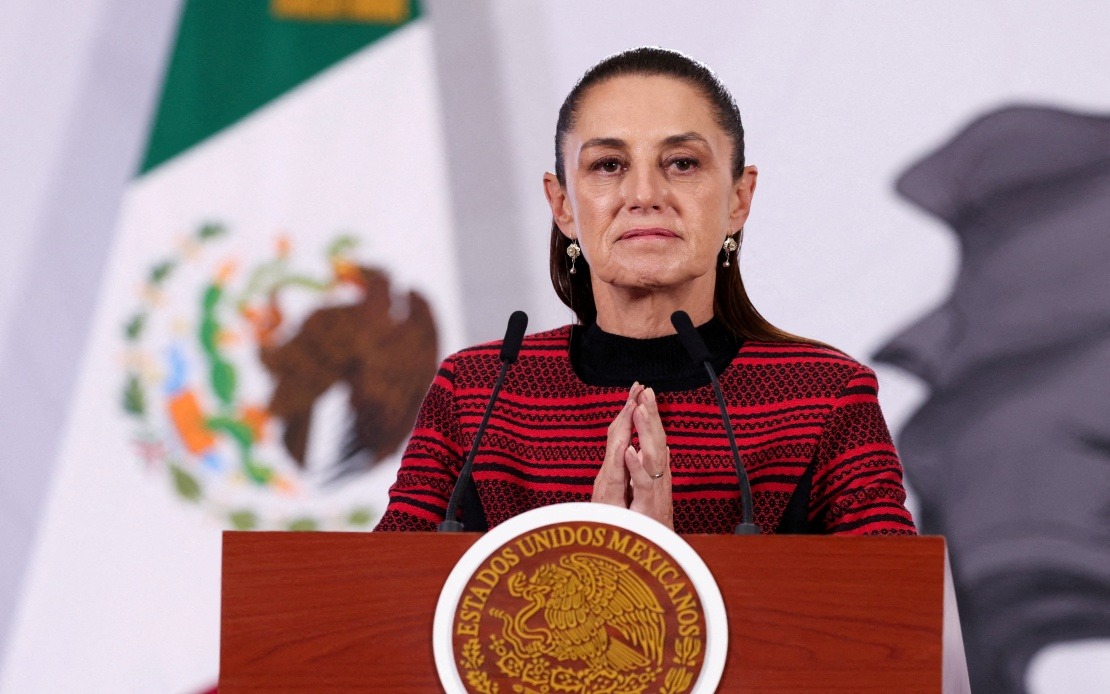
Mexican President Claudia Sheinbaum will travel to the World Cup final in the United States following a direct invitation from President Donald Trump, according to reports on Friday. The gesture comes as a surprising diplomatic overture given the current friction between the two neighbouring countries, particularly around trade and security matters that have dominated recent discussions between Washington and Mexico City.
In a statement to the press, Sheinbaum confirmed that Trump had personally extended the invitation for her to attend the championship match between Argentina and Spain scheduled for Sunday in East Rutherford, New Jersey. She also disclosed that Canadian Prime Minister Mark Carney, whose nation is one of the three co-hosts of the tournament alongside Mexico and the United States, will likewise be present at the final.
The announcement represents a notable shift in Sheinbaum's engagement with World Cup events. Just weeks earlier, on June 11, she had chosen not to attend the tournament's opening ceremony held at Azteca Stadium in Mexico City, despite her position as leader of a co-host nation. Rather than taking the occasion for herself, she donated her ticket to an indigenous woman with a passion for football, a decision that reflected her stated priorities at the time.
Relations between Mexico and the United States have remained strained, with disagreements over trade tariffs and cross-border security cooperation creating tension between the two administrations. The trade disputes have centred on automotive exports and agricultural products, while security concerns relate to migration and law enforcement coordination. Against this backdrop, Trump's invitation and Sheinbaum's acceptance suggest a willingness to engage at the highest levels despite these underlying disputes.
Personal interactions between the two leaders have been limited to date. Their only in-person meeting occurred in December at the World Cup draw ceremony held in Washington, providing a foundation for the diplomatic courtesy now on display. The relative brevity of their relationship makes this invitation particularly noteworthy as a signal of engagement during a sensitive period in bilateral relations.
Mexican media outlets reported that Sheinbaum had adjusted her schedule in the state of Quintana Roo to accommodate the journey to New Jersey for the final. The rearrangement demonstrates her willingness to prioritise this diplomatic opportunity, cancelling or postponing other commitments to attend the match. Such scheduling changes at the presidential level typically signal the importance attached to an engagement.
The World Cup final will attract significant international attention, with representatives from multiple countries expected to attend. Spain's royal family has confirmed their attendance, with King Felipe VI, Queen Letizia, Crown Princess Leonor, and Infanta Sofía planning to watch their nation compete from the stadium. Their participation underscores the event's status as a significant diplomatic and cultural occasion beyond its sporting significance.
Argentina's President Javier Milei, while leading one of the two finalist nations, has opted not to watch the match from the stadium itself. His decision is rooted in Argentine superstition, reflecting cultural beliefs about the president's role during major sporting events. This contrasts sharply with Sheinbaum's choice to attend, though her position as a co-host nation leader differs from Milei's role representing one of the finalists.
For Malaysia and Southeast Asian observers, Sheinbaum's diplomatic flexibility offers insights into how political leaders navigate international relations during periods of tension. The willingness to accept invitations and engage socially, even when substantive disagreements exist on policy matters, reflects the compartmentalisation that often characterises high-level diplomacy. This approach differs markedly from confrontational rhetoric or boycotts that might otherwise dominate headlines.
The World Cup final has become a stage not merely for sporting competition but for international diplomacy and soft power projection. Sheinbaum's attendance, orchestrated through Trump's invitation, demonstrates how sporting events can serve as venues for maintaining relationships and signalling openness to dialogue. For Mexico, participation in such high-profile moments reinforces its role as a co-host nation and as a significant player in North American affairs.
The broader context of trilateral cooperation on the World Cup suggests that despite trade disagreements and security challenges, Mexico, the United States, and Canada maintain functional relationships at the leadership level. Sheinbaum's acceptance of the invitation implies recognition that bilateral disputes, however substantial, need not prevent engagement at cultural and diplomatic events.

