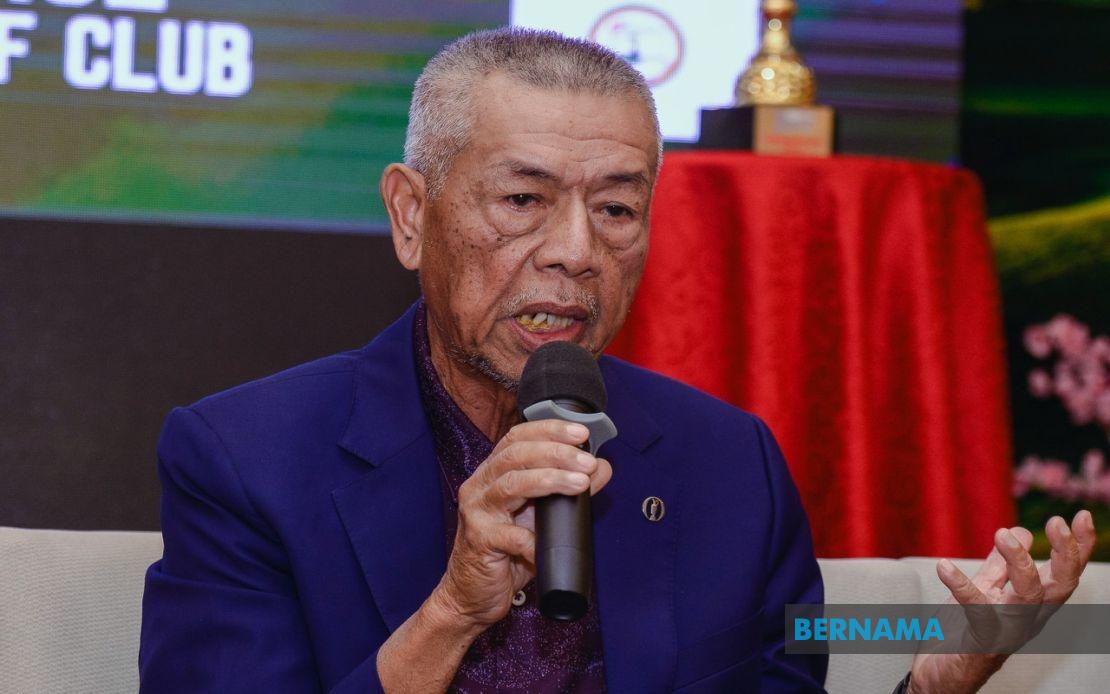
The Malaysian Golf Association has launched a formal push to establish a dedicated full-time national coach role as part of a broader strategy to elevate the country's competitive standing ahead of the 2027 SEA Games. The initiative emerged during discussions between MGA leadership and government sports officials, signalling the association's determination to build a more robust talent pipeline and competitive framework for one of Malaysia's enduring sports pursuits.
Tan Sri Mohd Anwar Mohd Nor, president of the MGA, articulated the association's vision during remarks at the launch of the 100PLUS MGA National Junior Development Programme Junior Series 2026 at The Mines Resort & Golf Club in Serdang. He emphasized that securing a high-calibre coaching position represents a cornerstone of the federation's broader modernization agenda, particularly given the significance of competing on home soil in 2027. The establishment of such a role would signal Malaysia's commitment to professionalizing its golf development infrastructure, a move increasingly common among regional competitors seeking to close performance gaps.
The request to Datuk Rahimi Ismail, secretary-general of the Ministry of Youth and Sports, underscores the MGA's recognition that sustainable improvement in national sport requires institutional support and adequate resourcing. Without dedicated coaching leadership, the association has struggled to implement cohesive long-term development frameworks that can compete with the structured programmes of regional rivals such as Thailand and Indonesia. A permanent appointment would enable continuity in player development, consistency in methodology, and the kind of sustained mentorship that typically distinguishes medal contenders from mid-tier performers.
Mohd Anwar stressed the critical importance of close collaboration between the MGA, the Ministry of Youth and Sports, and the National Sports Council in advancing the sport's infrastructure. This triangulated approach reflects Malaysia's broader governance model for national sports development, wherein government agencies, national federations, and elite training bodies work in concert to allocate resources and coordinate programming. The integration of these entities is essential for translating policy intentions into tangible improvements in training facilities, athlete stipends, coaching expertise, and international exposure opportunities.
Beyond the coaching position itself, the MGA has begun conceptualizing a multi-faceted preparation roadmap for the Games. One significant element involves potential training camps in Sarawak, a strategy that would expose national players to different course conditions, leverage regional talent pools, and strengthen institutional ties within Malaysia's federal sports structure. Mohd Anwar noted that he has already engaged Datuk Seri Abdul Karim Rahman Hamzah, Sarawak's Minister of Youth, Sports and Entrepreneur Development, to explore how the state can contribute meaningfully to the national programme. This localized approach reflects broader recognition that competitive advantage emerges not only from centralized excellence but from distributed expertise and collaborative resource-sharing across regions.
The timing of these initiatives carries particular weight given that 2027 represents both an opportunity and a test of Malaysia's sporting governance. As host nation, Malaysia will face elevated expectations and scrutiny from regional observers; strong domestic performances in golf would validate the country's investment in development infrastructure and enhance its standing within ASEAN sports circles. Conversely, underwhelming results could invite criticism of preparedness and resource allocation, potentially influencing future funding decisions and stakeholder confidence.
Golf occupies a distinctive niche within Malaysian sport, combining a tradition of amateur and professional participation with a relatively compact talent pool and high infrastructure costs. Unlike football or badminton, which benefit from mass participation and grassroots enthusiasm, golf development typically depends on consistent institutional support, quality coaching, and access to premium facilities. The MGA's push for a full-time national coach thus represents not merely a request for additional funding, but a fundamental assertion that golf deserves parity with other national sports in terms of professional coaching resources and organizational capacity.
The National Junior Development Programme, launched on the same occasion, exemplifies the federation's efforts to cultivate emerging talent systematically. By establishing structured pathways from junior to elite levels, the MGA seeks to create a pipeline of young players who possess both technical capability and competitive temperament. A full-time national coach would serve as the capstone of such a system, providing expert guidance and strategic direction that translates accumulated junior development into senior-level achievement. Without such leadership, even well-designed junior programmes risk fragmentation or ineffectiveness.
From a regional perspective, Malaysia's investment in golf coaching reflects broader Southeast Asian trends toward professionalization of national sports programmes. Thailand, Vietnam, and the Philippines have similarly elevated coaching standards and created dedicated development roles, generating improved international results and enhanced competitiveness. By establishing parallel structures, Malaysia signals its commitment to participating fully in this regional arms race for sporting excellence, ensuring that its athletes compete on equal technical and strategic footing.
The success of the MGA's advocacy with the Ministry of Youth and Sports and National Sports Council will likely depend on demonstrating clear pathways to improved performance and explaining how such investment aligns with Malaysia's broader national sporting objectives. Government agencies increasingly demand evidence-based justification for resource allocation, performance benchmarks, and accountability mechanisms. The MGA must therefore articulate not only what resources it needs, but how those resources will translate into measurable improvements in player rankings, medal prospects, and international standing.
Moving forward, the association faces the dual challenge of sustaining momentum with policymakers while simultaneously implementing the junior development and training programmes already underway. The establishment of a full-time national coach position, should it materialize, would represent a watershed moment for Malaysian golf, signifying both institutional maturation and renewed competitive ambition. For Malaysian sports observers and golf enthusiasts, the resolution of this matter will provide an important barometer of government commitment to supporting non-traditional sports and developing specialized expertise in pursuit of regional excellence.

