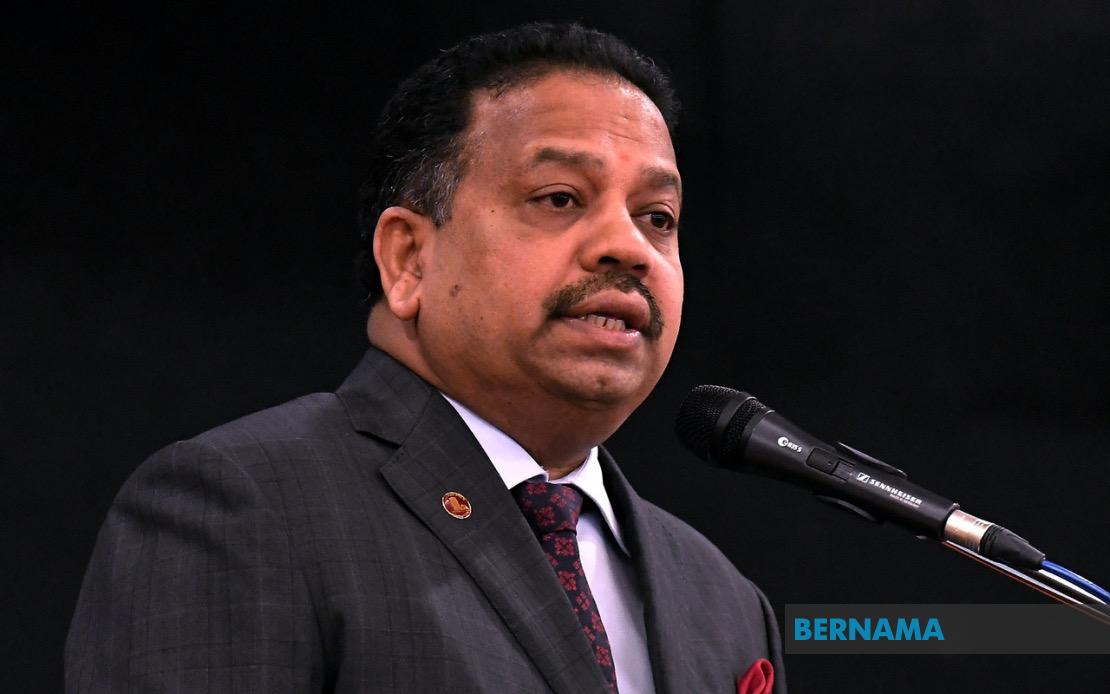
The Malaysian Indian Congress appears poised to consolidate support from the Indian community heading into the Johor state election, with party president Tan Sri S.A. Vigneswaran expressing bullish confidence about electoral prospects in constituencies where MIC candidates are contesting. Speaking at a press conference in Kulai on July 10, Vigneswaran grounded his optimism in what he characterised as productive working relationships between MIC and the administrations at both federal and state level, relationships he said have generated tangible results for Indian voters concerned with bread-and-butter issues affecting their families and livelihoods.
The timing of Vigneswaran's remarks underscores the significance of Indian voter blocs in Malaysia's electoral arithmetic, particularly in a state like Johor where demographic patterns and historical voting trends have long made minority communities strategically important to coalition builders. MIC is fielding four candidates across the 16th Johor state election: K. Raven Kumar in Kemelah, V. Rugendran in Kahang, P. Pannir Selvam in Perling, and R. Kumaran in Bukit Batu. Each candidacy represents an opportunity for the party to demonstrate its capacity to mobilise support and deliver parliamentary representation for Indian constituents within the broader Barisan Nasional framework.
Vigneswaran's messaging strategy throughout the campaign appears deliberately calibrated to distinguish MIC's approach from more adversarial political competitors. Rather than pursuing personal attacks on opposition figures, the party leader emphasised that MIC had adopted what he termed a mature posture focused squarely on articulating concrete solutions to community grievances. This framing carries implications beyond mere campaign rhetoric; it suggests MIC is seeking to position itself as a pragmatic, solutions-oriented representative body rather than simply a faction engaged in zero-sum political combat. For Malaysian readers familiar with fractious campaign environments, this positioning may signal an attempt to appeal to voters fatigued by personal invective and seeking substantive policy engagement.
The party's campaign narrative centres on a implicit bargain: MIC parliamentarians collaborate effectively with state government machinery to solve problems, and Indian communities respond by delivering electoral support to Barisan Nasional. This interdependency model reflects how communal representation operates within Malaysia's coalition system, where minority parties function partly as brokers between their community bases and majority-controlled government structures. The emphasis on state-level collaboration is particularly noteworthy given that state governments often control resource distribution and local administrative decisions that directly affect daily life.
Yet Vigneswaran was compelled to address a separate controversy that threatens to complicate MIC's narrative coherence. A Tamil-language news portal had circulated claims that MIC had received RM221 million in government funding, allegations Vigneswaran characterised as fundamentally inaccurate and deliberately misleading. He clarified that the sums in question constitute annual grants to AIMST University, a non-profit higher education institution owned by a foundation entity, rather than direct party funding. The distinction matters considerably for public perception and regulatory compliance, as direct government subsidies to political parties raise questions about organisational autonomy and the appropriate boundaries between state resources and partisan activity.
Since Datuk Seri Anwar Ibrahim's elevation to Prime Minister in 2023, AIMST University has received RM25 million in annual grants, with this year's allocation following that established pattern. Vigneswaran explained that these funds serve essential operational functions: upgrading student dormitories, installing renewable energy infrastructure through solar systems, and reducing the university's broader operating costs. By keeping institutional expenses manageable, the grants indirectly enable the university to maintain lower student fees, thereby widening access to higher education for families with limited financial capacity. This framing transforms government support from a suspicious subsidy into an investment in human capital development with tangible social benefits.
The funding arrangement is subject to standard government auditing procedures, according to Vigneswaran, suggesting that transparency mechanisms exist to monitor resource allocation and prevent misappropriation. Audited expenditures ostensibly create accountability frameworks that should satisfy governance standards, though critics might note that auditing processes themselves vary in rigour and independence across different institutional contexts. For Southeast Asian readers accustomed to transparency concerns in government spending, the invocation of auditing may provide reassurance or prompt further scrutiny depending on individual assessments of institutional credibility.
MIC's legal team has been instructed to pursue defamatory claims against the Tamil portal through formal demand letters requiring retraction and correction of the disputed allegations. This legal strategy represents a response to information framing that Vigneswaran views as fundamentally mischaracterised, and reflects broader dynamics whereby political parties utilise legal mechanisms to contest narratives they consider damaging. The approach carries both potential benefits and risks: vindication through legal process could restore reputation, yet protracted litigation might sustain media attention on the controversy longer than simple non-response would achieve.
The broader political context matters substantially for understanding these dynamics. Johor elections carry weight beyond the state itself because Johor represents Malaysia's second-most populous state and a traditional stronghold of Barisan Nasional political dominance. Developments in Johor reverberate through national political calculations, influencing perceptions of coalition cohesion and electoral viability heading toward eventual federal elections. Indian voter participation and satisfaction in Johor therefore possess implications that extend across Malaysia's political landscape.
MIC's positioning ahead of polling suggests a party seeking to balance multiple constituencies simultaneously: demonstrating effectiveness to Indian community members concerned with material outcomes, reassuring federal coalition partners of continued grassroots mobilisation capacity, and defending against allegations that might undermine claims of independent party integrity. Vigneswaran's confidence reflects organisational assessments of voter sentiment and party machine readiness, though election outcomes ultimately depend on factors beyond any leader's confident predictions. The coming results will indicate whether MIC's strategic calculations and voter outreach prove aligned with actual electoral behaviour among the communities the party seeks to represent.

