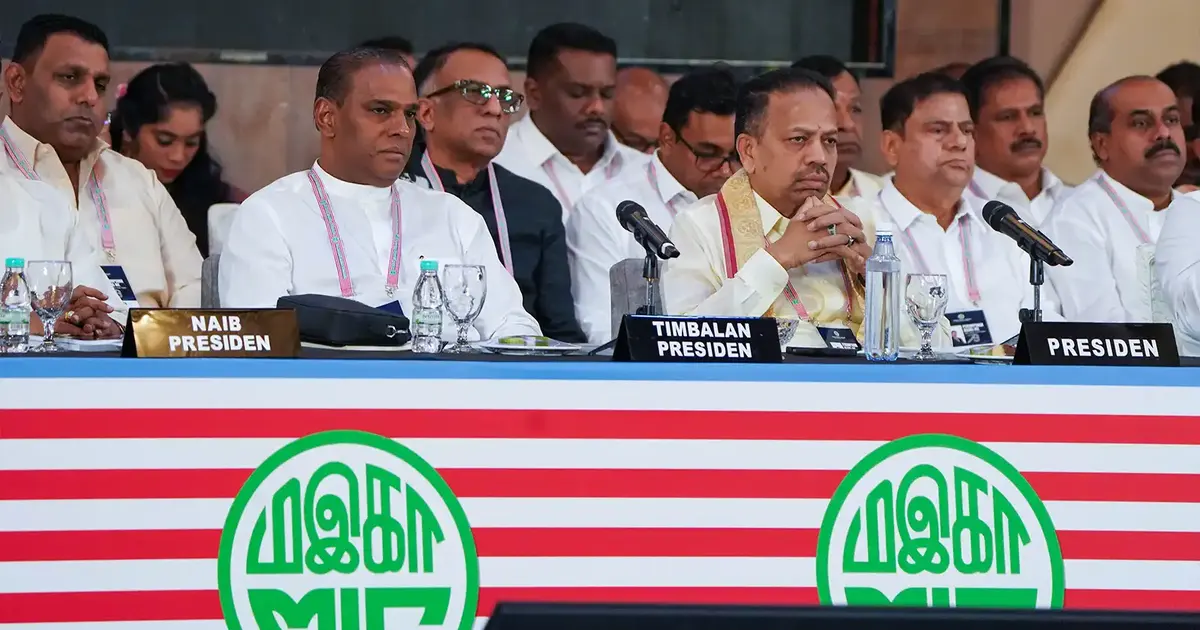
The Malaysian Indian Congress has revised its electoral strategy for the Johor state elections, cementing its presence in two constituencies while redirecting resources elsewhere through a seat-swap arrangement with its Barisan Nasional coalition partner Umno. This recalibration reflects the ongoing negotiation process within Malaysia's dominant political coalition as parties seek to maximize electoral competitiveness across the state's disparate constituencies.
As one of Barisan Nasional's three principal component parties, the MIC has historically played a crucial role in mobilizing minority voter support, particularly among Malaysia's Indian-origin electorate. However, the party faces mounting pressure to demonstrate electoral relevance and deliver concrete parliamentary representation. The decision to maintain direct control over two Johor seats while facilitating a strategic exchange with Umno signals MIC's determination to preserve meaningful presence in a state where Indian voters form modest but significant population pockets. This approach reflects a careful calibration between ambition and pragmatism within coalition politics.
The seat swap mechanism reveals how modern Malaysian electoral coalitions operate beyond simple seat-division agreements. Rather than merely dividing constituencies by mathematical formula, Barisan Nasional parties now engage in sophisticated exchanges that account for relative party strength, voter demographics, and individual candidate viability. Such arrangements require mutual confidence between coalition partners and represent a tacit acknowledgment that electoral success depends not on patronage allocation but on optimal deployment of resources and candidate quality. For Umno, absorbing an additional seat suggests confidence in its ability to retain the constituency with its standard campaign apparatus.
Bukit Batu represents particularly significant terrain within MIC's Johor calculations. The constituency carries symbolic importance as a traditional Indian Congress stronghold and must be defended to maintain the party's internal cohesion and morale. For MIC grassroots members and supporters, losing prominent constituencies without a compelling strategic rationale would signal organizational decline. Retaining Bukit Batu alongside at least one other seat preserves MIC's core claim to relevance within Johor's political landscape and demonstrates to the community that their party retains meaningful voice in state governance.
The broader four-seat allocation mentioned for MIC across Johor reflects a modest but protected footprint. This suggests that beyond the two seats MIC will directly defend, the party may field candidates in additional constituencies under special circumstances or through joint nomination arrangements with other BN components. Such flexibility allows MIC to field candidates in constituencies with significant Indian populations without committing full organizational resources, thereby extending the party's reach while maintaining fiscal prudence. This tiered approach has become increasingly common across Malaysian coalition parties seeking to maximize presence without overextending limited machinery.
From a coalition stability perspective, MIC's negotiated position carries implications for Barisan Nasional's capacity to present a united electoral front in Johor. The fact that seat exchanges could be completed relatively smoothly suggests that personal rivalries and factional tensions within the coalition remain manageable. This contrasts with earlier periods when BN internal negotiations produced visible acrimony and public disputes. Successful resolution of seat negotiations before campaigns commence allows all components to focus on competitive messaging rather than internal grievances, ultimately strengthening coalition morale.
For Malaysian Indian voters in Johor, MIC's defensive positioning raises questions about representation and political influence. Whereas the party once contested substantially more seats, its current footprint represents a long-term contraction reflecting changing demographics and altered voting patterns. However, MIC's continued presence ensures that Indian community concerns regarding education, temple affairs, and economic participation maintain direct advocacy channels within state government. The party's willingness to engage in strategic seat exchanges rather than withdraw entirely suggests organizational leaders believe they can still influence outcomes in selected constituencies where community concentration justifies campaign investment.
Umno's willingness to accommodate MIC through seat exchanges indicates the broader coalition's commitment to maintaining multi-ethnic representation within Barisan Nasional structures. Rather than pursuing maximum Umno representation across all constituencies, the coalition recognizes that electoral legitimacy and policy effectiveness benefit from incorporating diverse component parties. This approach also provides political insurance against accusations that Umno-dominated coalitions marginalize minority communities. By facilitating MIC's participation in meaningful constituencies, Barisan Nasional reinforces its historical positioning as a truly multiethnic political vehicle.
The timing of these seat arrangements carries relevance for broader Malaysian politics. As state elections approach across Malaysia, all coalitions must finalize candidate selections and campaign strategies. Parties completing negotiations ahead of official nomination periods gain tactical advantages in candidate development and voter identification. MIC's relatively swift resolution of its Johor positioning suggests institutional confidence within Barisan Nasional and potentially smoother overall coalition negotiations compared to rival alliances managing similar allocations.
Looking forward, MIC's Johor strategy establishes benchmarks for the party's approach in other states. The willingness to defend limited constituencies rather than contest numerous marginal seats reflects maturation in Malaysian coalition politics toward efficiency and realism. Parties increasingly recognize that dispersing limited resources across many constituencies often produces disappointing results, whereas concentrated campaigns in defensible seats yield better outcome rates. This reorientation explains why Barisan Nasional's component parties increasingly pursue quality-over-quantity strategies in constituency allocation.
The seat swap arrangement ultimately reflects MIC's navigation between institutional decline and continued relevance. While the party's historical influence has diminished substantially, negotiated participation in coalitions ensures continued policy access and representation for Indian communities. This equilibrium, while modest compared to earlier eras of MIC dominance, represents a sustainable political position within Malaysia's evolving electoral landscape. The party's acceptance of this arrangement signals sophisticated leadership recognition that survival in coalition politics demands flexible adaptation to changing circumstances rather than nostalgic attachment to past glory.