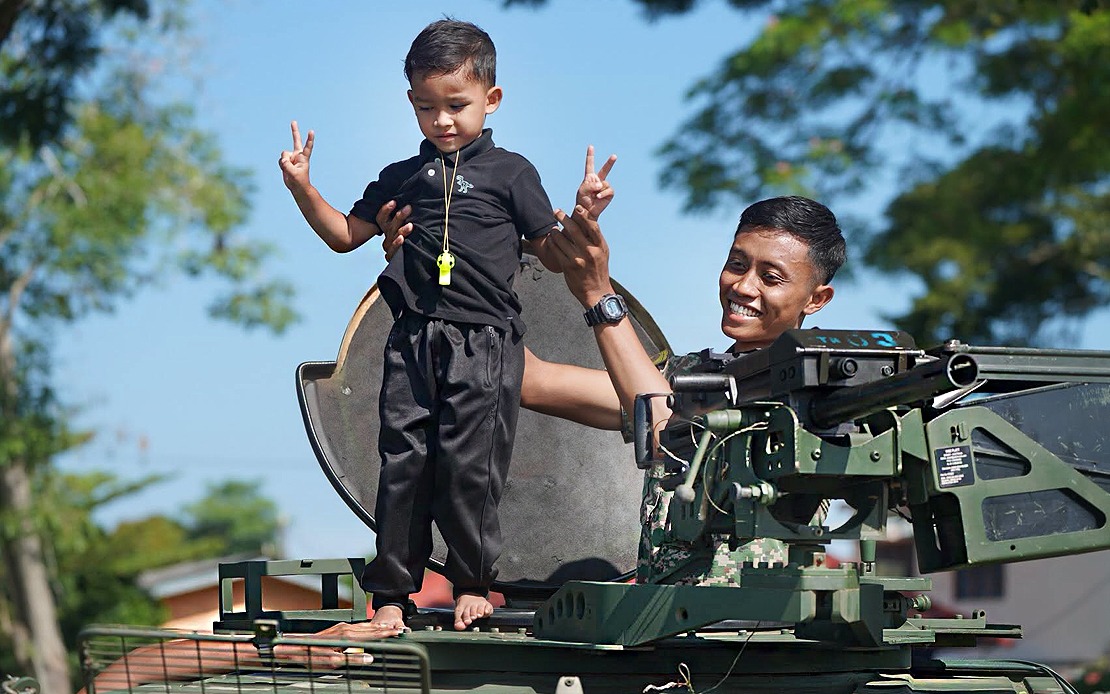
The Ministry of Defence has taken a significant step forward in bridging the gap between the armed forces and civilian communities by rolling out the 'Program Jiwa Murni MADANI' (PJM) initiative in Alor Gajah. Launched at Padang Awam Kampung Gadek on August 15, the programme represents a deliberate strategy to integrate defence and security objectives with tangible community benefits, creating spaces where ordinary citizens can directly interact with military personnel in non-combative, socially-productive settings.
The initiative operates as a multifaceted engagement platform, moving beyond traditional security messaging to encompass healthcare delivery, employment opportunities, and enterprise development. During the Alor Gajah event, participating communities gained access to free medical screenings—a particularly valuable service in rural areas where healthcare accessibility remains a challenge. The programme also featured career exhibitions and volunteer recruitment drives, creating pathways for civilians interested in military service or defence-related careers. Additionally, entrepreneurship workshops and subsidised RAHMAH Sales provided economic development opportunities for residents, demonstrating how defence ministry resources extend into civilian economic welfare.
Beyond one-day activation events, MINDEF's commitment manifested in tangible infrastructure development. The 9th Squadron of the Royal Engineers Regiment executed five substantial community projects totalling RM179,200, each addressing genuine local infrastructure deficits. These initiatives included playground repairs at the Multi-Purpose Hall in Kampung Baru, fence reconstruction at Sekolah Jenis Kebangsaan (Tamil) Durian Tunggal, futsal court development in Taman Seri Kelemak, and roof repairs at two religious institutions—the Madrasah Seri Kemuning and Surau Madrasah Khairiah. This approach leverages military engineering expertise for civilian benefit, simultaneously demonstrating defence capability while building community goodwill.
Deputy Defence Minister Adly Zahari's presentation of a RM133,000 cheque marked a second, equally significant component of the initiative. Distributed through the Service Centre Initiative, these funds benefited eight recipients representing diverse religious and cultural backgrounds across Alor Gajah. The recipients included mosque committees, temple associations, shrine foundations, and educational institutions, reflecting a deliberately inclusive approach that spans Islamic, Hindu, Buddhist, and Christian communities. This religious pluralism within a defence ministry programme signals recognition that national security and community cohesion require inclusive participation transcending sectarian boundaries.
The distribution of 500 RAHMAH welfare baskets to veterans' associations and local residents further underscores MINDEF's comprehensive welfare approach. For Malaysian Armed Forces veterans, such initiatives acknowledge decades of service while integrating them into community development. For general residents, the baskets represent tangible government support during economically challenging periods. This specific focus on veterans' associations creates opportunities for retired military personnel to remain engaged in public service, potentially reducing social fragmentation within this sometimes-marginalised demographic.
Complementing the community welfare strand, the Religious Corps of the Malaysian Armed Forces (KAGAT) conducted parallel activities through the 'Program Ilmu dan Muafakat MADANI' (PIKAT) at Masjid Kelemak. This spiritual dimension—featuring congregational prayers, religious lectures, and mosque engagement—reflects recognition that defence and security extend beyond physical infrastructure to encompass social cohesion and shared values. The combination of PIKAT's spiritual focus with PJM's welfare orientation creates a holistic engagement model addressing multiple community needs simultaneously.
From a strategic perspective, these initiatives align with the National Defence Strategic Plan (PSPN) 2026-2030, specifically its Core 4 objective emphasising Civil-Military Interaction and Community Relations. Rather than viewing defence as a separate military domain, MINDEF positioning positions community welfare as integral to national security. This reflects contemporary security doctrine recognising that military institutions lacking community legitimacy and support face significant operational challenges. By delivering tangible benefits—healthcare, employment pathways, infrastructure, and religious facility support—MINDEF builds the social foundation necessary for sustained security operations.
For Malaysian readers, particularly those in rural areas, such initiatives represent meaningful engagement with national institutions. The Alor Gajah programme demonstrates that defence resources deploy toward civilian benefit, not merely military purposes. For Small and Medium Enterprises interested in government contracts or entrepreneurship support, MINDEF's activities signal alternative funding and development pathways. For religious institutions managing infrastructure constraints, the military's engineering support and financial assistance offer solutions often unavailable through conventional bureaucratic channels.
The regional implications merit consideration as Southeast Asian militaries increasingly adopt community engagement strategies. Malaysia's approach—combining infrastructure development, welfare provision, religious institution support, and explicit civil-military interaction—offers a model for other nations navigating similar civil-military relationship challenges. As regional tensions persist, building robust civil-military trust creates resilience against external pressures while strengthening internal cohesion.
Looking forward, the consistency of such programmes—MINDEF having now established regular PIKAT and PJM cycles—suggests institutionalisation rather than ad-hoc initiatives. This sustainability matters significantly. Communities requiring ongoing healthcare access, economic support, and infrastructure maintenance benefit from predictable, recurring engagement rather than sporadic interventions. For local leaders in Alor Gajah and similar districts, the challenge becomes ensuring that momentum continues and that initial infrastructure improvements and welfare distributions translate into lasting community development.
The integrated nature of these programmes—combining spiritual engagement through KAGAT, practical community service through PJM, and direct financial support for religious and educational institutions—demonstrates sophisticated understanding of community needs. Rather than imposing defence department priorities onto communities, MINDEF responds to locally-identified infrastructure and welfare gaps while maintaining explicit defence ministry messaging and presence. This balance between meeting genuine community needs and pursuing institutional objectives represents the core challenge of civil-military engagement in any democratic context.
For Malaysian defence policy, the Alor Gajah initiative exemplifies evolving doctrine treating military institutions as agents of community welfare alongside security provision. Sustained implementation across multiple districts, combined with measurable outcome tracking and community feedback mechanisms, could establish MINDEF as a visible provider of public goods in rural Malaysia. Success requires ensuring that programmes extend consistently to underserved communities, that infrastructure improvements receive adequate maintenance, and that the underlying message—that defence institutions serve civilian populations—remains central to institutional identity and practice.

