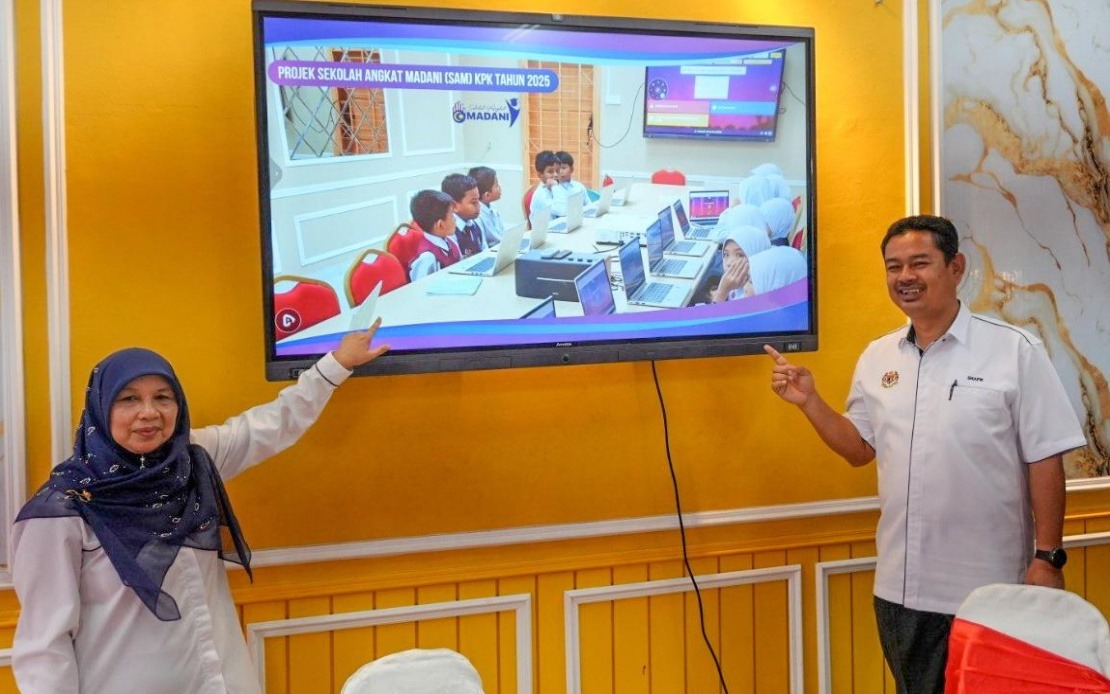
The Ministry of Plantation and Commodities (KPK) has committed RM100,000 towards upgrading facilities at Sekolah Kebangsaan Bendang Kering in Kuala Kangsar, Perak, as part of its wider school adoption initiative aimed at bridging educational disparities in rural communities. The allocation was formally handed over during a ceremony held at the school, with KPK deputy secretary-general (Strategic Planning and Management) Shafie Taib officiating the event in June.
The Malaysian Rubber Board (LGM) is orchestrating the implementation of this adoption programme, which reflects a broader governmental push to strengthen educational infrastructure and human capital development across the country. By positioning the LGM as the executing agency, the ministry has leveraged sector-specific expertise to ensure that improvements align with contemporary educational standards and best practices. This institutional arrangement demonstrates how specialised bodies within the government can extend their mandate beyond their core functions to support national development priorities.
The investment has already yielded tangible improvements across multiple areas of the school's physical environment. Renovation works have focused on the assembly area and main hall, spaces that serve as focal points for student gatherings and school-wide activities. The ministry has also prioritised the establishment of reading corners and the enhancement of preschool classrooms, recognising that early childhood education infrastructure requires particular attention to foster foundational learning habits and literacy development.
Beyond basic infrastructure, the funds have supported the introduction of interactive smartboards into teaching spaces, a step that modernises classroom instruction methods and prepares students for digital literacy in an increasingly technology-dependent economy. The deployment of air conditioning units addresses the practical challenge of maintaining comfortable learning conditions in Malaysia's tropical climate, a factor that directly impacts student concentration and attendance. Educational signage and new furniture have also been installed, creating a more stimulating and ergonomically appropriate learning environment.
The programme extends considerably beyond physical infrastructure improvements, incorporating substantive academic and character-building components. A focused academic performance scheme targeting Malay, English, Science, and Mathematics has been established, with structured incentive systems designed to motivate students achieving outstanding results. This targeted approach recognises that infrastructure alone cannot drive educational quality; curriculum delivery and student motivation require complementary support mechanisms to translate improved facilities into better learning outcomes.
Leadership and talent development have been woven into the programme's design through initiatives including the Student Leadership Motivation Camp and the Student Talent Development Camp. These interventions address a recognised gap in Malaysian education systems where academic excellence often overshadows the cultivation of soft skills, interpersonal competencies, and leadership capabilities that employers and universities increasingly value. By embedding such programmes into a rural school setting, the ministry signals recognition that students in less urbanised areas deserve comparable developmental opportunities.
The selection of SK Bendang Kering reflects official recognition that educational disparities between urban and rural regions persist despite national development efforts. Rural schools frequently face challenges securing adequate resources, attracting qualified teaching staff, and accessing contemporary educational technology. By singling out this institution for structured support, the government acknowledges that market-driven approaches alone do not remedy these inequities, necessitating deliberate public investment and programmatic intervention.
For Malaysian and Southeast Asian observers, this initiative illustrates an emerging model of corporate social responsibility integration within government structures. Rather than outsourcing educational development to private corporations, the ministry has leveraged state-owned entities like the LGM to execute programmes, maintaining public sector control over quality standards and equity considerations. This approach may offer lessons for other regional governments seeking to upgrade rural educational infrastructure without excessive privatisation.
The emphasis on contemporary educational methodologies—interactive learning tools, leadership development, talent identification—reflects Malaysia's positioning within a competitive regional knowledge economy. States throughout Southeast Asia are increasingly competing to develop skilled workforces capable of supporting high-value industries. Initiatives targeting rural students help prevent the emergence of educational underclasses that might be excluded from such opportunities, thereby maximising the talent pool available for national development.
The ministry's confidence that the adoption programme will continue serving as a platform for educational empowerment suggests this represents an ongoing commitment rather than a one-off gesture. Replication of the model across additional rural schools could substantially alter the trajectory of educational access and quality in less urbanised areas. However, the success of such scaling depends on sustained budget allocations and consistent monitoring of outcomes across both infrastructure metrics and student achievement indicators.
For stakeholders in Malaysian education policy, the programme demonstrates that rural development and educational modernisation can be pursued simultaneously through targeted public investment. The integration of academic support with facilities upgrading provides a comprehensive framework that addresses multiple dimensions of educational quality. Should such initiatives prove effective in raising student outcomes and retention rates at SK Bendang Kering, the model may increasingly inform how the government allocates resources for rural educational development across Malaysia.

