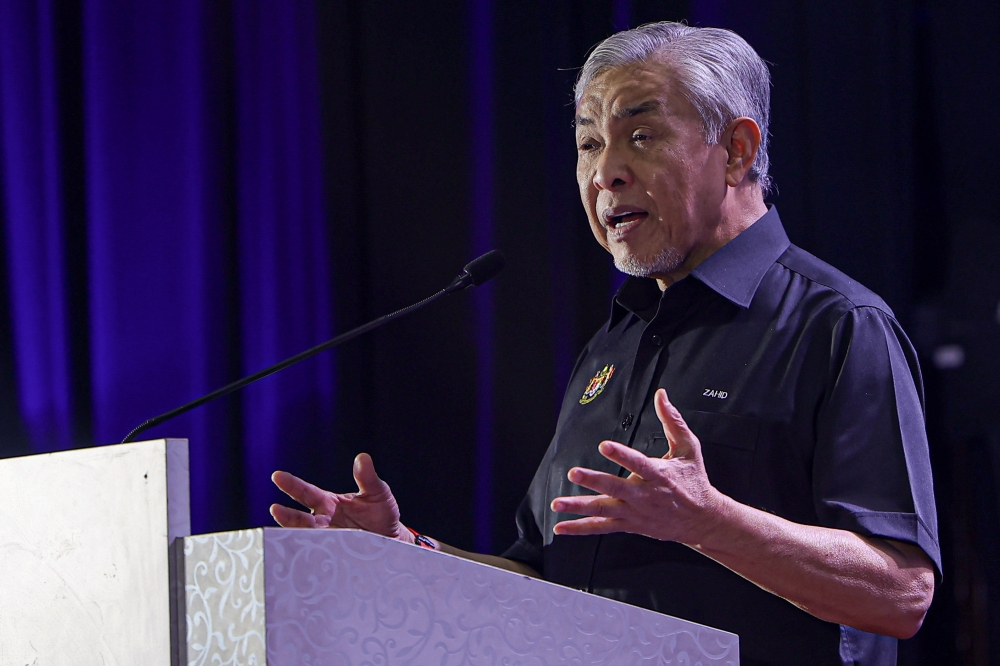
Deputy Prime Minister Datuk Seri Ahmad Zahid Hamidi has raised concerns that civil servants across several ministries were subjected to pressure to attend events organised by or linked to the Barisan Nasional coalition during the recent state-level electoral campaigns. Speaking in Putrajaya on August 6, Zahid indicated that the practice potentially compromised the traditional neutrality expected of the public service and warranted scrutiny by relevant authorities.
The allegation touches on a sensitive constitutional principle governing Malaysia's civil service. The Federal Constitution and the Public Officers (Conduct and Discipline) Regulations 1993 explicitly require the public administration to remain impartial and non-partisan, particularly during periods of heightened political competition. When state elections take place, the expectation is that government officers maintain strict neutrality, refraining from active participation in campaign-related activities unless their professional duties directly require it. Any systematic pressure to breach this boundary carries implications for institutional integrity and democratic fairness.
Zahid's statement comes amid a broader discourse about the boundaries between political machinery and state institutions. Malaysian politics has historically struggled with the blurring of lines between ruling coalition machinery and government administration, a challenge that intensifies during election periods when resources, personnel, and organisational structures become subject to competing pressures. The deputy premier's public airing of these concerns suggests that even within the government, senior figures recognise the severity of potential overreach and the reputational costs to the state apparatus.
The timing of the allegation is noteworthy. Recent state elections across Malaysia have drawn increased domestic and international attention to governance standards and electoral conduct. Opposition parties have frequently raised concerns about the perceived advantage incumbent coalitions enjoy through access to state resources and the presumed influence over public sector participation in political events. Zahid's intervention lends credence to these concerns while simultaneously positioning the federal government as conscious of compliance with constitutional expectations, though it also implicitly acknowledges that such pressure occurred under the administration he helps lead.
The mechanisms through which such pressure may have been exerted likely varied by ministry and locality. In some cases, circulars or directives from senior officials might have framed attendance at BN-linked events as implicitly expected or beneficial for career progression. In others, peer pressure and informal expectations within office hierarchies may have created a coercive environment. Without naming specific ministries or providing detailed evidence, Zahid's statement functions partly as a warning against such practices while offering cover for institutions to review their own conduct internally.
For Malaysian civil servants, the situation presents a genuine dilemma between organisational expectations and constitutional obligations. Junior and mid-level officers who receive directives to attend political events from superiors face an uncomfortable choice: comply with what appears to be an institutional expectation and risk violating their duty of impartiality, or refuse and potentially face career consequences. The absence of clear, transparent enforcement of neutrality rules at the ministry level means that many officers operate in grey zones where the boundaries between acceptable and unacceptable conduct remain ambiguous.
The ramifications extend beyond individual officers to the broader legitimacy of electoral outcomes. When voters perceive that state machinery has been mobilised on behalf of particular political contenders, confidence in the impartiality of election administration diminishes. In Malaysia's competitive electoral environment, where control of state assemblies carries substantial consequences for resource allocation and policy direction, even perceived compromises to civil service neutrality can fuel post-election disputes and undermine democratic consolidation. The fact that a deputy prime minister felt compelled to raise these concerns publicly suggests awareness of the reputational damage such practices inflict.
The question of enforcement now becomes critical. Zahid's statement implicitly calls for investigation and potential corrective action, yet accountability mechanisms remain underdeveloped in practice. The Public Complaints Bureau and the Public Service Department possess theoretical authority to investigate such matters, yet their track records of pursuing cases involving political pressure remain limited. Without robust follow-up, Zahid's statement risks being interpreted as performative rather than indicative of genuine institutional reform.
For Malaysian policymakers and civil service leadership, the challenge lies in translating abstract constitutional principles into concrete operational guidelines and institutional cultures that protect officer neutrality without paralyzing legitimate government communication. Clear policies distinguishing between ministerial administrative functions and campaign activities would provide officers with defensible positions when refusing pressure to participate in overtly political events. Training and monitoring systems that emphasise the constitutional duty of impartiality could shift organisational norms.
The allegation also carries implications for how Malaysia manages future elections. As the country moves toward potentially more frequent electoral cycles at state and federal levels, the stakes of protecting civil service integrity only increase. Regional observers, particularly those from democracies grappling with similar tensions between political parties and state institutions, will watch how Malaysia responds to this assertion of institutional pressure.
Ultimately, Zahid's comments represent both an acknowledgment that systemic problems exist and an opening for corrective institutional action. Whether the government translates this acknowledgment into concrete measures—clearer guidelines, visible enforcement, and leadership messaging about the primacy of constitutional neutrality—will determine whether the statement marks a turning point in Malaysian administrative practice or remains merely a note of concern without substantive consequences.

