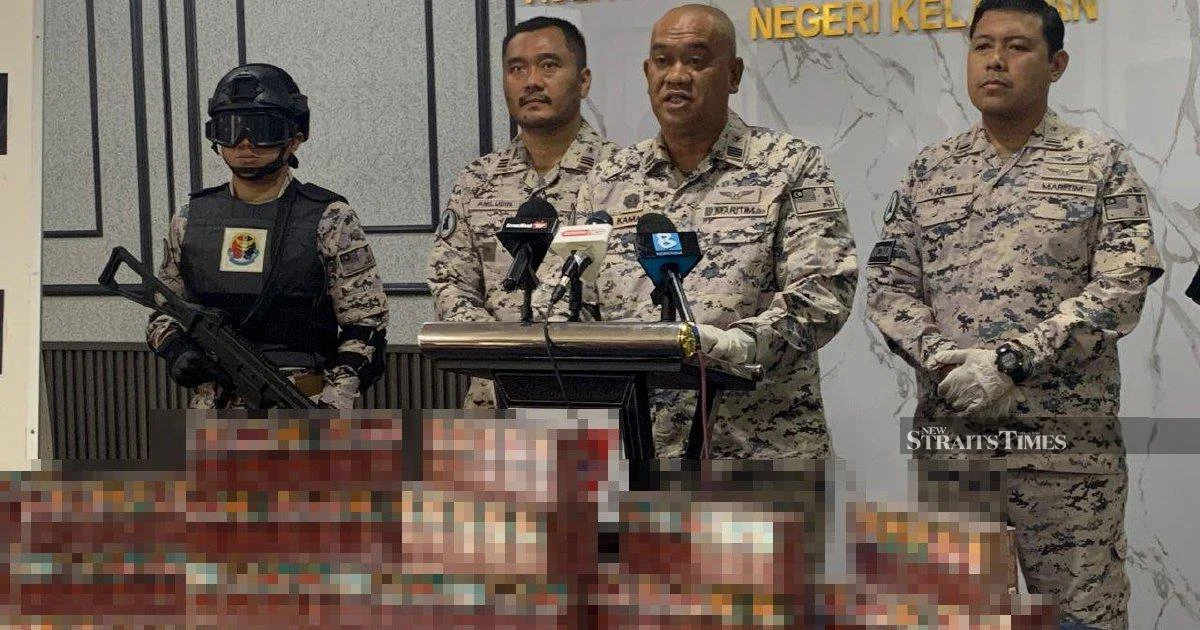
The Malaysian Maritime Enforcement Agency (MMEA) has intercepted a substantial consignment of illegal cigarettes in a targeted operation along the Kelantan coast, marking another significant blow against organised smuggling syndicates operating in Malaysian waters. The enforcement action took place at Kampung Penambang in Pasir Puteh, where officers discovered and seized 24 boxes of contraband cigarettes with an estimated black market value of RM212,000, demonstrating the continued sophistication and scale of illicit tobacco trafficking in the East Coast region.
This seizure underscores the persistent challenge facing Malaysia's law enforcement agencies in combating cigarette smuggling, an issue with deep roots in regional trade dynamics and substantial economic implications. The contraband tobacco trade remains one of Southeast Asia's most lucrative criminal enterprises, with syndicates exploiting porous maritime borders and supply chain complexities to move products between jurisdictions. Kelantan's strategic location along the east coast has historically made it vulnerable to such operations, with multiple waterways and fishing communities providing concealment and transit opportunities for smugglers.
The MMEA's operation reflects an increasingly coordinated approach to maritime security in Malaysian waters, where agencies have enhanced surveillance capabilities and inter-agency cooperation to detect and disrupt trafficking attempts. The recovery of this particular shipment represents not merely the disruption of a single transaction but rather intervention in a wider network of distribution and profit generation. Investigations following such seizures frequently reveal connections between smuggling groups, funding sources, and retail distribution channels, providing intelligence that supports broader enforcement strategies.
The economic dimensions of cigarette smuggling carry substantial consequences for Malaysia's revenue base and legitimate commercial interests. Lost excise duties and taxes on illegal tobacco sales represent significant foregone government revenue, while the illicit trade undermines the competitive position of legitimate manufacturers and retailers who operate within the legal framework. The RM212,000 valuation of this single seizure illustrates the magnitude of money flowing through smuggling networks, funds that often sustain other criminal enterprises and provide capital for expanding operations.
From a public health perspective, the proliferation of contraband cigarettes in Malaysia presents additional complications beyond tax evasion concerns. Illicit tobacco products frequently lack proper regulation and quality control standards, potentially exposing consumers to unmonitored substances and health risks. Furthermore, the availability of cheaper smuggled cigarettes may undermine public health initiatives aimed at reducing smoking prevalence through taxation and regulatory measures, particularly among younger and lower-income populations more price-sensitive to tobacco products.
The Kelantan operation highlights the particular vulnerability of northern and eastern coastal regions, where geographic proximity to neighboring Thailand and access to maritime routes create operational advantages for smuggling syndicates. These networks typically maintain supply chains extending from manufacturing sources through transhipment points to final distribution markets, with sophisticated logistics and corruption mechanisms enabling sustained operations despite enforcement pressures. The recovery of 24 boxes suggests this represented either an intermediate shipment or partial interception of a larger operation, a distinction that investigative follow-up would clarify.
MEA's enforcement capacity has expanded in recent years through equipment upgrades and personnel training, yet the scale of smuggling activity continues to challenge resources across multiple agencies. Coordination between maritime enforcement, customs authorities, police narcotics divisions, and local intelligence networks remains critical to sustained success against entrenched smuggling organisations. The agency's visibility of operations in areas like Kampung Penambang depends on community reporting, intelligence development, and strategic positioning of patrol assets—factors requiring sustained investment and operational planning.
The seizure arrives amid broader regional concerns about cigarette smuggling affecting multiple Southeast Asian jurisdictions. Thailand, Vietnam, and other neighboring countries experience comparable challenges, creating pressure for cross-border intelligence sharing and coordinated enforcement responses. However, divergent regulatory frameworks, tax structures, and corruption vulnerabilities across the region complicate efforts to establish unified approaches to supply chain disruption and source country interdiction.
Looking forward, sustained effectiveness against cigarette smuggling will likely require multi-faceted strategies extending beyond maritime interdiction. Supply-side interventions targeting manufacturing sources, financial system measures disrupting smuggling proceeds, and enhanced retail enforcement detecting illicit product distribution represent complementary approaches. Investment in technology enabling tracking of legally manufactured cigarettes through the supply chain could provide additional intelligence regarding diversion points where products enter smuggling networks.
The Kelantan operation demonstrates that Malaysia's maritime enforcement capacity remains operationally engaged with smuggling challenges, yet the recovery of RM212,000 worth of contraband in a single incident underscores the continuing profitability and persistence of these networks. Sustained pressure through consistent interdiction efforts, combined with intelligence development and multi-agency coordination, represents the most promising pathway toward meaningfully reducing the scale of illicit tobacco trafficking affecting Malaysian waters and creating cascading impacts across enforcement and health objectives.

