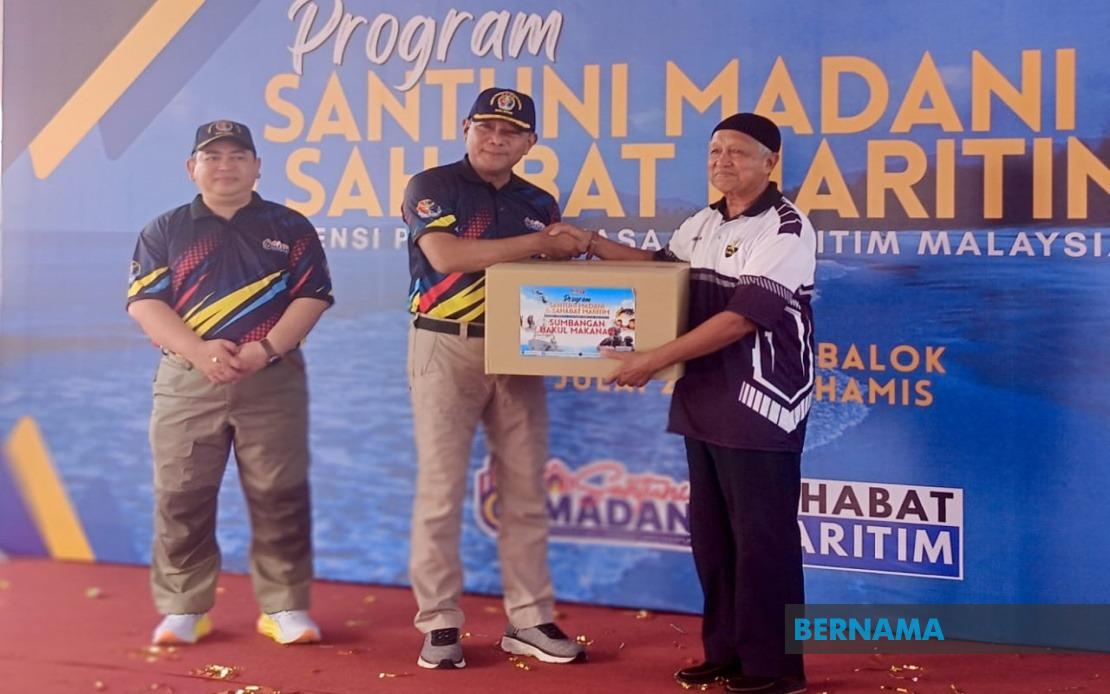
The Malaysian Maritime Enforcement Agency has delivered significant results in its enforcement operations during the opening half of 2024, recording RM2.29 billion in asset seizures and detaining 516 suspects across multiple categories of maritime violations. Maritime Admiral Datuk Mohd Rosli Abdullah, the agency's director-general, disclosed the figures during a community engagement event held at Pantai Rekreasi Balok in Kuantan, positioning these achievements as a demonstration of the MMEA's core mission to protect Malaysian territorial waters and uphold national sovereignty.
The composition of seizures reveals the breadth of maritime enforcement challenges facing the nation. Confiscated local vessels constitute the overwhelming majority of the value recovered, totalling RM2.11 billion, underscoring the vulnerability of domestic maritime assets to criminal exploitation. Drug trafficking operations account for the second-largest component at RM86.06 million, reflecting the region's persistent struggle with narcotics transit through sea lanes. Foreign fishing vessels seized amounted to RM66 million, indicating ongoing pressure from illegal, unreported, and unregulated fishing activities that deplete Malaysia's marine resources and underscore jurisdictional enforcement complexities. Additional seizures encompassed smuggled cigarettes valued at RM25.16 million, farmed prawns worth RM5.2 million, and contraband diesel totalling RM3.33 million, painting a picture of diverse illicit trade routes operating across Malaysian waters.
Admiral Mohd Rosli emphasised that the agency's operational tempo reflects a deliberate strategic approach to preventing the smuggling of price-controlled and subsidised commodities beyond Malaysian borders, a persistent challenge given the economic incentives for arbitrage across regional boundaries. He highlighted that concurrent efforts to combat tax evasion through maritime channels remain central to MMEA operations, recognising that such activities deprive the government of revenue essential for public services. The director-general's remarks underscore growing official recognition that maritime crime extends far beyond traditional concerns of piracy or illegal fishing, encompassing intricate supply-chain violations that demand sustained interagency coordination and resource deployment.
The MMEA's operational framework increasingly emphasises integrated enforcement mechanisms, particularly through participation in Operation Tiris, a multi-agency initiative designed to enhance surveillance and interception capabilities across disputed and contested maritime zones. This collaborative approach addresses a critical reality facing Southeast Asian maritime enforcement: individual agency resources often prove insufficient against organised criminal networks with sophisticated vessel technology, satellite communications, and transnational logistical capabilities. By pooling intelligence and coordinating operations with customs, police, and defence agencies, Malaysian authorities can achieve coverage and response capacity unattainable through unilateral efforts.
A recent high-profile success illustrates this operational integration. In late June, MMEA enforcement officers, working alongside partner agencies, disrupted a cigarette smuggling operation in Tawau, Sabah, seizing contraband and a vessel collectively valued at RM64 million. This single operation, whilst notable, represents merely one data point in what Admiral Mohd Rosli framed as a sustained campaign against cross-border criminal enterprises. The specificity of operation locations and dates suggests that MMEA maintains detailed operational records and demonstrates transparency in reporting enforcement outcomes to public stakeholders.
Beyond enforcement metrics, the MMEA has begun emphasising community engagement as a complementary strategy to traditional law enforcement. The Santuni MADANI and Sahabat Maritim programmes conducted during the Kuantan event aimed to cultivate awareness of maritime safety protocols among coastal populations whilst simultaneously strengthening cooperative relationships between enforcement personnel and fishing communities. This approach reflects broader international best practices recognising that sustainable maritime security depends partly on community compliance and willingness to report suspicious activities to authorities. Coastal populations, by virtue of their proximity to maritime activities, possess observational advantages that formal surveillance systems cannot replicate.
The agency has also identified maritime search and rescue capabilities as a priority domain requiring continued enhancement and investment. SAR operations, whilst sometimes perceived as distinct from enforcement activities, frequently intersect with criminal investigations, particularly when vessels engaging in smuggling operations encounter distress situations. Building redundancy and rapid-response capacity in SAR infrastructure benefits both humanitarian objectives and enforcement outcomes. Similarly, Admiral Mohd Rosli reaffirmed commitment to maritime security more broadly, acknowledging that territorial water protection serves multiple state interests ranging from fisheries resource management to counterterrorism and counter-proliferation objectives.
For Malaysian readers and policymakers, these enforcement figures carry implications extending beyond headline statistics. The concentration of seizure value in domestic vessel confiscations suggests that Malaysian boat owners and operators face particular vulnerability to criminal coercion or enticement into smuggling operations, raising questions about economic pressures within fishing communities and the adequacy of legitimate livelihood alternatives. The substantial drugs seizures reflect Malaysia's continued role in regional narcotics transit networks, notwithstanding enforcement efforts. Cigarette smuggling persists despite multiple taxation and regulatory initiatives, indicating that price differentials with neighbouring jurisdictions continue incentivising illegal supply operations.
The regional context amplifies significance of these enforcement achievements. Southeast Asia's maritime domain remains characterised by overlapping jurisdictional claims, porous surveillance, and limited Coast Guard capacity in several neighbouring states, creating enforcement asymmetries that criminal networks routinely exploit. Malaysia's positioning as a developed maritime economy with relatively robust enforcement infrastructure makes its actions consequential for regional maritime governance. Successful MMEA operations contribute to deterrence effects that extend beyond Malaysian waters, as international smuggling networks factor enforcement risk into operational calculations across the region.
Looking forward, Admiral Mohd Rosli's emphasis on operational intensification suggests the MMEA anticipates continued or increasing maritime crime pressures throughout 2024. The agency's multi-dimensional approach—combining direct enforcement, community partnership, interagency coordination, and SAR capability development—reflects sophisticated understanding that maritime security comprises interconnected challenges requiring comprehensive responses. As Malaysian waters continue serving critical roles in regional trade, energy transport, and fisheries, maintaining enforcement effectiveness remains essential to protecting national interests whilst contributing to broader Southeast Asian maritime stability.

