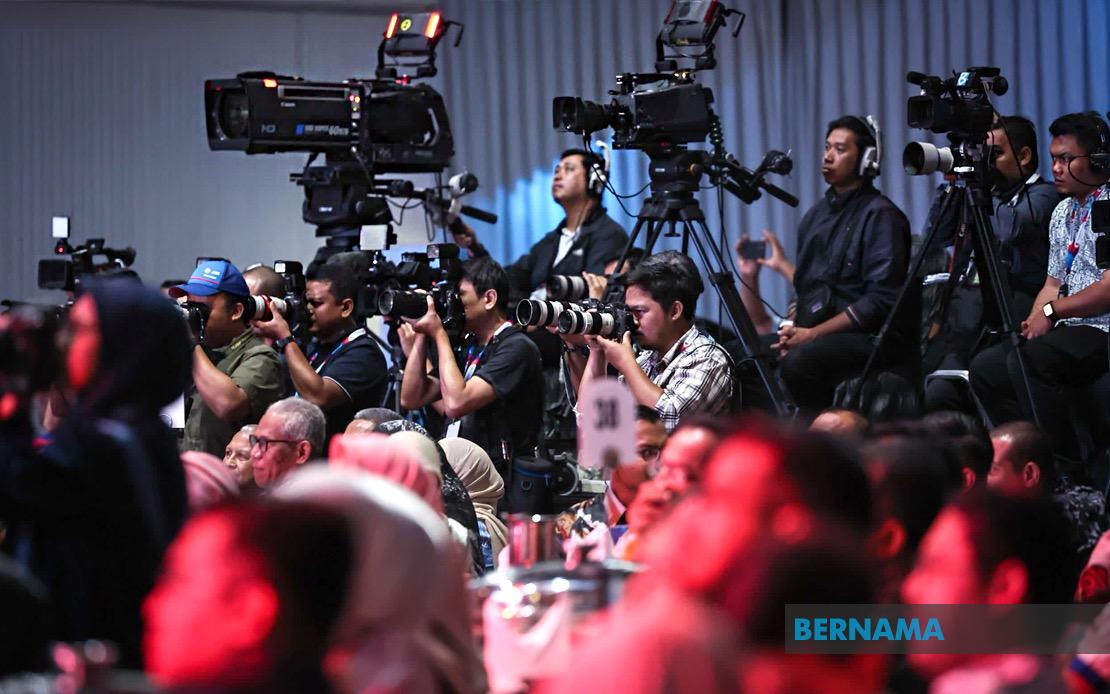
The Malaysian Media Council has thrown its backing behind Prime Minister Datuk Seri Anwar Ibrahim's call for a structured approach to handling complaints about journalists, positioning the endorsement as a significant step toward reinforcing independent media oversight in Malaysia. Under the proposed framework, grievances involving journalists from recognised news organisations must be directed to the Council initially rather than proceeding directly to legal or enforcement channels, a mechanism the MMM argues protects both journalistic integrity and public access to fair redress.
In welcoming the Prime Minister's stance, the MMM characterised the pronouncement as validating the institution's foundational purpose as an autonomous regulatory body for the nation's media landscape. The Council emphasised that this arrangement embodies its mandate to simultaneously advance media liberty, elevate journalistic standards, promote ethical responsibility in newsrooms, and furnish a complaints mechanism that operates transparently according to established protocols. This dual-function approach reflects a broader international trend where democracies seek to balance press freedom with accountability mechanisms that do not depend entirely on judicial intervention.
The MMM's statement underscores a critical distinction in its operational philosophy: the Council functions as a complement to—not a substitute for—the courts or investigative authorities. Rather, it positions itself as the appropriate venue for disputes centred on editorial judgement, professional conduct, reporting accuracy, the right of reply, corrections, coverage fairness, and matters bearing on the public interest. This delineation becomes particularly important in a Southeast Asian context where media organisations sometimes face pressure from multiple quarters, and a dedicated review body can help differentiate between legitimate concerns and attempts to inhibit reporting.
A central tenet of the MMM's framework rests on the proposition that journalistic complaints warrant contextual analysis before triggering formal investigations or punitive measures. By requiring preliminary assessment, the mechanism seeks to prevent arbitrary action against reporters and editors based solely on a lodged complaint, thereby introducing a buffer that considers journalism's democratic function and the media's accountability to audiences. This safeguard gains resonance given Malaysia's recent performance on international press freedom assessments, where the nation's ranking has become a touchstone for evaluating the health of democratic institutions.
The Council made clear that journalists and media outlets remain fully subject to Malaysian law, but emphasised that the nature of a complaint—specifically whether it concerns journalistic practice rather than criminal conduct—should determine the appropriate initial pathway. Complaints alleging defamation, invasion of privacy, inaccurate reporting, or unfair coverage can be managed through the MMM's established procedures, which incorporate professional standards and journalism principles. This tiered system aims to prevent situations where minor editorial disputes escalate into formal legal proceedings without intermediate resolution opportunities.
Operationally, the MMM's mechanism functions as follows: members of the public, organisations, government bodies, and affected parties submit complaints to the Council's Secretariat, which conducts preliminary screening to establish whether the matter falls within the Council's remit and involves journalistic practice. Where appropriate, the complaint is forwarded to the relevant news organisation for response, clarification, or corrective action. If unresolved at this stage, the complaint may advance to formal assessment under the Council's Code of Conduct and recognised journalism principles. This graduated approach provides multiple opportunities for settlement without necessitating formal adjudication.
The MMM stressed that this architecture does not shield news organisations from accountability but rather ensures that such accountability flows through professional, impartial, and balanced channels. The Council argued that media freedom and media responsibility should not be positioned as antagonistic forces but rather as complementary principles that strengthen each other when properly balanced. This framing addresses a persistent tension in Malaysian public discourse, where media freedom is sometimes caricatured as licence rather than as a cornerstone of democratic governance carrying commensurate responsibilities.
In positioning the Prime Minister's statement within the broader context of Malaysia's World Press Freedom Index standing, the MMM called upon all stakeholders—government ministries, political actors, public institutions, civil society bodies, and citizens—to channel media disputes through the Council's established mechanism rather than pursuing alternative avenues. The Council advocated for cultivating a culture wherein professional processes replace public campaigns, intimidation tactics, threats, or retaliatory measures as the default mode of addressing grievances. This cultural shift carries particular significance in Malaysia's media ecosystem, where informal pressure and reputational sanctions can prove as limiting as formal legal action.
The MMM's statement reflects an implicit acknowledgment that media regulation in Malaysia stands at an inflection point. By securing the Prime Minister's endorsement for its role, the Council gains political legitimacy to function as a credible interlocutor between journalists, complaint-makers, and other stakeholders. However, this legitimacy depends upon consistent application of principles, demonstrable impartiality, and public confidence that the mechanism prioritises substantive justice over expedient outcomes. For Malaysian newsrooms, the development signals that working within a structured complaints framework may offer greater protection than navigating ad-hoc pressures or litigation risks.
Looking forward, the MMM committed to close collaboration with government, Parliament, media organisations, civil society, and the public to implement this approach effectively and consistently with Malaysia's democratic framework. This multistakeholder engagement becomes crucial in a regional context where press freedom remains unevenly distributed and where models of media self-regulation vary considerably across Southeast Asia. Malaysia's experience with the MMM mechanism may offer lessons for other nations in the region grappling with similar challenges of harmonising media freedom, public accountability, and regulatory independence.

