New Delhi and Jakarta are moving to cement what both governments view as a crucial partnership for the Indo-Pacific region, with Indian Prime Minister Narendra Modi's visit to Indonesia this week signalling the depth of strategic intent behind their warming ties. Meeting with President Prabowo Subianto on Tuesday at Jakarta's Merdeka Palace, Modi's discussions with the Indonesian leader reflected broader aspirations to anchor bilateral cooperation across multiple sectors even as economic globalisation encounters significant headwinds and geopolitical competition intensifies across Asia.
The ceremonial trappings of the encounter underscored Jakarta's view of the relationship's importance. Modi's aircraft was escorted into Indonesian airspace by three fighter jets, and Prabowo himself greeted the Indian premier on the tarmac at Halim Perdanakusuma Air Force Base—a protocol choice that signals the highest diplomatic regard between the two governments. Such symbolic gestures matter in international relations, particularly when two large developing nations seek to demonstrate alignment to their domestic constituencies and the wider world.
The substantive agenda encompasses an unusually comprehensive range of concerns. Defence and security cooperation tops the list, followed by commitments to expand trade and investment frameworks, establish joint approaches to food security, coordinate energy strategies, and secure supplies of critical minerals essential for modern industries. Notably, both countries are also prioritising capacity building in health and education sectors, suggesting the partnership extends beyond purely geopolitical or commercial calculus into areas affecting ordinary citizens. Eight formal agreements and multiple memorandums of understanding were expected to be formally announced, Indonesian Foreign Minister Sugiono disclosed to journalists ahead of the talks.
For Malaysia and other Southeast Asian nations monitoring regional dynamics, this partnership carries particular significance. India and Indonesia together represent over one-third of the world's population and control or influence crucial maritime corridors through which global commerce flows. Their coordination on issues ranging from energy security to critical minerals acquisition will likely reverberate throughout the region, potentially affecting supply chains, pricing, and the balance of power in regional forums where both countries hold substantial influence.
The visit marks Modi's return to Indonesia after a 2018 visit, but the context has shifted dramatically. Then, the global economy appeared more stable; today, inflation, supply chain disruptions, and competing great-power strategies dominate policymaking. Prabowo's invitation as chief guest at India's Republic Day celebrations last year had already signalled mutual interest in deepening engagement. This return visit by Modi consolidates that trajectory while providing an opportunity to translate goodwill into concrete institutional arrangements.
Defence procurement features prominently in bilateral discussions, with Indonesia having expressed serious interest in India's BrahMos supersonic cruise missile system. These negotiations have reportedly advanced to sophisticated stages, suggesting both governments believe the arrangement addresses genuine strategic needs rather than serving merely symbolic purposes. Beyond specific weapons systems, maritime security cooperation looms large given that India and Indonesia share overlapping strategic interests across key shipping lanes connecting the Indian Ocean to the Pacific. Such cooperation becomes increasingly vital as competition for regional influence intensifies and freedom of navigation—particularly through the Strait of Malacca—remains a central concern for multiple stakeholders.
A digital commerce initiative dubbed the Indonesia Open Network is scheduled for launch during the visit, directly mirroring India's own digital public infrastructure model. This represents an intriguing transfer of governance technology and reflects growing recognition that economic competition increasingly plays out through digital architecture and financial technology standards, not merely traditional trade arrangements. For Southeast Asian observers, India's willingness to share such technological frameworks suggests New Delhi's confidence in its own digital innovations and desire to position itself as a knowledge provider to developing economies.
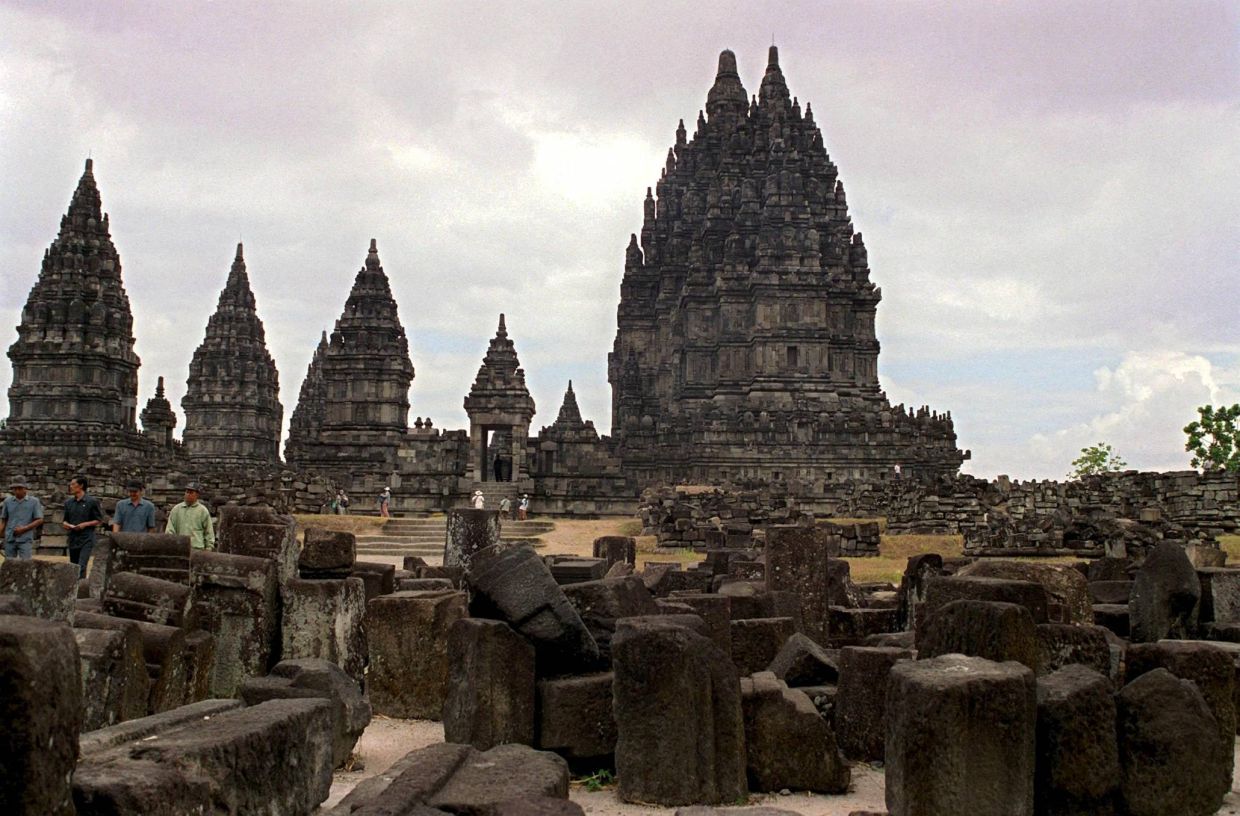
Cultural and heritage cooperation, often overlooked in geopolitical analysis, forms another dimension of the visit. Modi is expected to travel to Yogyakarta on Wednesday to potentially inaugurate an Indian-supported restoration project at Prambanan, the celebrated Hindu temple complex. This commitment to preserving Indonesia's cultural patrimony carries symbolic weight beyond tourism or academic interest. It demonstrates India's willingness to invest in shared cultural heritage and signals respect for Indonesia's diverse religious and cultural traditions, thereby strengthening people-to-people connections that ultimately underpin durable diplomatic relationships.
The timing of Modi's visit—positioned as the opening salvo of a broader Indo-Pacific tour encompassing Australia and New Zealand—underscores strategic calculation. By starting in Indonesia and moving through regional partners, Modi reinforces the message that India views Southeast Asia not as peripheral to its foreign policy but as central to its strategic positioning. This sequencing also reflects awareness that Indonesia, as ASEAN's largest member and a nation of global demographic and economic consequence, deserves priority attention from any great power seeking influence across Asia.
Both countries' membership in the Group of 20 and BRICS adds another layer to their relationship. Within these forums, India and Indonesia increasingly coordinate positions on development finance, climate action, and alternatives to Western-dominated multilateral institutions. Their bilateral strengthening thus has implications extending well beyond their own relationship, potentially influencing how the Global South collectively engages with major powers and shapes international institutions.
Indian Ambassador Sandeep Chakravorty's emphasis on the importance of Global South solidarity carried particular resonance, framing the partnership not as directed against any specific rival but as an assertion of independent agency by two major developing democracies. This rhetorical framing attempts to position India-Indonesia cooperation as constructive rather than confrontational, an important distinction given sensitivities surrounding great-power competition in Asia. For Malaysia and other regional states seeking to maintain strategic autonomy while benefiting from engagement with multiple powers, the India-Indonesia model offers both inspiration and cautionary lessons about the complexities of balancing competing interests.

