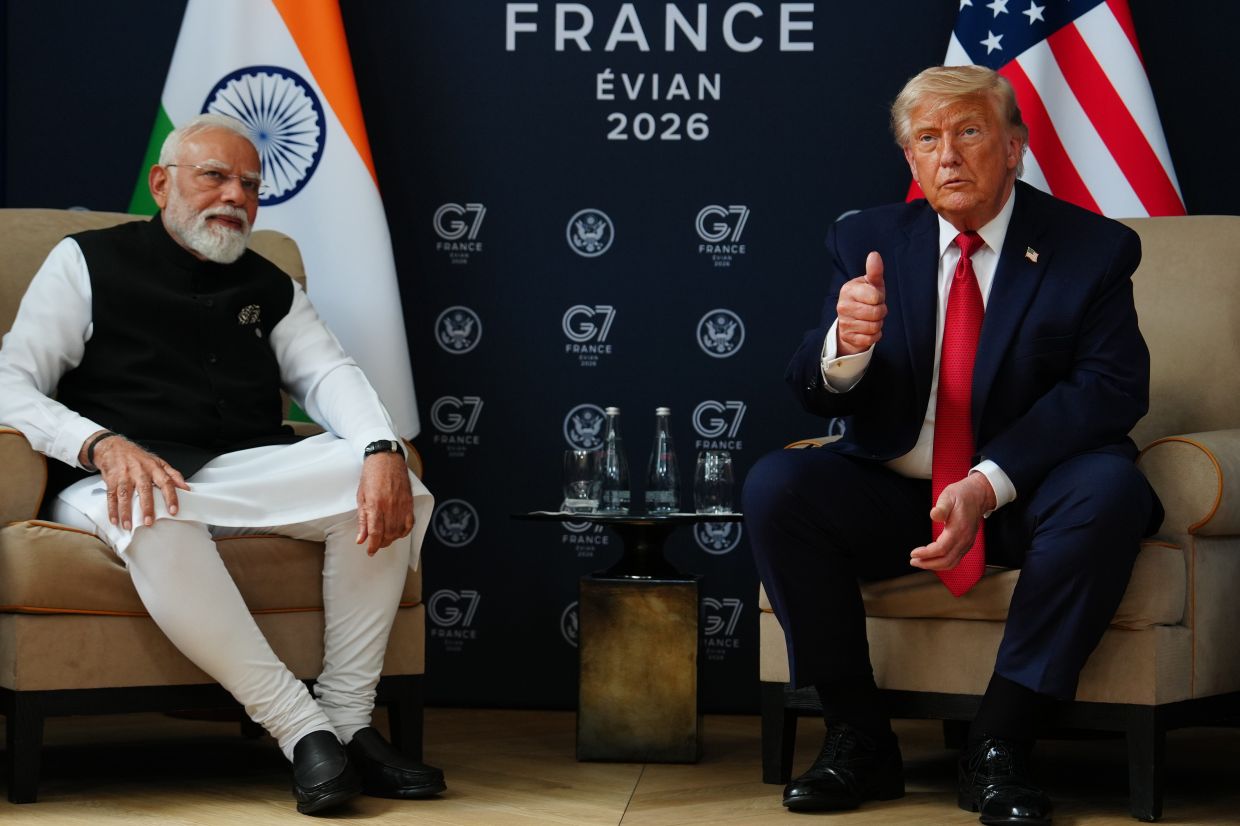
New Delhi's diplomatic engagement with Washington has reached a pivotal moment, with Indian Prime Minister Narendra Modi declaring that bilateral trade negotiations have achieved "significant progress" following his meeting with President Donald Trump on the sidelines of the G7 summit in Evian, France. The two leaders held their first face-to-face talks since their February 2025 gathering in Washington, signalling renewed momentum in efforts to reshape the commercial relationship between the world's largest and largest democracies.
According to India's foreign ministry readout, both leaders expressed considerable satisfaction with progress on the interim Bilateral Trade Agreement, which has been a focal point of engagement between the two nations for several years. When questioned by reporters about the proximity of a final accord, Trump indicated that negotiations had advanced to a stage where completion appeared imminent, describing the parties as "very close" to finalising terms. The Trump administration has dispatched US Trade Representative Jamieson Greer to conduct the next round of discussions in India, underscoring the urgency both governments are placing on reaching resolution.
The underlying economic stakes justify this heightened attention. Washington and New Delhi have established an ambitious target of increasing bilateral trade to US$500 billion by 2030, a figure that would substantially deepen commercial interdependence between the two nations and reshape regional supply chains. India's Commerce Minister Piyush Goyal signalled in early June that negotiators had resolved approximately 99 per cent of the initial tranche of the proposed agreement, suggesting that remaining obstacles are largely technical rather than fundamental. This assessment indicates that the final phase of negotiations, while potentially contentious, should not derail the broader arrangement.
For Malaysian readers and broader Southeast Asian observers, the significance of a US-India trade deal extends beyond bilateral relations. A strengthened commercial partnership between Washington and New Delhi would reinforce the geopolitical architecture that many regional nations view as essential for maintaining a rules-based international order. India's growing economic and strategic role in the Indo-Pacific has made its trade relationships with major Western powers a matter of considerable regional interest, particularly for nations concerned about navigating between competing great-power interests.
The path to this moment, however, has not been smooth. An initial framework agreement reached in February this year appeared to signal an imminent conclusion, yet subsequent developments complicated progress. The US Supreme Court's striking down of Trump's sweeping tariff measures created uncertainty about Washington's trade policy direction, while the Trump administration simultaneously launched investigations into unfair trade practices by multiple countries, including India, and imposed a blanket 10 per cent tariff on imports. This apparent contradiction—simultaneously negotiating a bilateral agreement while initiating protectionist investigations—created friction that slowed discussions and required high-level intervention to restart.
Market access and tariff disputes have proven to be the thorniest issues, reflecting the deep structural differences in how both economies operate and protect domestic industries. India's resistance to opening certain sectors while seeking improved access to American markets has mirrored similar tensions in other trade negotiations globally. The fact that negotiators have reportedly resolved 99 per cent of outstanding issues suggests that both sides have found acceptable compromises on these fundamentally difficult questions, though the final one per cent typically encompasses the most politically sensitive areas.
Beyond commerce, Modi raised pressing humanitarian concerns during his Evian meeting with Trump, specifically advocating for safeguards protecting Indian seafarers operating in the Middle East. Three Indian sailors died in a US military strike targeting a commercial vessel off Oman on June 10, an incident that has complicated India's already delicate position in the Middle Eastern conflicts. This appeal highlights how regional instability creates ripple effects that affect ordinary citizens from nations far removed from the primary conflict zones, a reality that resonates strongly across Southeast Asia where many countries depend on safe maritime passage through volatile waters.
India's vulnerability to Middle Eastern disruptions extends well beyond maritime safety concerns. The closure of the Strait of Hormuz by Iran has severely constrained energy supplies that India depends upon, while disruptions to fertiliser and food supply chains have cascading consequences for agricultural production and food security. Modi explicitly warned that these supply-chain disruptions caused by regional conflict would continue imposing costs on Global South nations for an extended period, an assessment that has particular resonance for other developing economies in Southeast Asia that face similar vulnerabilities to external shocks beyond their control.
The timing of Modi's emphasis on these humanitarian and supply-chain concerns underscores a broader Indian strategy: leveraging deepened engagement with the United States on economic matters while simultaneously seeking American acknowledgment of the costs that Middle Eastern instability imposes on non-combatant nations. For Southeast Asian policymakers observing from Bangkok, Jakarta, or Kuala Lumpur, this approach offers instructive lessons about negotiating with major powers—pursuing concrete economic benefits while diplomatically advancing broader regional stability concerns.
The completion of a US-India trade agreement would mark a significant milestone in reshaping global commerce patterns. It would demonstrate that even amid broader American protectionist tendencies, Washington remains willing to forge deeper commercial ties with strategic partners. For India, such an agreement validates its pivot toward closer alignment with the United States and like-minded democracies, though New Delhi would undoubtedly maintain its traditional balancing act between multiple great powers. Both nations' commitment to working toward what they describe as a "commercially meaningful agreement at the earliest" suggests that negotiators expect to present a final accord within months rather than years.
Regional implications merit attention as well. A stronger US-India economic partnership could reshape supply chains and investment flows throughout Asia, potentially creating new opportunities and competitive pressures for countries like Malaysia, Vietnam, and Thailand that have developed manufacturing capabilities. The agreement would also underscore India's elevated position within American strategic calculations, reinforcing New Delhi's role as a counterweight to Chinese influence in the Indo-Pacific—a development that carries significance for how regional power dynamics evolve over the coming years.