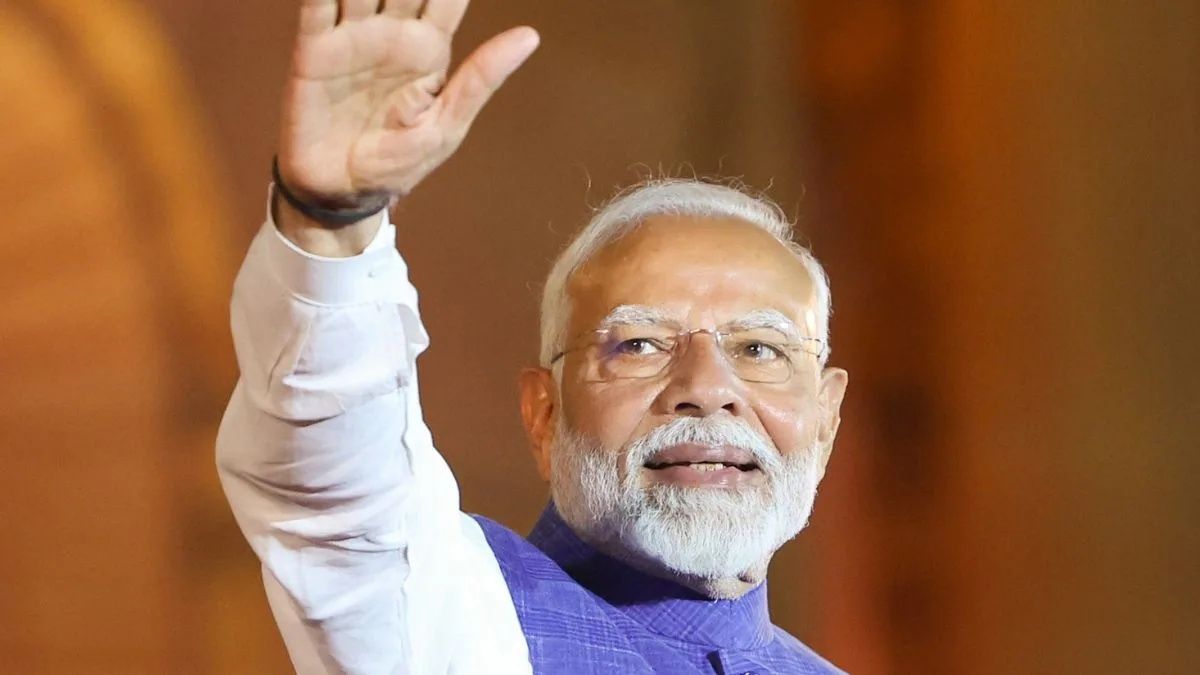
Prime Minister Narendra Modi will lead India's national celebrations for the 12th International Day of Yoga (IDY) from Kolkata's historic Red Road on Sunday, June 21, reinforcing his government's emphasis on the philosophy of "Healthy Body, Healthy Mind." The early-morning main gathering in the "City of Joy" will feature mass demonstrations of the Common Yoga Protocol, drawing thousands of attendees from government, corporate and civic sectors alongside ordinary citizens who have registered through the Ministry of Ayush's Yoga Sangam Portal.
The decision to host the principal IDY event in Kolkata carries unmistakable political undertones, arriving on the heels of the Bharatiya Janata Party's decisive victory in the West Bengal Assembly elections earlier this year. The relocation of the celebration from New Delhi signals New Delhi's strategic focus on the state, where the BJP has displaced the long-ruling Trinamool Congress and consolidated control. Senior BJP functionaries have indicated that West Bengal will command significant attention from the Modi government's developmental agenda, with implicit messaging about accelerated investment and administrative priority flowing to the newly governed state.
The choice of Red Road as the venue itself merits examination. Beyond its symbolic weight as one of Kolkata's most significant public gathering spaces, the location represents a convergence of civic engagement, military heritage and ecological consciousness. Indian administrators view the venue as emblematic of modern, organised public participation—a carefully curated backdrop for demonstrating governmental capacity and popular enthusiasm simultaneously. The organisers anticipate record attendance figures, reflecting broader expectations of successful political theatre alongside legitimate wellness promotion.
For Malaysian and Southeast Asian observers, the scale of India's IDY infrastructure reveals how comprehensively yoga has been repositioned as a national development and soft power instrument. The Ministry of Ayush has orchestrated an expansive apparatus spanning 2,500 organised events globally, involving participation from 211 Indian diplomatic missions abroad. This represents yoga's transformation from niche wellness practice to state-sponsored cultural export, with explicit foreign policy implications across Asia and beyond.
The technological dimension deserves attention. The Yoga Sangam Portal reaching 600,000 organisational registrations indicates unprecedented digital mobilisation around health initiatives in India. These registered organisations will conduct simultaneous yoga sessions, creating a nationally coordinated wellness demonstration of striking proportions. For governments across the region contemplating population health strategies, India's integration of technology, institutional participation and grassroots engagement offers a replicable model, though one that remains firmly embedded within national political communications frameworks.
Union Minister of State for Ayush Prataprao Jadhav has articulated this year's theme—"Yoga for Healthy Ageing"—as addressing a genuine demographic challenge facing India and the entire Asia-Pacific region. Longer life expectancy creates corresponding pressures on healthcare systems and requires innovative approaches to maintaining independent, active living among ageing populations. The minister's framing positions yoga as offering "a time-tested and holistic pathway" toward achieving quality in extended lifespans, not merely quantity. This resonates acutely across Southeast Asia, where ageing societies increasingly seek preventive and traditional wellness modalities to complement conventional medical infrastructure.
The Ministry of Culture's complementary initiative to organise yoga programmes at 100 iconic locations nationwide represents a deliberate interweaving of wellness promotion with cultural heritage preservation. By anchoring yoga practice to India's architectural and historical landmarks, authorities reinforce narratives positioning yoga as integral to Indian civilisational identity rather than imported wellness trend. The calculation extends beyond domestic audiences, projecting India's cultural continuity and contemporary vitality to international observers.
Prior to the main celebration, Kolkata has hosted preparatory events including "Daud Se Dhyan 2026 – From Movement to Stillness," an initiative combining health and sanitation objectives under the broader Swachhata Se Swagat Programme. This integration of cleanliness, civic responsibility and wellness demonstrates how IDY functions as an umbrella for multiple governmental development objectives, mobilising public participation across intersecting policy domains rather than promoting yoga in isolation.
The West Bengal government's mandate requiring all state employees to participate in IDY celebrations at designated venues or workplace locations further illustrates how wellness initiatives become embedded within administrative compliance frameworks. Mandatory participation transforms voluntary health practice into organisational performance metric, raising questions about how freely chosen wellness behaviours differ from state-mandated observances. The blurring of these categories reflects broader patterns across South and Southeast Asia where development imperatives increasingly penetrate domains traditionally considered personal or private.
For Malaysian policymakers and public health officials, India's IDY mobilisation offers instructive contrasts and comparisons. While Malaysia has consistently promoted wellness and traditional medicine, India's centralised coordination and explicit integration of health initiatives within broader state machinery demonstrates alternative governance models. The question of whether such comprehensive state orchestration enhances or constrains genuine public engagement with wellness practices remains contested, yet undoubtedly delivers measurable participation metrics and international visibility.
The international dimensions of IDY should not be overlooked. With participation spanning 211 Indian missions globally, the celebration functions as cultural diplomacy, positioning Indian wellness traditions as globally relevant solutions to universal ageing and health challenges. For the region, particularly smaller nations lacking India's institutional capacity, the appeal of yoga as non-pharmaceutical health intervention carries substantial political and practical weight.
Ultimately, the 12th International Day of Yoga demonstrates how contemporary governments strategically deploy wellness promotion and cultural practice toward multiple simultaneous objectives—genuine public health advancement, political messaging, cultural nationalism, and international soft power projection. The genuine value of yoga practice for healthy ageing runs parallel to, rather than separate from, these political instrumentalisations. Understanding both dimensions proves essential for comprehending how modern states integrate health governance with broader national strategic objectives.

