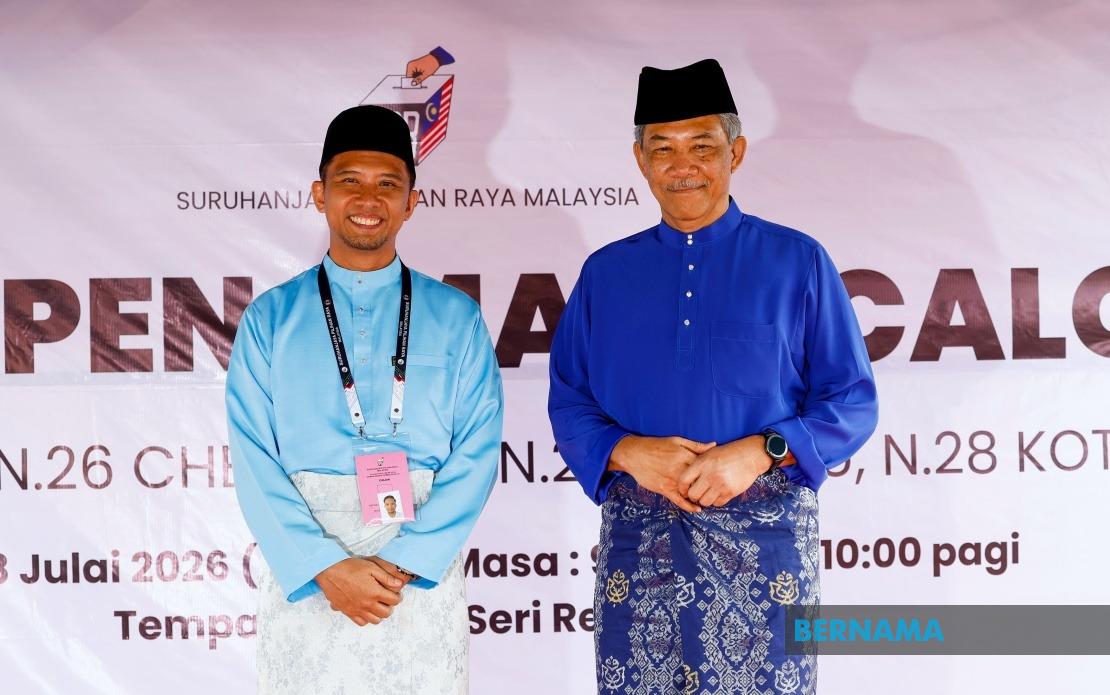
The Negeri Sembilan state election campaign enters its formal phase with several keenly contested races confirmed following the conclusion of nominations on July 18. The headline battle will take place in the Rantau constituency, where state Barisan Nasional chairman and Foreign Minister Datuk Seri Mohamad Hasan faces Pakatan Harapan's Dr Azizul Hakim Mahdi in a direct two-candidate contest that promises to draw significant attention across the state and beyond.
Returning officer Mohd Zamri Mohd Esa confirmed the nomination results after the process concluded at Dewan Sri Rembau, formally setting the stage for what analysts view as a critical test of voter sentiment in a state that has shown shifting political preferences in recent years. Mohamad's position as both UMNO deputy president and the Foreign Minister elevates the Rantau race to national significance, with the outcome carrying implications for the broader political balance ahead of any future national elections.
The 59-year-old Mohamad has represented Rantau continuously since 2004, establishing what would appear to be a formidable local entrenchment. His tenure spanning two decades suggests deep roots within the constituency and established relationships with the electorate. However, the 2023 state election result, whilst delivering him a 10,280-vote majority with 16,957 votes against PH's Rozmal Malakan's 6,677 votes, represents a narrower victory margin than might have been expected for an incumbent of his stature and seniority.
Dr Azizul Hakim, at 35 years old, represents a generational shift in PH's candidate strategy for the state. His professional credentials as a medical doctor, combined with his private sector experience as owner of three clinics across Senawang, Puncak Alam, and Melaka, position him as a candidate with tangible community engagement credentials. The healthcare sector focus proves particularly relevant in Malaysian politics, where voters consistently identify medical access and affordability as priority concerns, especially in semi-urban constituencies like Rantau.
Campaigning from this positioning, Dr Azizul Hakim seeks to reframe the contest around healthcare provision and local development rather than allowing the narrative to become dominated by Mohamad's ministerial profile. The medical doctor's argument centres on lived experience within the communities he proposes to represent, drawing upon his clinical background to address healthcare disparities. This localist, professional approach potentially appeals to younger and more service-oriented voters who may view his candidacy as offering substantive policy alternatives rather than traditional party machines.
Mohamad's campaign strategy emphasises the Barisan Nasional coalition's broader governance platform and its electoral mandate. Speaking immediately after nominations closed, the Rembau Member of Parliament stressed the importance of systematic grassroots campaigning and articulation of BN's manifesto to voters. His approach reflects confidence in his incumbency advantage whilst acknowledging that victory requires active persuasion rather than automatic retention, particularly given the competitive political environment in Negeri Sembilan.
Beyond Rantau, the state election presents multiple contests reflecting broader coalition positioning. The Paroi seat develops into a three-way competition between PH's Ahmad Shahir Mohd Shah, PN's Kamarol Ridzuan Mohd Zin, and Bersatu's Mohd Nazree Mohd Yunus, fragmenting the non-BN vote and potentially creating openings for the ruling coalition. Meanwhile, the Chembong constituency witnesses a straight fight between incumbent BN candidate Datuk Zaifulbahri Idris and PH challenger Danish Nazran Murad, providing PH with an opportunity to dislodge an established seat holder.
The Kota constituency adds further complexity with a three-cornered contest between BN's incumbent Suhaimi Aini, PH's Muhammad Allif Ibrahim, and Bersatu's Akmal Noradzmi Abdul Rahim. These multiple contests across the state suggest that Negeri Sembilan remains genuinely competitive terrain where coalition management and ground organisation could produce decisive differences. The presence of Bersatu candidates in several seats indicates continuing fragmentation within Perikatan Nasional, potentially benefiting whichever coalition executes the most unified campaign.
The Election Commission's timeline provides parties with nine days of campaigning following nomination closure, concentrating candidate outreach and messaging into an intense but manageable window. Early voting on July 28 will precede the main polling day on August 1, with the revised electoral calendar reflecting lessons learned from previous cycles regarding campaign efficiency and electoral administration. The 889,490 registered voters eligible to participate comprise predominantly ordinary voters, supplemented by military and police personnel eligible for early voting, reflecting Negeri Sembilan's mix of civilian and security force populations.
The Negeri Sembilan State Legislative Assembly's 36 seats mean that coalition control requires 19 seats for a stable majority, making seat-by-seat performance decisive. Neither BN nor PH can afford significant losses whilst attempting to expand representation, rendering close races in constituencies like Rantau strategically vital for ultimate government formation. The state's political significance extends beyond mere parliamentary arithmetic, as Negeri Sembilan represents middle Malaysia—neither Klang Valley nor rural peninsula—making its electoral verdict genuinely indicative of broader voter sentiment.
Mohamad Hasan's positioning as a senior federal minister defending his seat adds particular resonance to the Rantau race, as voters may view local contests as opportunities to either endorse or register dissatisfaction with federal performance. This dynamic has historically complicated BN's maintenance of state-level representation even when federal governments retained confidence. The straight fight format between Mohamad and Dr Azizul Hakim eliminates vote-splitting complications and produces a clearer reflection of Rantau voters' preferences between establishment incumbency and professional alternative.
With both the Rantau contest and broader Negeri Sembilan state election now formally underway, the campaign period will test whether traditional advantages of incumbency, ministerial office, and coalition machinery can overcome emerging preferences for younger, professionally credentialed candidates representing alternative visions. The August 1 polling results will provide meaningful indicators of voter priorities and coalition viability in a state that continues reflecting Malaysia's complex and evolving political landscape.

