Malaysia's Foreign Minister Datuk Seri Mohamad Hasan is set to lead the country's diplomatic representation at an emergency gathering of the Organisation of Islamic Cooperation's Council of Foreign Ministers in Jeddah, where deliberations on the escalating Palestinian situation will dominate proceedings. The extraordinary session represents a critical juncture for the 57-member bloc to unify its messaging and strategic response to developments in the Middle East, with Malaysia positioned as an influential voice advocating for stronger coordinated action among Islamic nations.
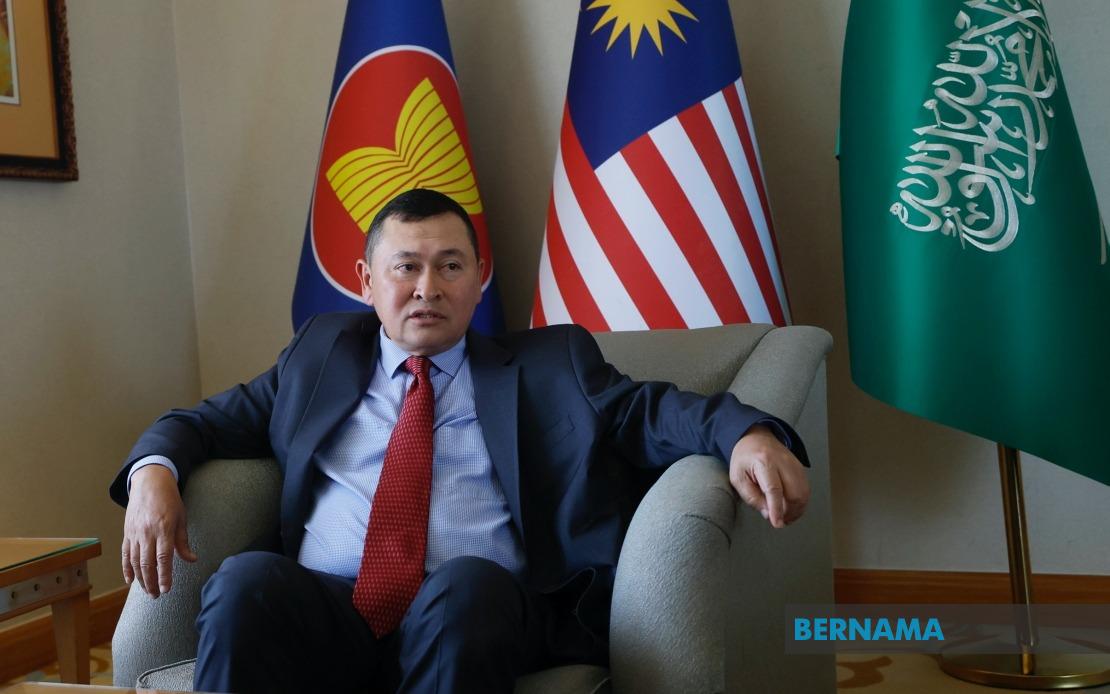
The meeting, scheduled for August 27, builds on earlier discussions that sought to establish common ground among OIC members regarding their approach to the Israeli-Palestinian conflict. According to Datuk Syed Bakri Syed Abdul Rahman, Malaysia's Ambassador to Saudi Arabia and Permanent Representative to the OIC, this gathering will enable member states to refine their collective stance and identify concrete measures to address what many view as an escalating humanitarian and security crisis in Palestinian territories. The one-day forum signals the urgency with which the organisation views recent developments and the perceived need for renewed diplomatic mobilisation.
During the session, Mohamad will present Malaysia's National Statement, which is expected to reiterate Kuala Lumpur's long-standing commitment to Palestinian self-determination and statehood. The statement will emphasise Malaysia's position that any viable resolution must be grounded in the pre-1967 borders, reflecting the established international consensus on territorial parameters for a future Palestinian state. This framing demonstrates Malaysia's alignment with broader Arab and Muslim perspectives on the conflict's fundamental parameters, though it also highlights the Malaysian government's sophisticated diplomatic approach of linking historical legality to contemporary negotiations.
A central component of Malaysia's intervention will focus on Israel's military operations and their humanitarian consequences across Palestinian territories. The Foreign Minister is anticipated to draw particular attention to the situation in Gaza, where ongoing military campaigns have generated significant civilian displacement and suffering, alongside deteriorating access to essential services and supplies. Beyond Gaza, Malaysia will address the longstanding tensions in the West Bank, where Israeli military presence and settlement expansion continue to restrict Palestinian movement and economic development. This multi-dimensional analysis reflects Malaysia's understanding that the conflict encompasses not merely military dimensions but also the administrative mechanisms through which territorial control translates into civilian hardship.
The question of Israeli settlements represents another focal point for Malaysia's intervention. These settlements, classified as illegal under international law by most countries and international bodies, remain central to Palestinians' grievances and obstacles to peace negotiations. By directing OIC attention to settlement expansion, Malaysia seeks to highlight what many view as systematic encroachment on Palestinian land and resources. This issue resonates particularly strongly in Muslim-majority countries that view settlement policy as fundamentally incompatible with any genuine peace process, and Malaysia's emphasis on this matter signals its commitment to addressing root causes rather than merely responding to humanitarian emergencies.
Beyond the Palestinian question, the extraordinary meeting will address the election of a new OIC secretary-general, indicating that institutional renewal and governance reform remain concurrent priorities for the organisation. This administrative agenda suggests that the OIC seeks not only to respond to immediate crises but also to strengthen its institutional capacity for future engagement. The intersection of crisis response with institutional renewal underscores the organisation's effort to position itself as both reactive and proactive in addressing member states' interests and concerns.
Malaysia's delegation will push for the adoption of a comprehensive resolution condemning Israel's military actions against Palestinians and calling for coordinated responses from OIC member states. Such resolutions typically combine symbolic significance—affirming shared values and principles—with more substantive elements, including calls for humanitarian assistance, diplomatic initiatives, and support for Palestinian institutions. The anticipated resolution specifically references Al-Quds Al-Sharif, the Islamic designation for Jerusalem, emphasising the religious and historical dimensions of the conflict that extend beyond conventional political or territorial frameworks. This linguistic choice reflects the manner in which Muslim-majority nations frame the Israeli-Palestinian conflict as encompassing not merely competing national claims but also disputes over sacred religious sites and their governance.
Humanitarian assistance represents a practical dimension of Malaysia's engagement with the Palestinian issue. According to Syed Bakri, Malaysia remains committed to ensuring that aid reaches affected Palestinian populations, a commitment that reflects both moral conviction and Malaysia's historical role as a bridge-builder between developed and developing nations. The emphasis on humanitarian channels also suggests Malaysia's recognition that diplomatic resolutions often proceed slowly, necessitating parallel efforts to alleviate immediate suffering and maintain international awareness of civilian needs. This approach acknowledges the gap between political negotiation and humanitarian reality, positioning Malaysia as committed to both tracks of engagement.
On the diplomatic margins, Mohamad is scheduled to meet with counterparts from multiple nations to discuss bilateral cooperation frameworks. These conversations will extend beyond the Palestine question to encompass broader economic and commercial opportunities, indicating Malaysia's strategy of leveraging diplomatic engagement for multifaceted benefits. Such bilateral meetings during multilateral gatherings allow countries to advance specific national interests while simultaneously contributing to collective problem-solving. For Malaysia, this approach reinforces its positioning as a serious diplomatic player capable of maintaining distinct bilateral relationships whilst participating constructively in broader coalitional politics.
Malaysia's active engagement at this OIC extraordinary meeting reflects its broader diplomatic strategy in the Muslim world. As a Southeast Asian Muslim-majority democracy with significant economic interests and influence in the region, Malaysia often positions itself as a moderate voice capable of advocating for Palestinian rights whilst maintaining pragmatic engagement with international partners. This balancing act has become increasingly challenging as global divisions over the Israeli-Palestinian conflict have intensified, yet Malaysia's consistent participation in OIC forums demonstrates its commitment to maintaining standing within the Islamic world whilst pursuing its own developmental and strategic objectives.
The timing of this extraordinary meeting occurs against a backdrop of intensifying global divisions over the Middle East conflict. The OIC's decision to convene an emergency session signals the organisation's assessment that routine diplomatic channels and regular meetings have proven insufficient to address the scale and urgency of recent developments. For Malaysia and other member states, the meeting represents an opportunity to demonstrate solidarity with Palestinian causes whilst exploring whether coordinated action can meaningfully influence regional and international dynamics. The outcome of Mohamad's leadership at this gathering may influence Malaysia's diplomatic positioning and relationships with both the Islamic world and Western nations in the months ahead.

