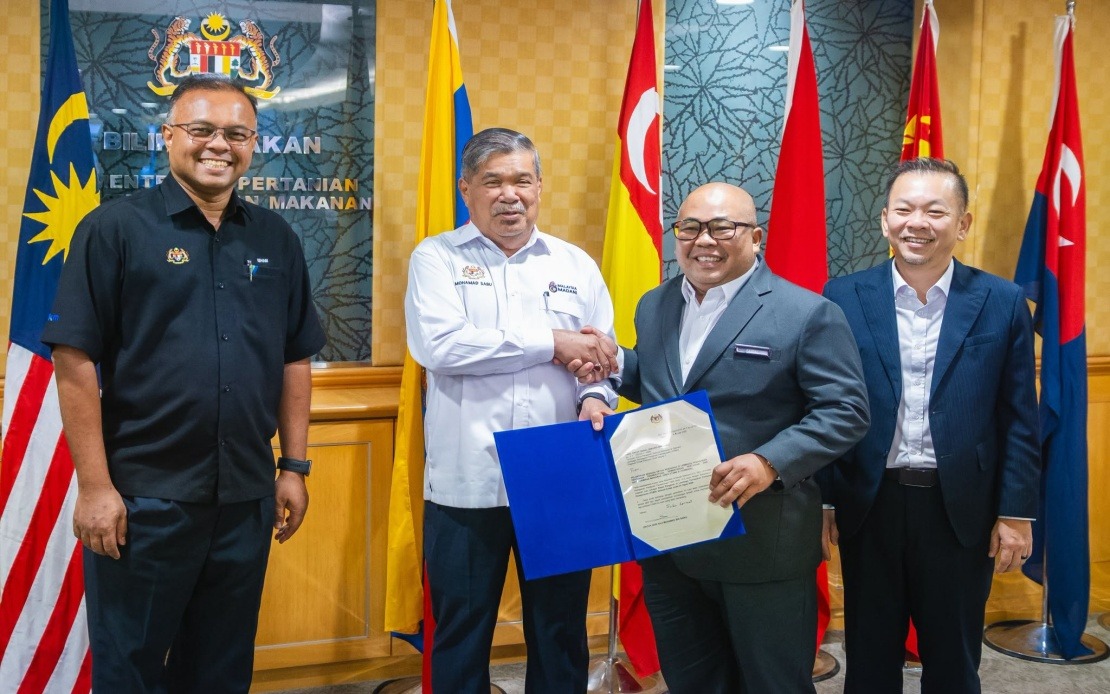
Kuala Lumpur has witnessed a significant shift in agricultural governance with the formal appointment of Faisal Iswardi Ismail as the new director-general of the Federal Agricultural Marketing Authority (FAMA), effective from August 1. The appointment was officially announced by Agriculture and Food Security Minister Datuk Seri Mohamad Sabu, who personally handed over the appointment letter during a post-Cabinet meeting on August 5. This move signals a continuation of the government's commitment to strengthening the nation's agricultural sector at a critical time when food security and rural development remain pressing concerns.
Faisal Iswardi's elevation from his previous position as deputy director-general overseeing Food Security and Operations represents a promotion rooted in institutional experience and demonstrated competence in managing agricultural operations. His background in the food security division positions him well to navigate the complex challenges facing Malaysia's agricultural marketing landscape, where coordination between producers, distributors, and consumers remains essential for maintaining stable food supplies and farmer livelihoods. The internal promotion suggests confidence in the existing leadership structure and continuity in FAMA's strategic direction.
In his remarks following the appointment, Minister Mohamad Sabu underscored the substantial responsibility now vested in Faisal Iswardi's shoulders. The minister acknowledged through his Facebook statement that the position carries considerable weight, particularly given FAMA's multifaceted role in the agricultural ecosystem. He emphasised that the authority serves as a crucial intermediary for marketing locally produced agricultural products, a function that has grown increasingly important as Malaysia seeks to enhance food self-sufficiency and reduce reliance on imports.
The scope of FAMA's responsibilities extends far beyond simple product promotion. The authority operates as a linchpin in strengthening the entire food supply chain, from farm to consumer, ensuring efficient distribution networks and fair pricing mechanisms that benefit all stakeholders. This responsibility takes on heightened significance in the Malaysian context, where agricultural production is dispersed across geographically diverse regions, and logistical coordination becomes essential for maintaining product quality and market accessibility. Faisal Iswardi will need to balance competing interests—supporting farmer incomes while ensuring affordable food access for consumers across urban and rural areas.
A central dimension of FAMA's mandate involves directly supporting the economic welfare of farmers and agribusiness entrepreneurs. Malaysia's agricultural sector employs a substantial portion of the rural workforce, and many smallholder farmers depend on effective marketing channels to achieve viable incomes. The authority's performance in facilitating market access, negotiating prices, and connecting producers with buyers directly influences rural economic outcomes and rural-to-urban migration patterns. Faisal Iswardi's tenure will be judged partly on whether smallholder farmers perceive tangible improvements in their market access and income stability.
Minister Mohamad Sabu's public blessing of the appointment carries symbolic weight within Malaysia's bureaucratic culture, where ministerial endorsement helps legitimise leadership transitions and signals administrative continuity. The minister's invocation of well-wishes and his religious benediction reflect cultural protocols that resonate with Malaysian public expectations and reinforce a sense of national institutional coherence. This cultural dimension of bureaucratic handovers, while sometimes overlooked in purely administrative analysis, plays a meaningful role in staff morale and public perception of institutional health.
The timing of this appointment occurs within a broader context of Malaysian agricultural policy reforms aimed at modernising the sector and improving its competitiveness. The government has increasingly prioritised food security as a strategic national concern, particularly following global supply chain disruptions and inflation pressures that have affected food costs for Malaysian households. FAMA's role in this larger agenda cannot be overstated, as the authority's effectiveness directly translates into either improved availability and affordability of staple foods or continued price pressures that burden ordinary Malaysians.
Faisal Iswardi assumes leadership during a period when agricultural marketing faces multifaceted challenges. These include adapting to digital transformation in supply chains, managing climate-related production variability, competing with imported agricultural products, and ensuring that modern retail and e-commerce channels integrate effectively with traditional marketing structures. His previous experience in food security operations provides relevant knowledge, though the director-general role demands strategic vision and stakeholder management capabilities that extend beyond operational expertise.
The appointment also reflects broader structural considerations within Malaysian government agencies. FAMA's importance to food security policy suggests that leadership quality in this position carries implications beyond the authority itself, touching on national economic stability and household food affordability. The decision to promote from within indicates institutional confidence in existing personnel development processes and suggests that succession planning within the agricultural bureaucracy is functioning as intended. This continuity can foster institutional memory and consistent policy implementation, though it may also require careful management to ensure fresh perspectives and necessary reforms are not neglected.
Looking ahead, Faisal Iswardi's tenure will be measured against specific performance indicators: whether smallholder farmers achieve improved market access and income stability, whether urban consumers experience reasonable food price stability, whether supply chain efficiency improves, and whether FAMA successfully bridges the gap between Malaysia's agricultural production capacity and domestic consumption needs. His appointment represents both an opportunity to advance agricultural marketing efficiency and a test of whether Malaysia's institutional framework can effectively address the complex interplay between rural development and urban food security. The coming months will reveal whether this leadership transition translates into measurable improvements in agricultural sector performance and farmer wellbeing.

