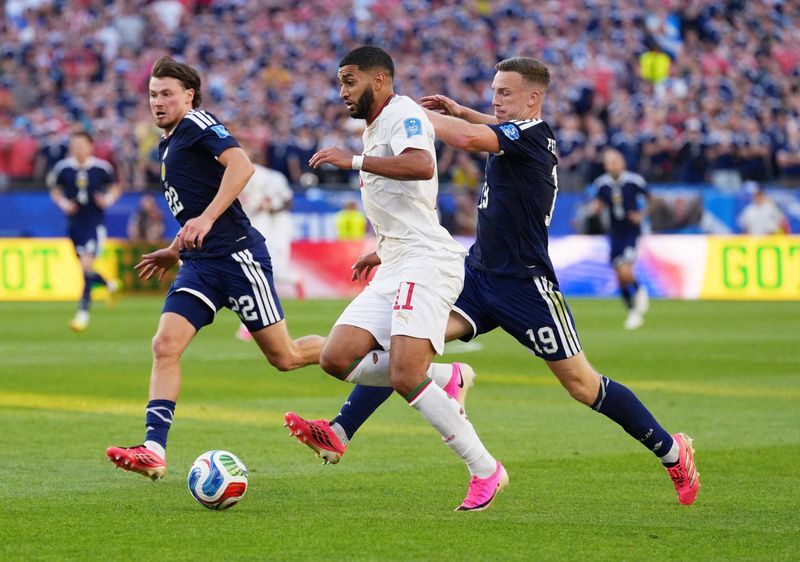
Morocco delivered a masterclass in controlled aggression at Foxborough, overwhelming Scotland with a relentless display that culminated in a 1-0 victory and firm grasp on Group C progression. The decisive moment came with stunning swiftness when Ismael Saibari capitalised on a defensive lapse to fire home after just 71 seconds—the fastest goal in this World Cup cycle and a demonstration of Morocco's clinical edge over an outmatched opponent.
The North African side's performance underscored why they emerged as Qatar's semi-finalists just four years ago, showcasing the organisational precision and pressing intensity that has made them a formidable force in international football. Throughout ninety minutes at Gillette Stadium, Morocco suffocated Scotland's attacking ambitions and methodically controlled possession, turning what might appear a narrow scoreline into a comprehensive tactical victory that left the Scots chasing shadows for large stretches.
Scotland arrived with genuine optimism following their historic 1-0 triumph over Haiti—their first World Cup victory in 36 years—but Morocco's opening salvo punctured any notion the Scots would build momentum. The goal itself exemplified Morocco's sharpness: Brahim Diaz threaded a perfectly weighted cross that found Saibari arriving at pace, while Scotland's Grant Hanley's premature advance from his central defensive position left a canyon of space that the Moroccan attacker exploited ruthlessly, his finish clinical and unerring.
Saibari, already credited with a goal in Morocco's earlier 1-1 draw against Brazil and reportedly having passed medical tests with German giants Bayern Munich, etched his name into World Cup folklore as only the second African player to score in consecutive appearances at the tournament, matching Egypt's Mohamed Salah's achievement. His rapid rise and immediate impact suggested Morocco's attacking depth could prove decisive in their knockout stage ambitions should they continue their group dominance.
Morocco's dominance extended well beyond that opening strike. Azzedine Ounahi orchestrated moves down the left flank with consummate ease, at one point fashioning a chance that saw two Moroccan players fail narrowly to finish in the goal-mouth scramble. El Khannouss twice troubled Scotland's defences with efforts that demanded concentration from goalkeeper Angus Gunn, while Saibari himself struck the post with a deflected effort that could easily have doubled the margin. Scotland's first shot of any consequence arrived deep into first-half stoppage time—a damning statistic that illustrated how thoroughly Morocco controlled territorial battle and possession.
The pattern intensified after half-time as Morocco maintained their suffocating press. The Scots, required to chase the game, found themselves stretched and vulnerable to rapid transitions that carved open additional openings. Yet despite sustained Moroccan pressure and mounting danger, Scotland managed to keep the deficit to a single goal through a combination of disciplined defending and occasional fortune. Gunn made crucial saves when called upon, denying El Khannouss with an instinctive stop from a glancing header that could have finished the contest.
Scotland's late-game attempts to manufacture an equaliser proved largely toothless against Morocco's composed rearguard, who neither panicked nor loosened their grip on proceedings. The North Africans' captain Achraf Hakimi faced hostile reception from Scottish supporters aware of his ongoing rape trial allegations—a backdrop that added emotional intensity to proceedings—yet Morocco's football did their talking, with the team demonstrating they possess the mentality and quality to compete at the tournament's highest level.
With four points accumulated from two matches, Morocco now hold pole position in Group C and require only a result against Haiti on Wednesday to virtually secure knockout progression. Their remaining opponent represents a significant step down in quality, suggesting progression beckons for the North Africans. Scotland's position, meanwhile, has grown precarious: three points from their opening two fixtures leaves them vulnerable, particularly with five-time champions Brazil—themselves eager to improve after their draw against Morocco—looming as their final group opponents.
Morocco's victory carries wider implications for African representation in the tournament's latter stages. The continent's recent World Cup pedigree has strengthened with several nations advancing deep into competitions, and Morocco's polished display suggests they could threaten to replicate their Qatar success. For Scotland, the mathematics remain achievable but increasingly dependent on results elsewhere and their own performance against Brazil, a daunting assignment that offers scant margin for error should they harbour genuine knockout stage aspirations.
Azzedine Ounahi's pre-match pronouncements about targeting the final appeared less bravado and more considered assessment after witnessing his teammates' measured performance. Morocco's blend of technical quality, physical intensity, and tactical discipline marked them as a threat to any remaining opponent. For Scotland, the challenge now transforms into survival mode—a dramatic shift from the optimism that characterised their weekend following the Haiti victory.

