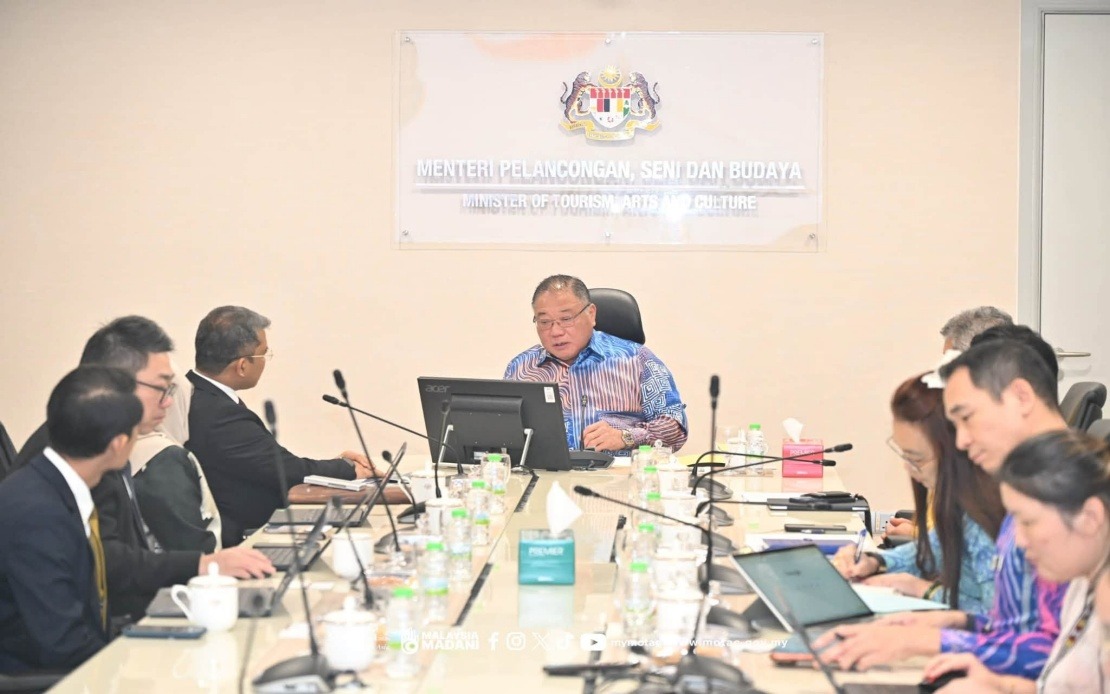
The Ministry of Tourism, Arts and Culture and Malaysia Aviation Group have escalated their strategic cooperation to capitalise on the extended Visit Malaysia Year 2026 campaign, signalling a coordinated effort to reverse post-pandemic tourism trends and position the country as a competitive global destination. Discussions between Tourism, Arts and Culture Minister Datuk Seri Tiong King Sing and MAG Group president and chief executive officer Captain Nasaruddin A Bakar centred on leveraging the airline's operational capabilities to drive visitor growth across priority markets and emerging tourism regions.
The partnership represents a recognition that Malaysia's tourism recovery depends fundamentally on strengthening connectivity between international markets and domestic attractions. By aligning MOTAC's promotional machinery with MAG's route development and fleet expansion plans, both institutions aim to reduce friction in the visitor journey—from initial marketing exposure through to arrival and on-ground experience. This integrated approach addresses a persistent challenge in Malaysian tourism: the gap between awareness-building efforts and actual seat capacity reaching key source markets.
Network expansion constitutes the centrepiece of the collaboration, with particular emphasis on India, China and Europe—regions containing hundreds of millions of potential visitors and representing different stages of economic development and travel demand. India's burgeoning middle class has demonstrated remarkable appetite for regional travel, while Chinese visitors historically deliver substantial spending per capita. European markets, though geographically distant, represent high-value tourists who tend to stay longer and explore beyond Kuala Lumpur and Penang. The addition of Fukuoka as a new destination reflects strategic positioning in Japan's secondary cities, where competition for tourist origin is less intense than from major hubs like Tokyo or Osaka.
Beyond route planning, the two organisations have committed to developing sophisticated marketing campaigns that harness airline seat inventory as a promotional asset. Joint strategies targeting low-season demand represent a particular focus, as Malaysian tourism has historically struggled with pronounced seasonality—with visitor numbers and hotel occupancy rates fluctuating dramatically between peak and off-peak periods. By coordinating flight promotions with MOTAC's destination marketing, both parties expect to flatten demand curves and improve overall sector profitability by keeping hotels, attractions and hospitality workers employed year-round.
The collaboration extends into the passenger experience itself, acknowledging that tourism competitiveness increasingly depends on service quality rather than price alone. Improvements to cabin facilities, in-flight catering standards and cabin crew training reflect understanding that international visitors form impressions of Malaysia before they even land, making the flight experience integral to tourism positioning. These enhancements become particularly significant when competing for premium leisure travellers and business tourists who possess options across multiple Southeast Asian destinations.
Supporting the domestic tourism ecosystem emerged as a third pillar of the partnership, with both parties committed to channelling benefits to local industry participants rather than concentrating gains among large corporations. This approach acknowledges that sustainable tourism development requires distributing economic benefits across transport operators, hotels, restaurants, guides and craft producers. By intentionally designing collaboration mechanisms that advantage smaller players—through preferential booking arrangements, training programmes or guaranteed client flows—MOTAC and MAG aim to build political and community support for the VM2026 campaign beyond government circles.
The timing of this deepened partnership carries strategic significance given Malaysia's position within regional tourism competition. Thailand, Vietnam and Indonesia have invested heavily in expanding international connectivity and destination marketing, while Singapore's premium positioning captures high-value visitors. Malaysia must differentiate through combinations of accessibility, value and experience quality. The MAG collaboration addresses accessibility directly; combined with MOTAC's destination narrative work, this positions Malaysia competitively without engaging in destructive price competition that erodes sector profitability.
Government-private sector coordination of this nature reflects evolving understanding of tourism as strategic infrastructure rather than peripheral economic activity. Tourism generates employment across dozens of sectors, from aviation and hospitality through to handicrafts and cultural services. It provides foreign exchange, supports rural economies through heritage and cultural tourism, and builds soft power by creating positive international perceptions. When tourism performs strongly, benefits cascade through multiple layers of the economy; conversely, tourism downturns concentrate economic pain.
The extended VM2026 timeline—originally scheduled to conclude in 2026 but now extended into 2027—provides runway for these collaborative initiatives to gain momentum and demonstrate results. Visitor arrivals data will serve as the primary performance metric, but the campaign's success ultimately depends on sustained revenue generation and employment creation across Malaysian tourism sectors. The partnership between MOTAC and MAG essentially represents a wager that coordinated, multi-stakeholder tourism development strategies outperform fragmented approaches where government and private operators work in isolation.
Looking forward, this collaboration may establish a template for Malaysian sectoral development more broadly—demonstrating how strategic ministries can align with private sector operators around shared growth objectives. If VM2026 delivers measurable increases in international visitor arrivals and tourism receipts, the MOTAC-MAG model could encourage similar partnerships in other priority sectors, from manufacturing to digital services.

