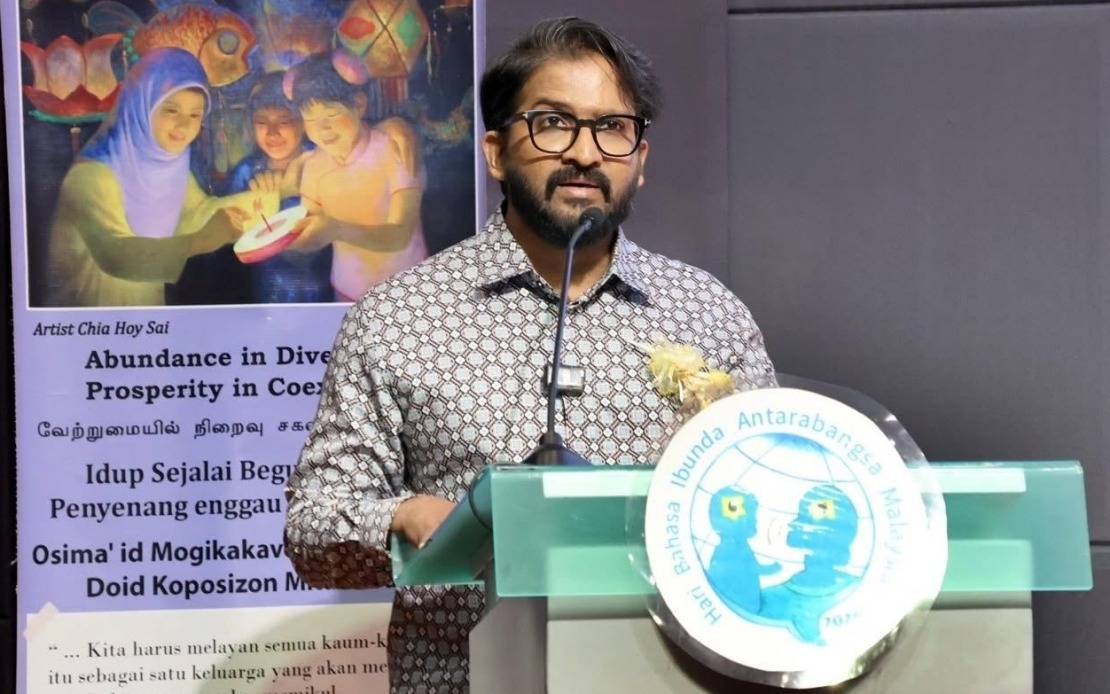
Deputy National Unity Minister R. Yuneswaran has made a compelling case for prioritising mother-tongue education as a practical tool for reducing social tensions, particularly those involving race, religion and royalty—commonly known as 3R issues—that dominate Malaysian social media discourse. Speaking recently, Yuneswaran highlighted how linguistic proficiency in one's heritage language could serve as a bridge to cultural understanding and social cohesion, addressing a growing concern among policymakers about online polarisation.
The minister's argument rests on a diagnosis that many 3R disputes stem fundamentally from gaps in cross-cultural knowledge. When citizens lack familiarity with the histories, languages and cultural contexts of their fellow Malaysians, misunderstandings become more likely to fester and escalate online. This observation carries particular weight given how quickly social media amplifies grievances and how difficult it becomes to resolve conflicts rooted in cultural misunderstanding. Yuneswaran's intervention suggests the government recognises that combating divisive rhetoric requires addressing its root causes rather than merely policing its symptoms.
Language, according to Yuneswaran's framing, transcends its conventional role as a mere communication tool. Instead, he positions it as a repository of identity, heritage and community values—elements that define how individuals perceive themselves and relate to broader social structures. This philosophical approach transforms mother-tongue education from a peripheral academic concern into a matter of national cohesion. For Malaysia, where linguistic diversity correlates closely with ethnic and religious identities, this connection carries significant practical implications for how the country navigates its multicultural reality.
Malaysia's documented linguistic landscape includes approximately 130 languages, a figure that underscores the nation's remarkable cultural variety. Rather than viewing this diversity as a liability or potential source of fragmentation, Yuneswaran reframes it as an asset worthy of celebration and deliberate cultivation. This perspective directly counters narratives that treat cultural differences as inherent sources of conflict. By encouraging deeper engagement with heritage languages, the government signals that it views diversity not as something to be minimised but as something to be understood and respected.
A crucial element of Yuneswaran's message addresses a persistent anxiety among some Malaysian communities: the fear that emphasising mother-tongue education somehow diminishes national unity or the centrality of Bahasa Malaysia. Drawing on his own experience navigating multiple educational streams, the deputy minister explicitly refutes this zero-sum framing. Proficiency in one's mother tongue, he argues, operates independently from competence in the national language or other acquired languages. Rather than creating competing loyalties, multilingualism enriches individuals' capacity to engage with diverse communities and understand nuanced perspectives.
This argument holds particular relevance for Malaysia's ongoing education policy debates. The country has long grappled with questions about how to balance mother-tongue instruction with national-language prominence, and whether these educational approaches can coexist productively. Yuneswaran's intervention suggests that viewing these as complementary rather than competing objectives may offer a path forward for policymakers seeking to strengthen both national cohesion and cultural preservation. The distinction he draws—that one's own cultural literacy enhances rather than impedes respect for others—provides intellectual grounding for integrated language policies.
Under the 13th Malaysia Plan, the National Unity Ministry has assumed expanded responsibility for nation-building initiatives centred on mutual understanding, reciprocal respect and genuine curiosity about different communities. Yuneswaran frames mother-tongue education as an instrumental component of this broader agenda. By investing in linguistic diversity, the government positions itself as supporting not merely academic achievement but the deeper work of building a society where citizens genuinely comprehend and value one another's perspectives and heritage.
The minister's emphasis on understanding as the foundation for unity reflects a sophisticated understanding of how social divisions operate. Merely legislating against divisive speech or removing inflammatory online content addresses consequences rather than origins. By contrast, cultivating genuine understanding through language education targets the underlying gaps in knowledge and empathy that permit 3R tensions to flourish. This preventive approach, if successfully implemented, could produce more durable social cohesion than enforcement-based strategies alone.
For Malaysian society at a moment of significant social media-driven polarisation, Yuneswaran's intervention offers a constructive framing of how the government intends to approach intercommunal tensions. Rather than positioning cultural groups as inherent competitors, he suggests that deeper engagement with heritage languages can transform how communities perceive one another. The practical challenge now lies in developing educational curricula and public programmes that effectively translate this aspiration into measurable improvements in cross-cultural understanding and reduced online conflict around sensitive communal issues.

