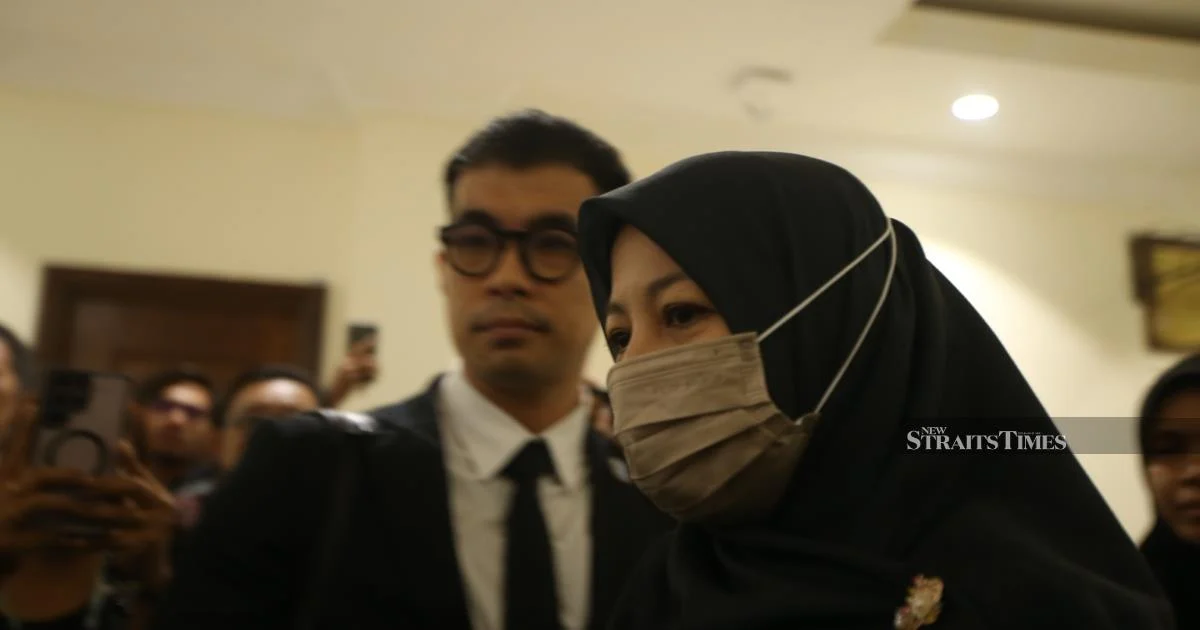
In Kota Kinabalu's coroner's court, Noraidah Lamat made a statement that cut to the heart of a parent's worst fears: she had come to regret her decision to enrol her daughter, the late Zara Qairinah Mahathir, at SMKA Tun Datu Mustapha. The admission speaks to a deeper tragedy that prompted the court inquiry and raises troubling questions about school environments, pastoral care, and the judgments parents must navigate when entrusting their children to educational institutions.
The revelation emerged during court proceedings examining the circumstances surrounding Zara's death. While the specifics of what transpired at the school remain central to understanding what led Noraidah to harbour such profound regret, her statement underscores how parental decisions made with the best intentions can intersect with tragic outcomes in ways no family could have anticipated. For Malaysian parents, particularly those in Sabah and beyond, the case carries uncomfortable implications about the adequacy of safeguarding measures in schools and the visibility parents have into their children's wellbeing once they cross institutional thresholds.
School selection represents one of the most significant decisions parents make during their children's formative years. Whether choosing between government schools, Islamic boarding institutions like SMKA Tun Datu Mustapha, or private alternatives, families weigh countless factors: academic reputation, facilities, proximity to home, and the perceived cultural or religious fit. For many Malaysian families, an SMKA—a Sekolah Menengah Kebangsaan Agama, or Islamic religious secondary school—represents an opportunity to combine rigorous education with Islamic values transmission. Yet Noraidah's retrospective regret suggests that whatever information was available to her during the enrolment decision-making process proved inadequate to the reality her daughter subsequently faced.
The coroner's court serves as the venue for examining such deaths, tasked with establishing facts about circumstances, cause, and any systemic failures that might warrant attention. The decision to hold proceedings for Zara's case indicates that authorities deemed her death worthy of formal judicial scrutiny rather than routine certification. This elevation itself signals that questions surrounded the circumstances—questions that extend beyond simple accident or illness to encompass environment, supervision, or institutional practice.
For bereaved parents in Malaysia, coroner's courts represent a formal stage where their pain can be heard, where institutional accountability theoretically operates, and where systemic gaps might be exposed for public and policy consideration. Noraidah's testimony carries particular weight because it moves beyond the abstract question of what happened to the more searching question of how adequate protective systems were. Her regret suggests either that warning signs were missed beforehand, that conditions at the school proved unsuitable for her daughter, or that a decision she understood one way turned out very differently in practice.
The case resonates particularly in Sabah, where education access and school options vary considerably from urban to rural areas. SMKA Tun Datu Mustapha stands as a significant educational institution in Kota Kinabalu, serving students across the state. Parents who choose such schools often do so in the belief that they are selecting among the best options available, investing both emotionally and practically in their children's placement there. The school's prominence makes Noraidah's expressed regret all the more consequential—it raises questions about whether other parents have harboured silent concerns, whether communication channels between school and families function adequately, and whether supervision standards align with what parents reasonably expect.
The coroner's inquiry process, while focused on establishing factual cause of death, inevitably illuminates the human dimensions of institutional life. Zara existed not as an abstraction but as a specific individual with particular needs, vulnerabilities, friendships, and daily experiences within the school environment. Her mother's regret encompasses not just the proximate events surrounding her death but the cumulative reality of an institutional choice that, in retrospect, Noraidah believes she should not have made. This parental recrimination, though natural and heartfelt, also raises uncomfortable questions about what objective information or warning signs might have suggested an alternative path.
Educational institutions in Malaysia operate under various regulatory frameworks, though questions often arise about whether policies translate consistently into practice, and whether communication channels between schools and parents function as intended. For the broader Malaysian education system, cases like Zara's that reach coroner's courts become important barometers of whether existing safeguarding structures protect vulnerable young people effectively. Schools typically must report significant incidents, maintain duty of care standards, and provide reasonable supervision—yet parents often have limited visibility into daily operations once their children enrol.
The coroner's court proceedings, once concluded, may result in findings that illuminate what occurred and whether any recommendations might prevent similar tragedies. Beyond legal conclusions, however, Noraidah's regret stands as a permanent testament to the stakes inherent in school selection and the trust parents necessarily place in institutions entrusted with their children's care during the most formative years. Her statement, entered into the court record, becomes part of a broader conversation about educational oversight, parental communication, and institutional responsibility.
For other families in Sabah and across Malaysia, Zara's case prompts reflection on how school choices are made, what questions parents should ask during enrolment, and what signs might warrant removing a child if circumstances prove unsuitable. The coroner's inquiry process, though focused on establishing facts about death, ultimately serves a broader societal function: ensuring that institutions answer for their responsibility to the young people in their care, and that parents' judgments about educational placement rest on the best available information about school environments and practices.

