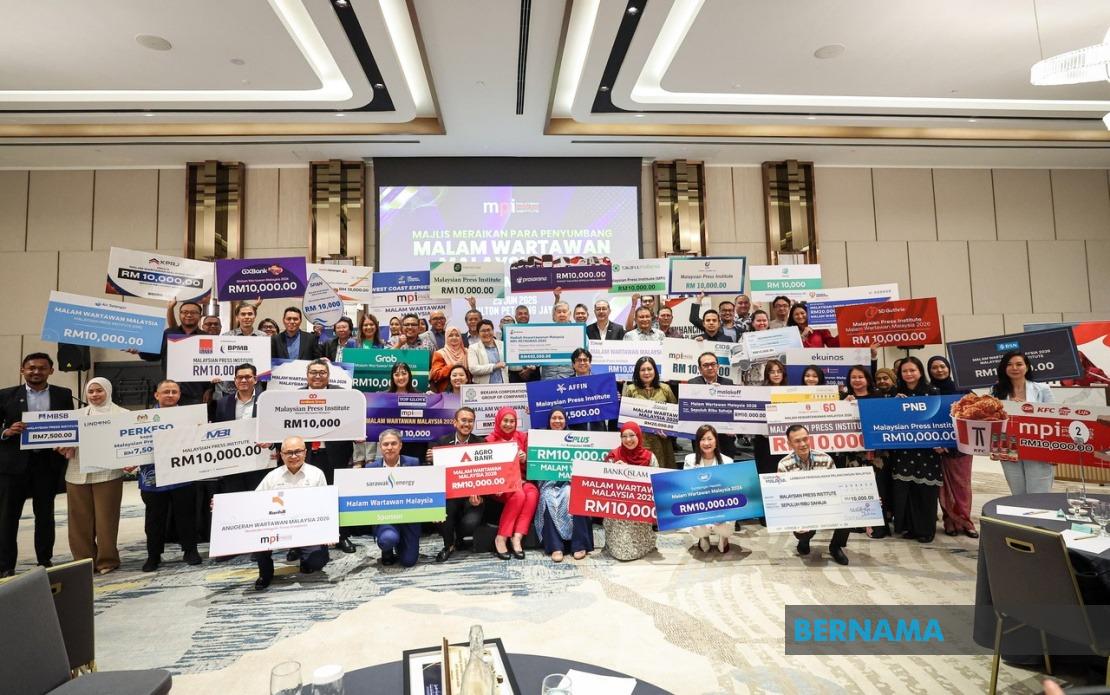
The Malaysian Press Institute has successfully mobilised over RM1 million in financial commitments ahead of Malaysia Press Night 2026, scheduled for next month, signalling robust industry backing for one of the country's most significant journalism recognition events. The funding haul of RM1.037 million combines RM587,000 garnered from 60 contributing organisations with a RM450,000 sponsorship commitment from PETRONAS, the energy giant that has underwritten the prestigious MPI-PETRONAS Malaysian Journalism Awards for three decades.
Dr Ainol Amriz Ismail, chief executive of the Malaysian Press Institute, framed the funding achievement as evidence of collective resolve to advance journalism standards in an era when media credibility and public trust face mounting pressures. Speaking at the Contributors' Appreciation Ceremony in Kuala Lumpur, he characterised the financial support as a reflection of shared commitment to sustaining professional, ethical practice across newsrooms. The gathering included MPI president Datuk Yong Soo Heong, deputy president Farrah Naz Abd Karim, and senior representatives from partner organisations including Bernama and PETRONAS.
The 2026 iteration of Malaysia Press Night takes on heightened significance with confirmation that Prime Minister Datuk Seri Anwar Ibrahim will grace the event on July 17. This high-level political endorsement underscores the government's acknowledgment of journalism's structural importance to informed democratic discourse and national development. The venue and specific programming details remain under finalisation, but the prime ministerial attendance sets an elevated tone for industry recognition and celebration.
The annual Malaysia Press Night operates as the flagship vehicle through which the institute honours media professionals whose work exemplifies rigorous fact-gathering, information verification, and accurate reportage conducted in service of the public interest and national benefit. Beyond the ceremonial recognition component, the event functions as a networking platform where industry leaders, practitioners, and stakeholders converge to discuss contemporary challenges confronting journalism across Malaysia and the broader Southeast Asian region. The programme format accommodates panel discussions, awards presentations, and substantive dialogue on professional standards.
PETRONAS's sustained sponsorship since 1994 represents one of the longest corporate commitments to journalism excellence in Malaysian business history. The oil and gas major's consistent backing demonstrates how large multinational corporations operating in Malaysia recognise their stake in maintaining a healthy media ecosystem capable of delivering credible information and independent scrutiny. This partnership model offers lessons for other industries seeking to invest in media resilience and professional development.
Dr Ainol Amriz emphasised that contributor support extends beyond underwriting a single annual ceremony. The financial commitments enable the Malaysian Press Institute to sustain year-round professional development programming, deliver industry-focused training initiatives, and implement capacity-building schemes that benefit the broader media community. These behind-the-scenes investments in journalist skill development, ethical practice frameworks, and technological adaptation represent the institutional infrastructure that advanced media ecosystems require to remain competitive and credible.
The third edition of a journalism dialogue forum formed part of this year's contributors' recognition event, assembling prominent industry figures for substantive discussion. Datuk A. Kadir Jasin, an iconic figure in Malaysian journalism history, shared the panel with Firdaus Hussamuddin representing Karangkraf Group's commercial media operations, Namanzee Harris from TV AlHijrah's Islamic broadcasting portfolio, and Thiaga Rajan Muthusamy as editor-in-chief of Vanakkam Malaysia, the Tamil-language publication. This panel composition reflected diversity across print, broadcast, and community-focused media segments, enabling exchange of perspectives on industry-wide challenges and opportunities.
The Malaysian media landscape faces a complex operating environment characterised by digital disruption, economic pressure on traditional business models, and evolving audience consumption patterns. In this context, the Malaysian Press Institute's role as convener, advocate, and professional standards guardian has grown more critical. The organisation's ability to mobilise financial support from 60 distinct organisations demonstrates that stakeholders across business, government relations, and the broader corporate sector recognise journalism's systemic importance. This funding breadth indicates consensus that professional media development warrants sustained investment.
For Southeast Asian regional observers, Malaysia's approach to journalism recognition and professional development offers instructive lessons. The model combines government acknowledgment through high-level attendance with sustained private sector backing, creating a multi-stakeholder architecture for media support. This differs from contexts where journalism either receives minimal institutional investment or remains heavily dependent on single funding sources that may introduce bias or undermine editorial independence. The diversified funding approach that Malaysia Press Night exemplifies represents one pathway toward building resilient, professionally capable media sectors across the region.
The timing of the funding announcement and upcoming ceremony coincides with growing regional awareness of misinformation challenges, digital literacy deficits among audiences, and the critical need for credible information sources. Malaysia's initiative to celebrate and resource quality journalism sends a signal about where national priorities lie during a period of significant technological and social change. By highlighting journalism's role in gathering facts and delivering accurate reports, the Malaysian Press Institute reinforces values that remain foundational to informed citizenship and effective governance across all Southeast Asian democracies.
Looking ahead to July's ceremony, the combination of prime ministerial attendance, substantial financial backing, and a cohort of respected industry panellists suggests momentum building around journalism recognition and professional advancement. The RM1.037 million mobilised for 2026 exceeds previous years' support levels, indicating growing confidence in the event's significance and the press institute's stewardship. As media industries across Southeast Asia grapple with technological disruption and business model transformation, Malaysia's demonstrated commitment to celebrating and supporting journalism excellence offers a constructive institutional model worthy of regional attention and potential adaptation.

