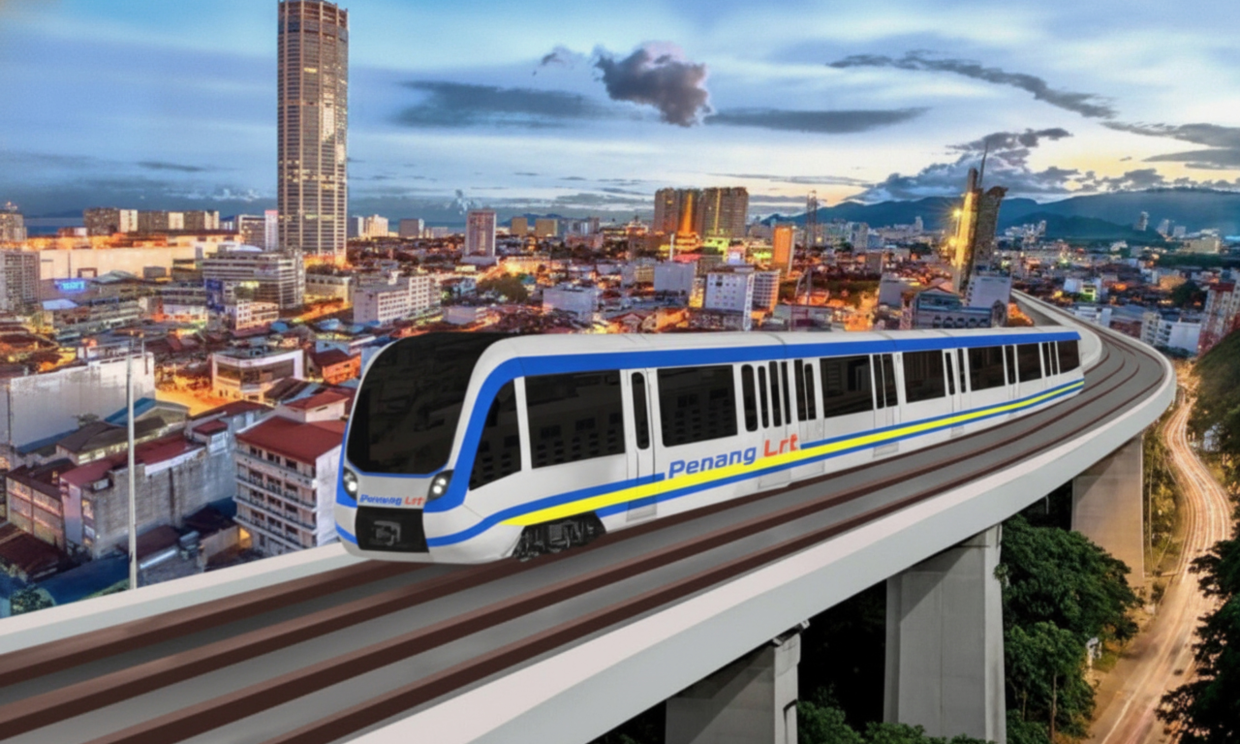
Malaysian Resources Corp Bhd (MRCB) has won a substantial RM3.028 billion contract to deliver the entire railway systems package for the Penang Light Rail Transit (LRT) Mutiara Line, marking a major victory for the infrastructure specialist in Malaysia's competitive rail construction sector. The Bursa Malaysia-listed company announced the win through an unincorporated joint venture with Theta Edge, structured on a 90:10 basis, signalling confidence from both parties in the project's commercial viability.
The contract, which spans 68.8 months from signing to completion, encompasses the full spectrum of engineering disciplines required for modern rapid transit: design, procurement, installation, testing, commissioning and long-term maintenance of railway infrastructure. This comprehensive scope reflects the complexity inherent in deploying integrated transit systems that must operate reliably in a tropical climate while serving daily commuter flows across the George Town metropolitan area.
The railway systems package specifically covers four critical subsystems that form the backbone of any functioning LRT network. The train component involves supply and installation of rolling stock suited to Penang's traffic patterns and passenger demographics. The signalling system represents the technological nerve centre, managing train movements, spacing and safety protocols. Power supply infrastructure must deliver consistent, uninterrupted electricity to stations and entire operational networks. Telecommunications systems enable real-time communication between control centres and trains, while the integrated ticketing architecture provides the passenger interface through fare collection and journey management.
For Malaysian investors and industry observers, this contract award underscores MRCB's expanded footprint beyond its traditional strongholds in Kuala Lumpur and Selangor. The Penang win demonstrates that major regional contractors can secure signature projects outside the Klang Valley corridor, particularly when local governments prioritise transport connectivity. The Penang LRT Mutiara Line represents state-level ambition to reduce congestion and modernise public transport infrastructure, positioning the northern corridor as economically competitive with the federal territories.
Management guidance on earnings contribution remains measured but positive. MRCB acknowledged in its filing that the project will bolster future earnings for the wider group, though the company adopted a cautiously realistic tone about operational headwinds. Construction-sector volatility in material pricing and equipment costs presents genuine exposure that cannot be entirely eliminated, particularly given the 68.8-month duration spanning multiple commodity cycles and potentially volatile supply chain conditions in Southeast Asia.
The company's risk mitigation strategy rests on accumulated institutional knowledge from comparable megaprojects executed across the region. MRCB has previously delivered large-scale infrastructure assets requiring integrated systems coordination, multi-disciplinary teams and interface management across complex stakeholder ecosystems. The contractor's track record in navigating material inflation, labour supply constraints and logistical challenges provides reasonable assurance that cost and schedule management protocols can contain downside scenarios.
Market reaction reflected confidence in the contract award. MRCB shares appreciated one sen on the announcement, closing at 32 sen or 3.23% higher at the midday trading pause. More dramatically, joint venture partner Theta Edge surged 14 sen, representing a 25.45% jump to 69 sen, suggesting investor enthusiasm for the venture partner's expanded infrastructure exposure and perceived earnings leverage from this assignment.
The Penang LRT Mutiara Line itself forms part of broader northern corridor development strategy that includes upgraded road connectivity and airport expansion. By anchoring modern transit infrastructure in Penang, the project enhances the island's attractiveness for business relocation from Bangkok and Singapore, where congestion and cost pressures increasingly disadvantage regional headquarters operations. Malaysian policymakers recognise that competitive positioning depends on multimodal transport systems that rival established centres.
From a Southeast Asian perspective, this contract demonstrates ongoing confidence in Malaysian large-project execution capacity and rail technology adoption. While Singapore and Bangkok have mature rapid transit networks, Malaysia is expanding metropolitan coverage systematically. The Penang award signals that ASEAN markets continue investing substantially in urban mobility solutions despite global economic headwinds and inflationary pressures weighing on capital expenditure decisions elsewhere.
Implementation success will depend substantially on supply chain resilience. Modern LRT systems require globally sourced components including signalling equipment, power distribution hardware and rolling stock subsystems. Geopolitical fragmentation and semiconductor supply constraints have complicated infrastructure timelines across the region. MRCB's ability to navigate these international procurement challenges while maintaining schedule integrity will significantly influence project performance and the joint venture's profitability trajectory over the 68.8-month execution window.
The contract also underscores evolving local content and technology transfer expectations in Malaysian rail projects. Authorities increasingly expect contractors to develop domestic supply chains, create skill-based employment and facilitate knowledge diffusion to Malaysian firms. MRCB will need to structure procurement strategies that balance international technical standards with opportunities for local participation and capability building, particularly in systems integration and ongoing operations support.
Looking forward, the Penang LRT Mutiara Line represents a flagship demonstration project for Malaysian rail ambitions in a decade where urbanisation and congestion management have become central to regional competitiveness. Successful delivery would position MRCB for additional rapid transit opportunities across Malaysian cities while bolstering the nation's reputation as a credible delivery partner for complex infrastructure systems in Southeast Asia's increasingly competitive investment landscape.

